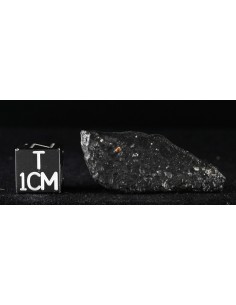
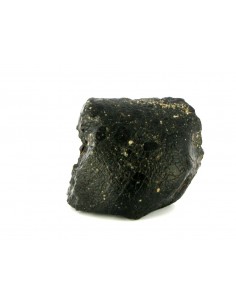
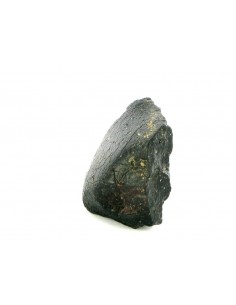
NWA 7533 Black Beauty

NWA 7533 – Martian Regolith Breccia | meteorites.tv

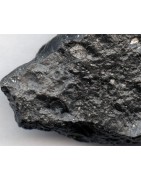
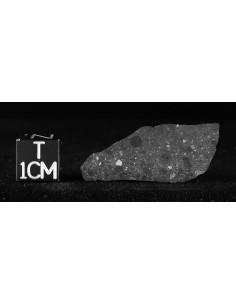
NWA 7533, often referred to by the informal nickname “Black Beauty”, represents one of the most scientifically important Martian meteorites ever discovered. Classified as a Martian regolith breccia, it is composed of lithified surface material formed by the accumulation and cementation of diverse crustal fragments on Mars.

Unlike igneous Martian meteorites that record discrete volcanic events, NWA 7533 preserves a complex mixture of ancient crustal components, impact-generated clasts, and mineral fragments of varying ages. Radiometric dating of zircon grains extracted from this breccia has established crystallization ages exceeding 4.4 billion years, indicating that parts of the Martian crust solidified almost as early as the oldest known rocks on Earth and the Moon.

Recent studies have also identified quartz-rich and granitic clasts within NWA 7533 material — mineralogical features previously thought restricted to highly evolved continental crust on Earth. These discoveries suggest that early Mars may have harbored diverse geological environments capable of producing evolved silicate rocks, and have profound implications for our understanding of early crustal evolution on both Mars and Earth.

NWA 7533 provides a direct record of ancient Martian surface processes, including impact bombardment, regolith development, hydrothermal alteration, and long-term crustal evolution, offering unparalleled insight into the formation and modification of the Martian crust during the first billion years of planetary history.

This meteorite also holds a particular personal significance, as NWA 7533 originates from my own collection. I was directly involved in bringing this exceptional Martian meteorite to the attention of the scientific community, enabling its study and its subsequent contribution to our understanding of early Martian crustal evolution. This close association highlights the important role of collaboration between field discovery, private stewardship, and institutional research in advancing planetary science.
Product added to wishlist
Product added to compare.