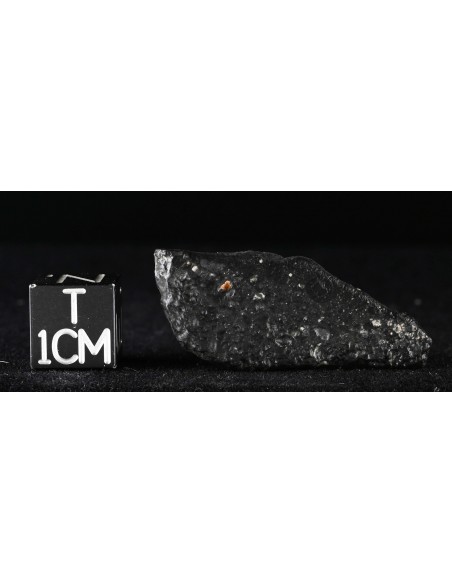
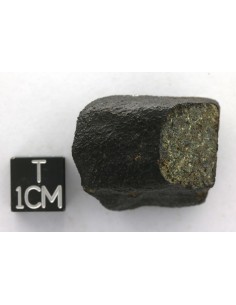
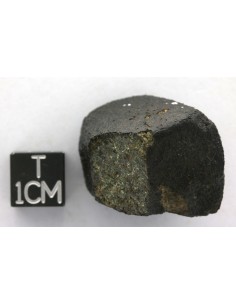
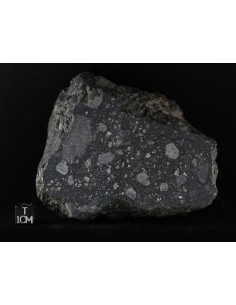
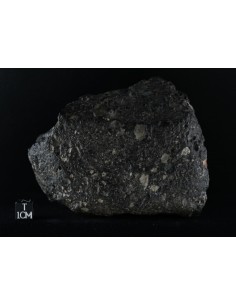
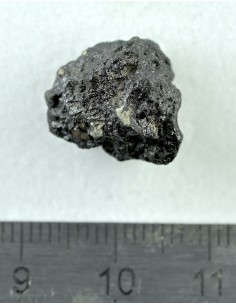
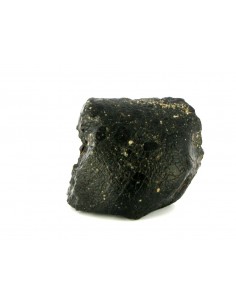
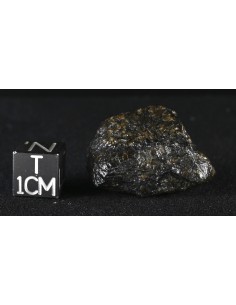
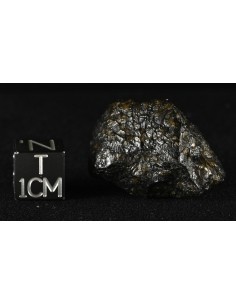
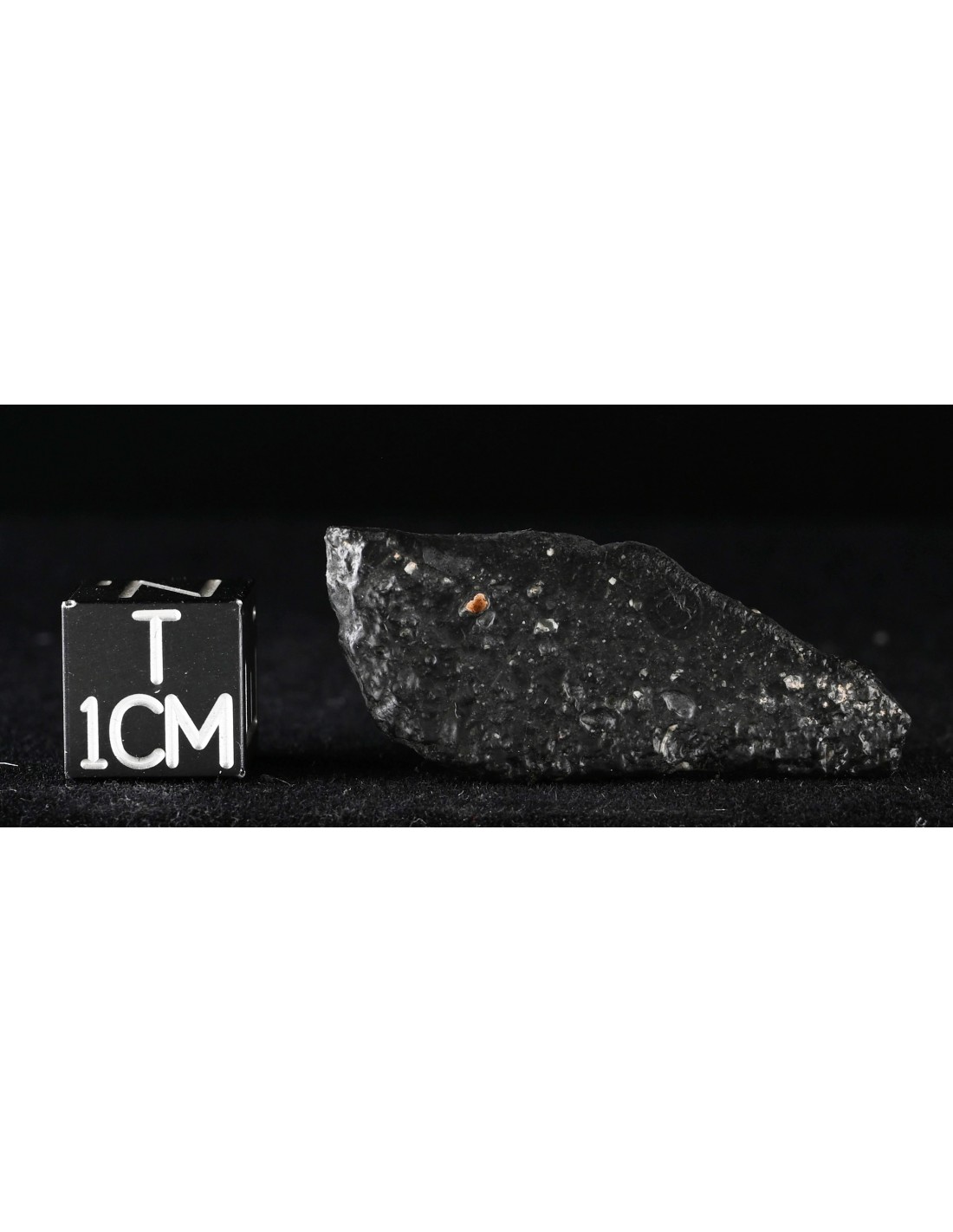
NWA 7533 is classified as a Martian regolith breccia, formed by the lithification of surface materials on Mars through repeated impact events, fragmentation, and re-cementation over extended geological timescales. Unlike igneous Martian meteorites that record single volcanic episodes, NWA 7533 preserves a complex mixture of ancient crustal components spanning a wide range of ages.
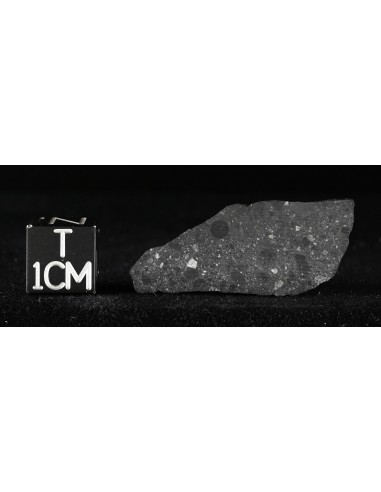
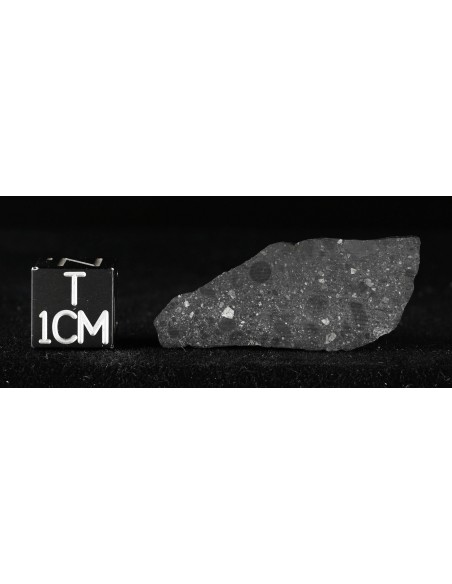
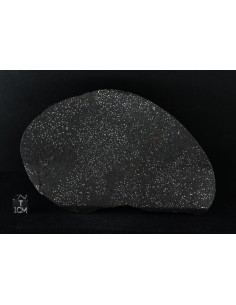
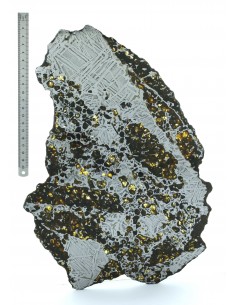
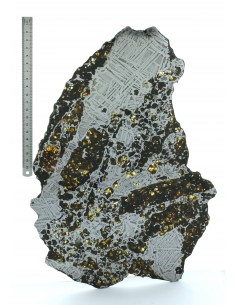
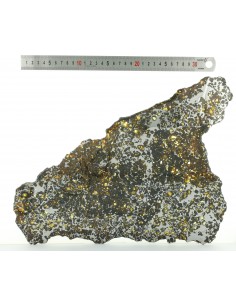
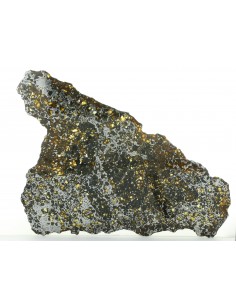
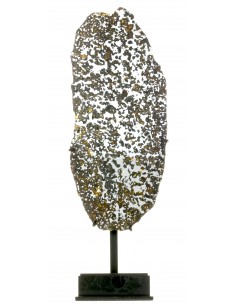
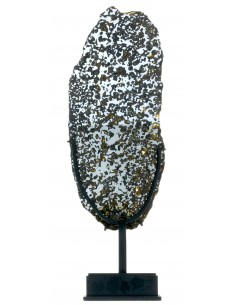
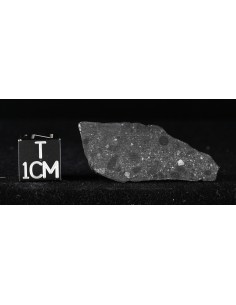
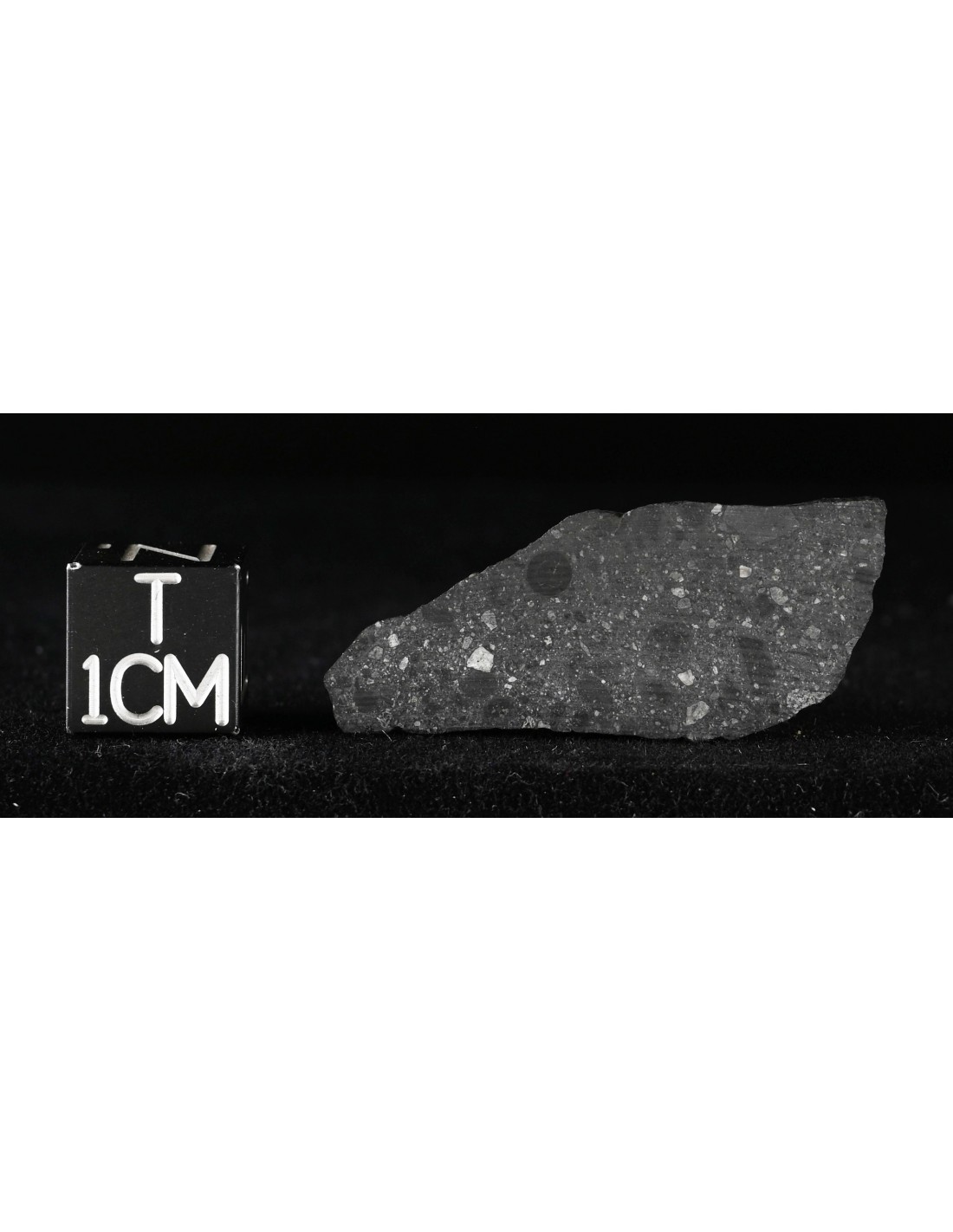
This complete thin slice offers an exceptional window into that complexity. The surface is densely populated with clasts of diverse lithologies, including impact-generated fragments, crystalline mineral aggregates, and fine-grained matrix material. The high clast abundance visible in this specimen makes it particularly illustrative of regolith processes such as impact gardening, brecciation, and crustal recycling on early Mars.
Zircon grains extracted from NWA 7533 material have yielded crystallization ages exceeding 4.4 billion years, indicating that parts of the Martian crust formed extremely early in planetary history. More recent studies have also identified quartz-rich and granitic clasts, suggesting that early Mars may have hosted evolved silicate environments comparable, in some respects, to early continental crust formation on Earth.
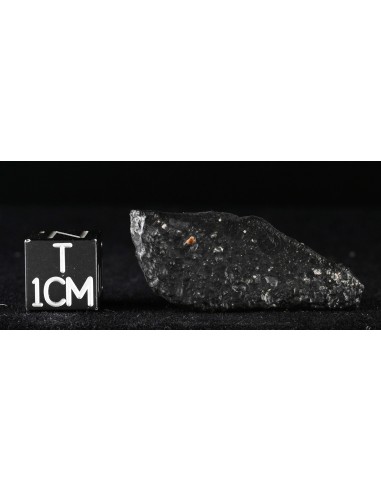
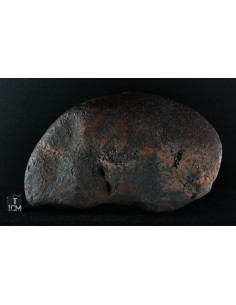
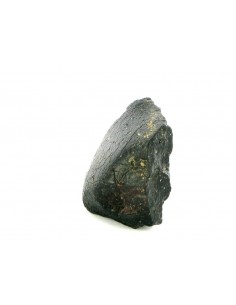
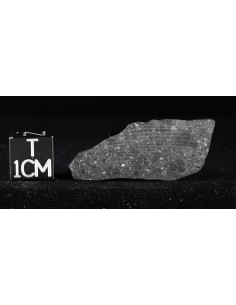
This specimen represents a complete slice, preserving the full cross-section of the meteorite fragment without trimming or reduction. Its thin profile enhances the visibility of internal structures and lithological contrasts, making it especially suitable for detailed observation, documentation, and educational or research-oriented display.