Carbonaceous Chondrites
Carbonaceous chondrites are among the most scientifically important meteorites known. Considered the most primitive material available from the early Solar System, these rare meteorites preserve ancient minerals, organic compounds, water-bearing phases, and in some cases presolar grains older than the Sun itself.
Unlike differentiated meteorites formed within melted asteroids, carbonaceous chondrites largely escaped major thermal processing and therefore retain much of their original primordial composition. They are regarded as direct remnants of the protoplanetary disk from which the planets formed approximately 4.56 billion years ago.
Their study has transformed our understanding of planetary formation, aqueous alteration, asteroid evolution, and the possible delivery of water and prebiotic organic compounds to the early Earth.
Primitive Material from the Early Solar System
Carbonaceous chondrites formed within primitive asteroids that accreted during the earliest stages of Solar System history. These meteorites contain a mixture of:
- Chondrules
- Calcium-aluminum-rich inclusions (CAIs)
- Fine-grained matrix
- Metallic grains
- Sulfides
- Hydrated minerals
- Organic compounds
Many carbonaceous chondrites experienced varying degrees of aqueous alteration, meaning liquid water circulated through their parent asteroids early in Solar System history. Others remained remarkably pristine and preserve extremely primitive nebular components.
Scientific Importance
Carbonaceous chondrites are fundamental to modern planetary science because they preserve chemical and isotopic information from the earliest Solar System.
These meteorites have yielded:
- Extraterrestrial amino acids
- Organic molecules
- Presolar grains
- Primitive nebular condensates
- Hydrated silicates
- Ancient isotopic anomalies
Some researchers believe that carbonaceous asteroids may have contributed part of Earth’s water inventory and delivered organic compounds relevant to prebiotic chemistry.
Main Groups of Carbonaceous Chondrites
Carbonaceous chondrites are divided into several major groups, each with distinct mineralogical and geochemical characteristics.
CM Carbonaceous Chondrites
CM meteorites are rich in hydrated minerals and organic compounds. They experienced significant aqueous alteration and are among the most studied meteorites in cosmochemistry.
The famous Murchison meteorite belongs to this group.
CV Carbonaceous Chondrites
CV chondrites are known for their abundant large chondrules and calcium-aluminum-rich inclusions (CAIs). They often display striking internal textures and scientifically important refractory inclusions.
The famous Allende meteorite is the best-known CV chondrite.
CO Carbonaceous Chondrites
CO chondrites contain very small and sharply defined chondrules within a fine-grained matrix. They are considered relatively primitive and often preserve excellent nebular textures.
CK Carbonaceous Chondrites
CK chondrites experienced stronger thermal metamorphism than most other carbonaceous groups, resulting in darker and more recrystallized textures.
CR Carbonaceous Chondrites
CR chondrites are rich in metallic grains and preserve highly primitive components. Some contain exceptionally well-preserved chondrules and organic matter.
CB Carbonaceous Chondrites
CB chondrites are extremely rare meteorites characterized by unusually high metal content and large metallic nodules embedded within silicate material.
CI Carbonaceous Chondrites
CI chondrites are among the rarest and most chemically primitive meteorites known. They contain large amounts of hydrated minerals and closely match the elemental composition of the solar photosphere, excluding volatile gases.
The Orgueil meteorite is the most famous CI chondrite.
Appearance and Preservation
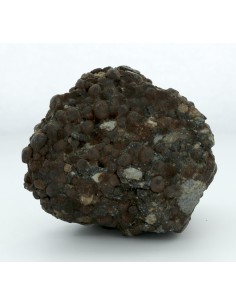
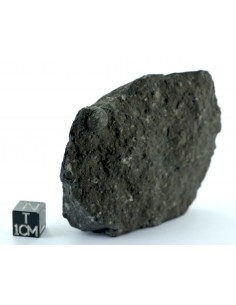
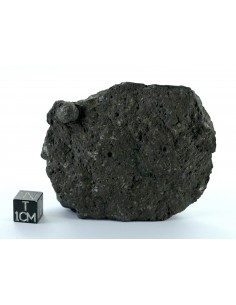
Carbonaceous chondrites vary greatly in appearance depending on their group and alteration history.
Some specimens display:
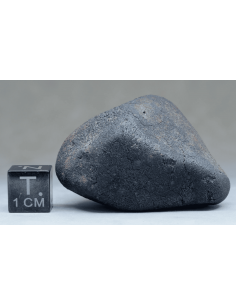
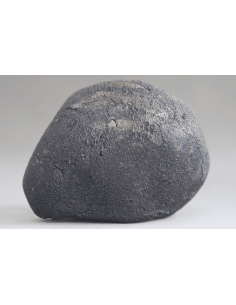
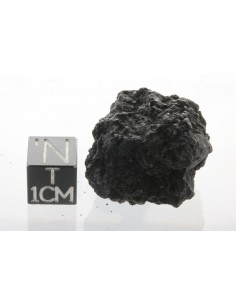
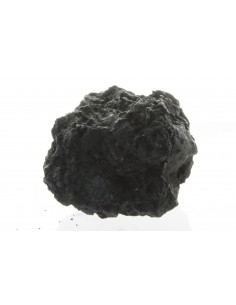
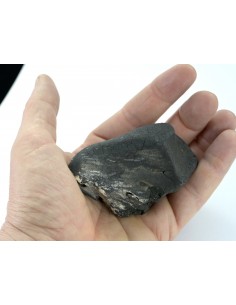
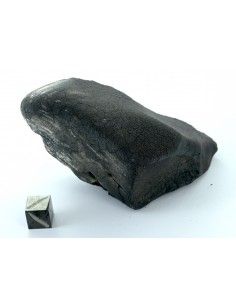
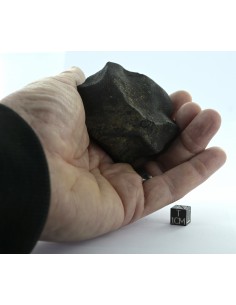
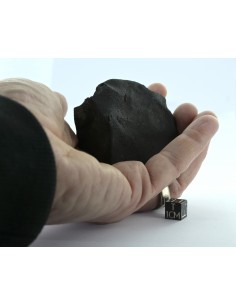
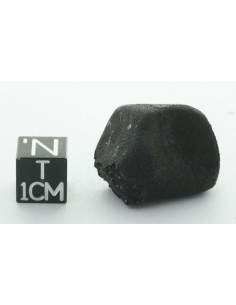
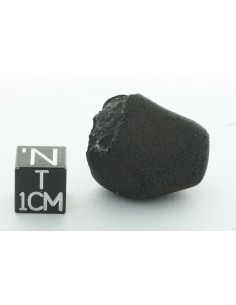
- Black fusion crusts
- Fine dark matrices
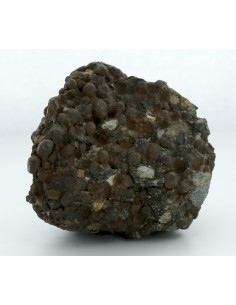
- Visible chondrules
- Metallic grains
- CAIs
- Brecciated textures
- Hydrated alteration features
Because many carbonaceous chondrites are fragile and porous, well-preserved specimens with fresh fusion crust are particularly sought after by collectors and institutions.
Collector Interest
Carbonaceous chondrites occupy a special place in advanced meteorite collections due to their scientific importance and rarity.
Collectors particularly value:
- Fresh witnessed falls
- Well-preserved fusion crust
- Visible chondrules and CAIs
- Primitive matrices
- Historical meteorites
- Rare classifications
Certain groups such as CI and CB meteorites are exceptionally difficult to obtain and rarely appear on the market.
Carbonaceous Chondrites and Planetary Science
Modern asteroid sample-return missions such as Hayabusa2 and OSIRIS-REx specifically targeted primitive carbonaceous asteroids because of their importance for understanding Solar System formation and the origin of water and organics on Earth.
These missions continue to confirm the central role carbonaceous materials play in planetary science and cosmochemistry.
Authentic Carbonaceous Chondrites
Authentic carbonaceous chondrites available for collectors range from complete individuals to prepared slices and research-grade fragments.
Each specimen preserves material formed during the earliest stages of Solar System evolution, making carbonaceous chondrites among the most scientifically meaningful meteorites that can be collected.