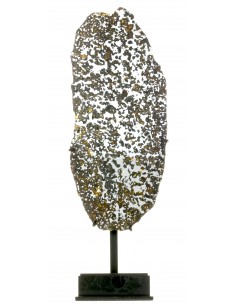
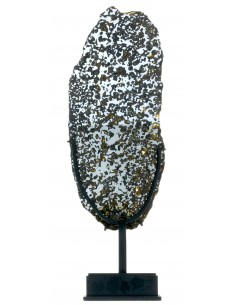
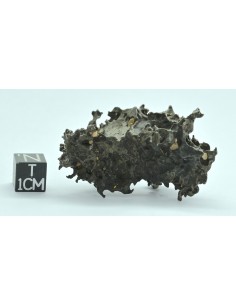
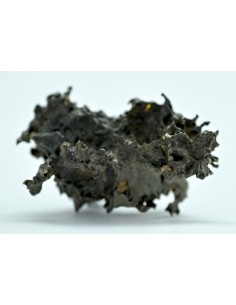
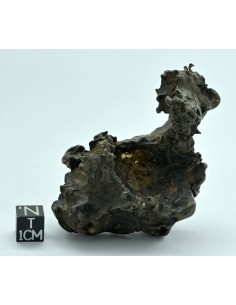
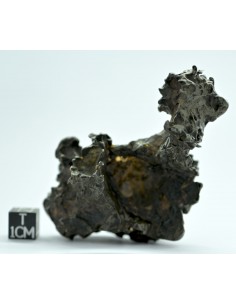
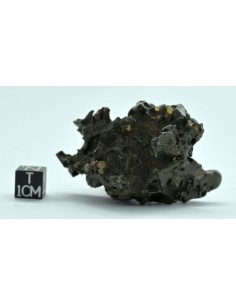
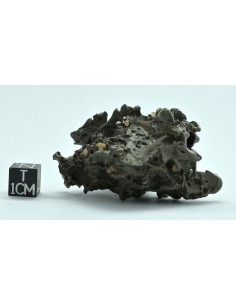
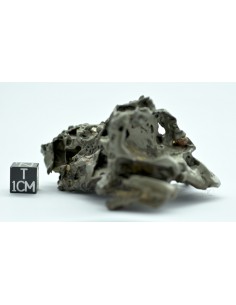
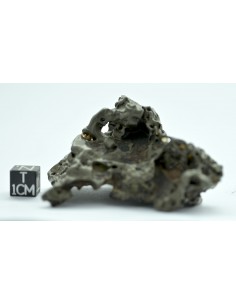
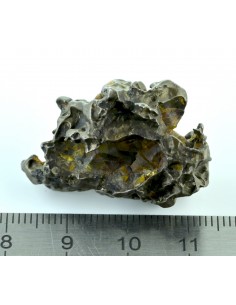
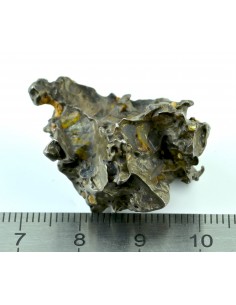
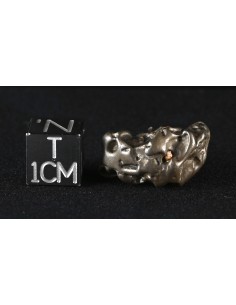
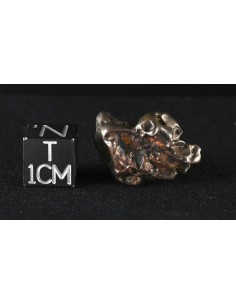
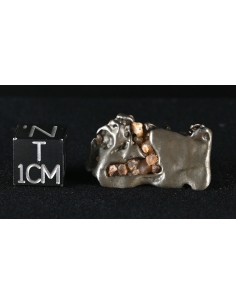
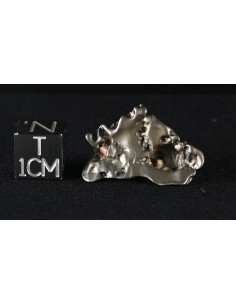
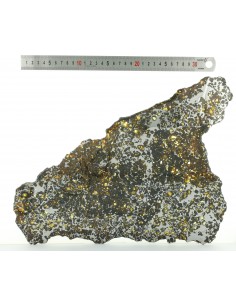
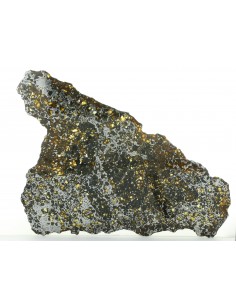
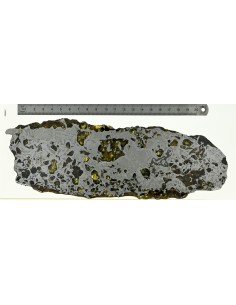
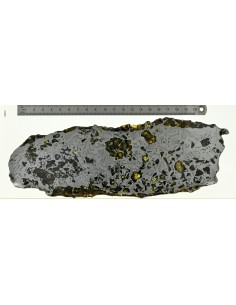
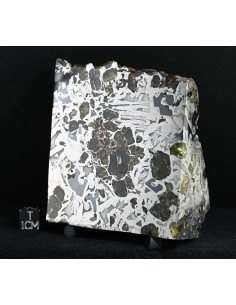
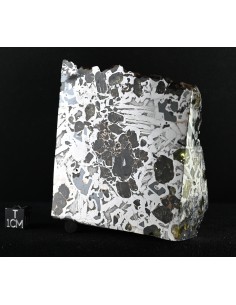
Pallasites are among the most visually striking and scientifically significant meteorites. They are composed of translucent olivine crystals embedded within an iron–nickel metal matrix, creating a remarkable association of metal and silicate rarely observed in natural materials.
Traditionally, pallasites have been interpreted as fragments originating from the boundary between the metallic core and the silicate mantle of differentiated asteroids, recording early planetary differentiation processes during the first stages of Solar System formation. This model remains valid for many classic pallasites and explains their unique mineralogical architecture.
However, modern research has shown that not all pallasites necessarily formed at a pristine core–mantle interface. Some specimens exhibit textures and structural relationships consistent with impact-generated brecciation, resulting from high-energy collisions between differentiated parent bodies. In these cases, metal and silicate materials were mechanically mixed during catastrophic impacts rather than crystallizing in situ at depth.
This diversity of formation pathways highlights the complex collisional history of the early asteroid belt and underscores the scientific importance of pallasites as records of both planetary differentiation and asteroidal impact processes. Each specimen preserves a distinct geological history, shaped by its parent body, its collisional environment, and its subsequent journey through space.
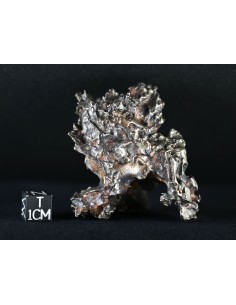
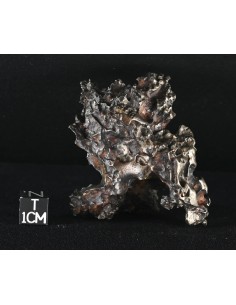
Beyond their scientific value, pallasites are highly prized for their exceptional visual qualities. Gem-quality olivines, often displaying golden, amber, or green hues, contrast dramatically with the surrounding metal. In arid terrestrial environments, prolonged exposure to wind and sand may further sculpt some specimens, producing rare natural forms of remarkable aesthetic and sculptural character.
Carefully selected for their integrity, provenance, and scientific relevance, the pallasites presented here occupy a unique position at the intersection of planetary science, mineralogy, and natural art.