What is an oriented meteorite?
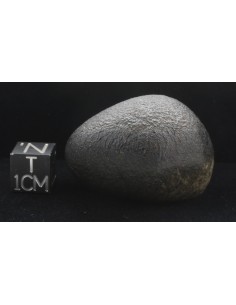
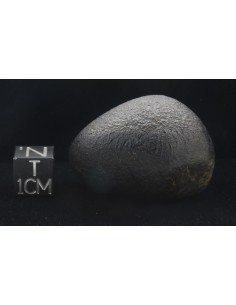
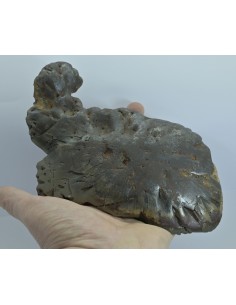
An oriented meteorite is a specimen that maintained a stable orientation during its passage through Earth’s atmosphere. Instead of tumbling randomly, the meteorite traveled with a fixed leading face, allowing aerodynamic forces and heat to shape it in a highly distinctive way.
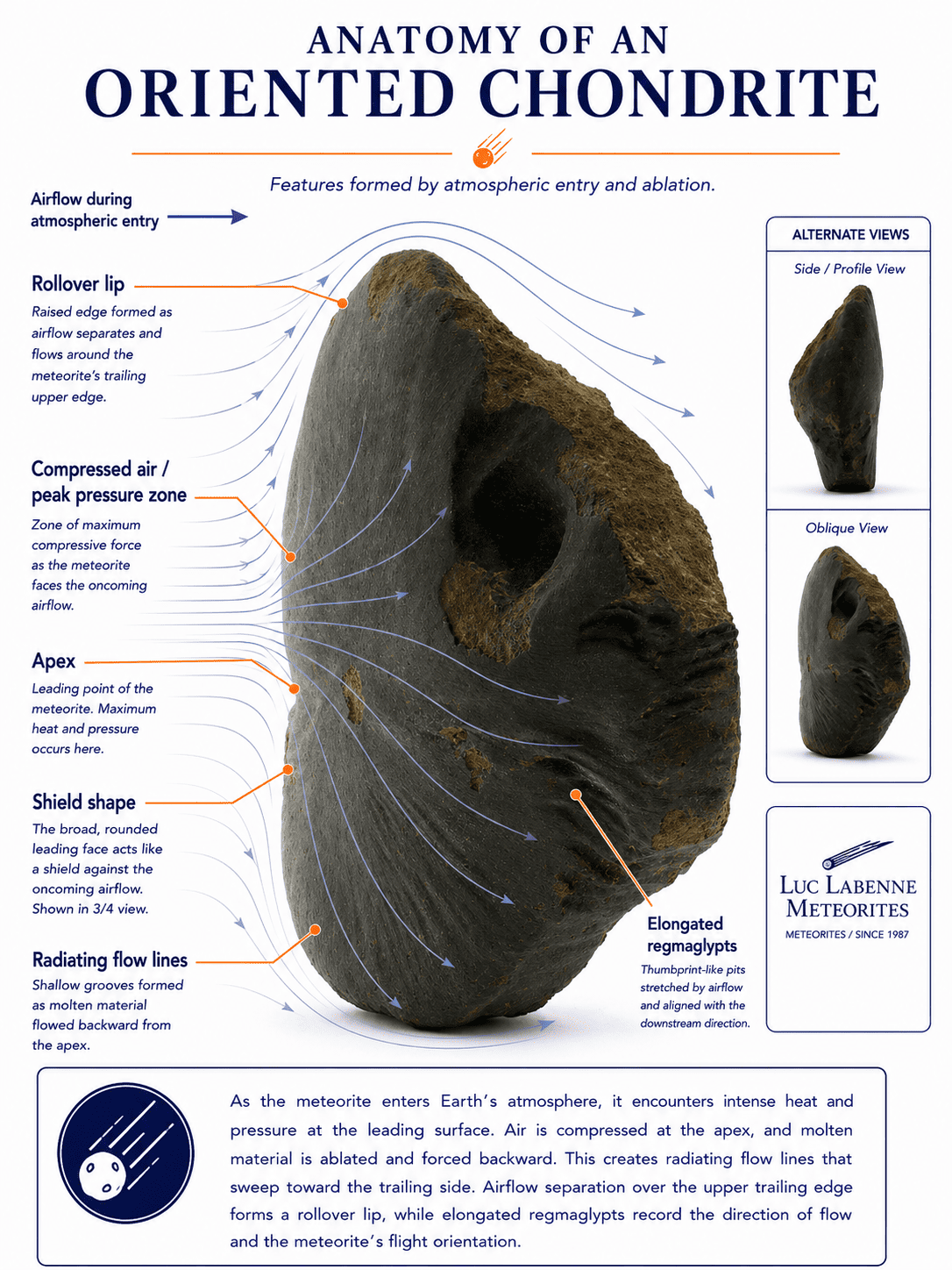
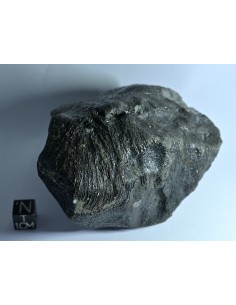
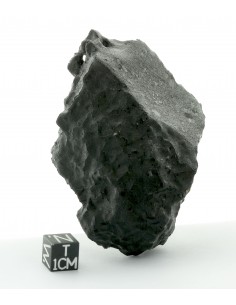
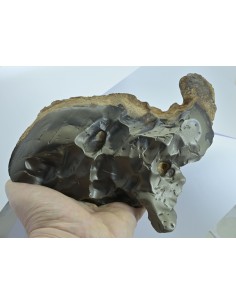
As the meteorite enters the atmosphere at high velocity, intense compression of air at its leading surface generates extreme heat. This heat causes surface material to melt and ablate, flowing backward along the body. When the flight remains stable, ablation is concentrated around a specific point on the leading face known as the apex. From this apex, molten material flows outward, forming characteristic flow lines radiating across the surface.
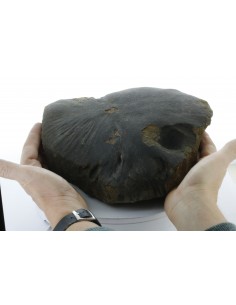
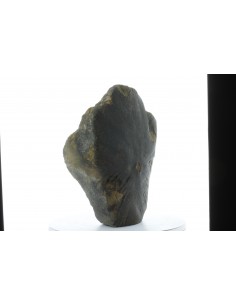
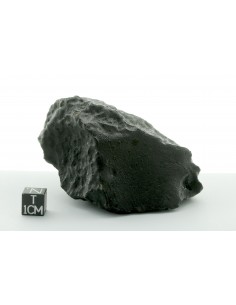
Many oriented meteorites develop a recognizable conical or shield-like shape, often with a curved front face and a relatively flatter rear surface. A raised roll-over rim, sometimes referred to as a “lip,” may form where molten material migrates from the front toward the back of the specimen.
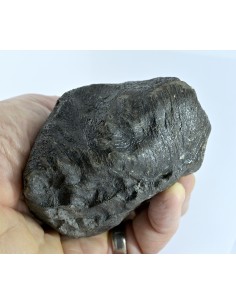
In larger oriented iron meteorites, regmaglypts may become elongated and aligned with the direction of flow, radiating away from the apex. On the rear side, ablation commonly results in a flatter surface. In some cases, a thick fusion crust may accumulate on the back, occasionally displaying vesicles formed by boiling material. While this feature is not required to define a meteorite as oriented, it is observed only in well-oriented specimens.
What does “oriented” really mean?
The term oriented refers to the aerodynamic behavior of the meteorite during atmospheric entry, not to its composition. A perfectly flight-oriented meteorite is one that preserved a stable flight angle long enough to develop a clearly defined leading face, flow lines radiating from a single apex, and a coherent overall aerodynamic form.
Because such conditions are rare, perfectly oriented meteorites are highly sought after, even when the meteorite itself belongs to a common classification such as an ordinary chondrite. In these cases, it is not the type of meteorite that confers exceptional value, but rather the rarity and clarity of its natural aerodynamic shape.
Some oriented meteorites exhibit pronounced radial flow lines, while others take on a smooth, shield-like form with subtle curvature. Each specimen records a unique balance between mass, velocity, angle of entry, and atmospheric stability.
Scientific and historical significance
Oriented meteorites have long attracted scientific interest. Their aerodynamic forms were studied by NASA during the development of crewed spaceflight, as natural analogues for atmospheric re-entry. The way meteorites dissipate heat and survive extreme thermal stress provided valuable insight into optimal shapes for heat deflection and structural integrity during re-entry.
As such, oriented meteorites occupy a unique position at the intersection of planetary science, aerodynamics, and natural design. They represent not only fragments of extraterrestrial material, but also precise physical records of atmospheric entry processes.