CV Carbonaceous Chondrites
CV carbonaceous chondrites are among the most visually distinctive and scientifically important primitive meteorites. They are especially renowned for their large chondrules and abundant calcium-aluminum-rich inclusions (CAIs), some of the oldest solid materials formed in the Solar System.
The designation “CV” refers to the Vigarano-type carbonaceous chondrites, named after the meteorite Vigarano that fell in Italy in 1910. These meteorites preserve important records of nebular processes, thermal events, and primitive Solar System chemistry dating back more than 4.56 billion years.
Many CV chondrites display spectacular internal textures combining large chondrules, refractory inclusions, and dark matrix material, making them highly appreciated both scientifically and aesthetically.
Primitive Solar System Material
CV carbonaceous chondrites formed during the earliest stages of Solar System evolution within primitive asteroids that experienced limited aqueous alteration compared to groups such as CM chondrites.
As a result, many CV meteorites preserve remarkably well-defined primary nebular components formed directly within the protoplanetary disk surrounding the young Sun.
These components include:
- Large chondrules
- Calcium-aluminum-rich inclusions (CAIs)
- Metallic grains
- Fine-grained primitive matrix
- Refractory minerals
Calcium-Aluminum-Rich Inclusions (CAIs)
One of the defining characteristics of CV chondrites is the abundance of CAIs, or calcium-aluminum-rich inclusions.
These refractory inclusions are considered among the oldest known solid materials formed in the Solar System and likely condensed at extremely high temperatures near the young Sun before being incorporated into primitive asteroids.
Some CV meteorites contain exceptionally large and visually striking CAIs that appear as pale inclusions contrasting against the darker matrix.
Their isotopic compositions provide critical information concerning the chronology and thermal environment of the early Solar System.
Chondrules and Texture
CV chondrites are also known for their relatively large and well-defined chondrules.
These spherical silicate droplets formed through rapid melting and cooling events within the solar nebula before being accreted into primitive asteroids.
The combination of large chondrules and abundant CAIs often produces highly aesthetic internal textures highly appreciated by collectors.
Many polished CV slices reveal striking contrasts between:
- Dark matrix material
- Bright CAIs
- Rounded chondrules
- Metallic grains
The Allende Meteorite
The most famous CV carbonaceous chondrite is undoubtedly Allende, which fell in Mexico in 1969.
Allende became one of the most scientifically studied meteorites ever recovered due to its exceptional abundance of CAIs and primitive nebular materials.
Its study revolutionized understanding of Solar System chronology, refractory condensates, and early nebular processes.
Scientific Importance
CV carbonaceous chondrites are fundamental for understanding:
- Formation of CAIs
- Solar nebula processes
- Primitive asteroid accretion
- Early Solar System chronology
- High-temperature condensation processes
- Thermal evolution of primitive bodies
Their refractory inclusions preserve some of the oldest isotopic signatures known in planetary materials.
Appearance and Collector Interest
CV chondrites are highly appreciated by collectors because of their visually striking textures and strong scientific significance.
Collectors particularly seek specimens displaying:
- Large visible CAIs
- Well-defined chondrules
- Fresh fusion crust
- Low terrestrial weathering
- Polished slices with strong texture contrast
- Historical or witnessed falls
Large complete slices displaying abundant CAIs are especially sought after for educational and display purposes.
CV Chondrites and Planetary Science
Because CV chondrites preserve primitive refractory inclusions and early nebular materials, they remain central to modern cosmochemistry and planetary science.
Their study continues to provide key information concerning the earliest solid materials formed around the young Sun and the initial stages of planetary formation.
Authentic CV Carbonaceous Chondrites
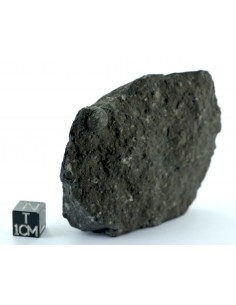
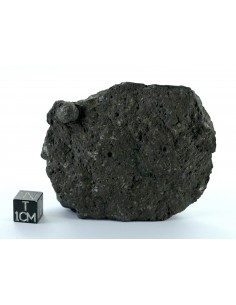
Authentic CV carbonaceous chondrites available to collectors may include complete individuals, slices, crusted fragments, and research-grade specimens.
Each specimen preserves material formed during the earliest moments of Solar System history and provides direct insight into primordial nebular processes.