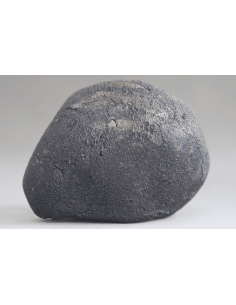
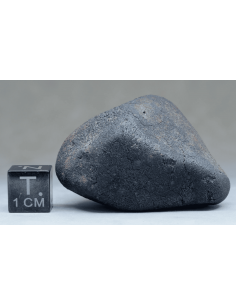
Murchison is one of the most scientifically important meteorites ever recovered and a cornerstone of modern cosmochemistry. This carbonaceous chondrite of type CM2 fell on September 28, 1969, near the town of Murchison in Victoria, Australia, following a spectacular fireball observed across a wide region.
The fall resulted in the recovery of more than 100 kilograms of material, providing researchers with an unprecedented quantity of fresh, well-preserved carbonaceous chondrite. This abundance, combined with the rapid recovery of specimens, made Murchison an ideal subject for laboratory study and established it as one of the most extensively analyzed meteorites in history.
Murchison is renowned for its exceptionally rich organic chemistry. It contains a wide variety of organic compounds, including amino acids, nucleobases, hydrocarbons, and other prebiotic molecules, many of which exhibit non-terrestrial isotopic signatures. These discoveries provided compelling evidence that complex organic matter was present in the early Solar System and could have been delivered to the early Earth by meteorites.
Mineralogically, Murchison is dominated by fine-grained matrix material rich in phyllosilicates, formed through extensive aqueous alteration on its parent asteroid. Chondrules, refractory inclusions, and sulfides are embedded within this hydrated matrix, recording a complex history of nebular formation followed by parent-body processing involving liquid water.
Because of its pristine nature and extraordinary scientific value, Murchison remains a reference specimen for the study of primitive Solar System materials, the origin of water, and the chemical pathways leading to prebiotic compounds.