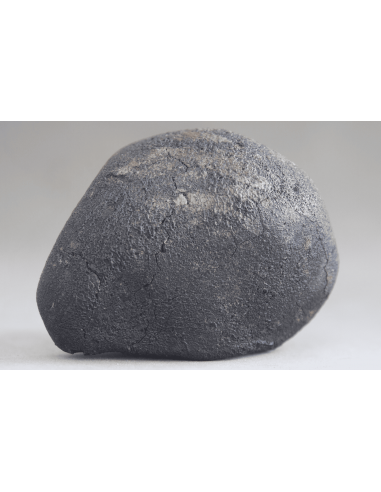
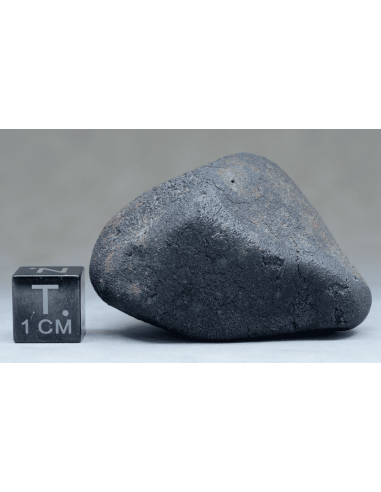
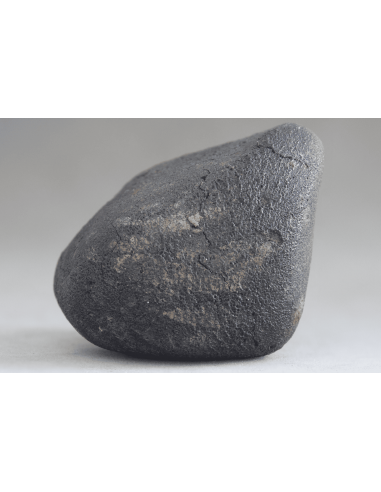
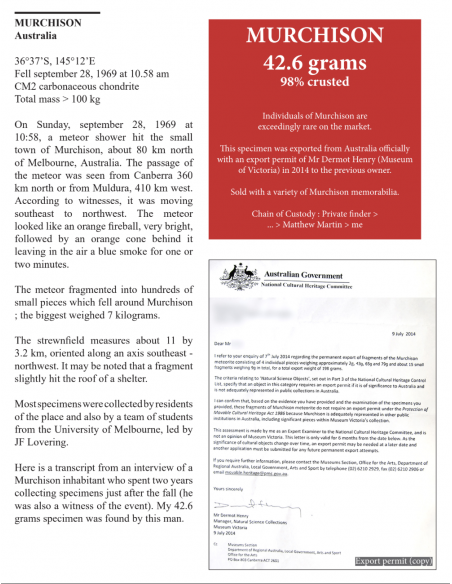
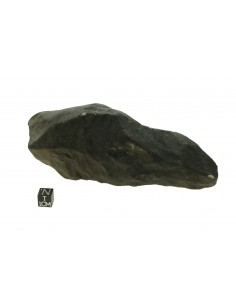
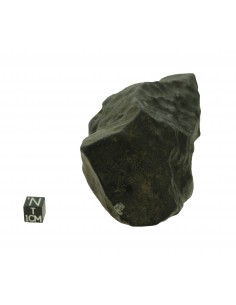
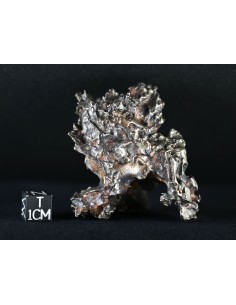
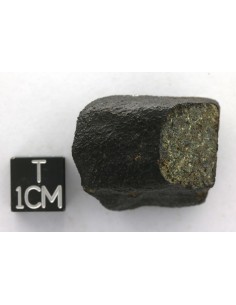
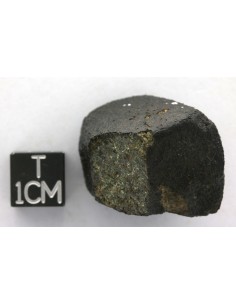
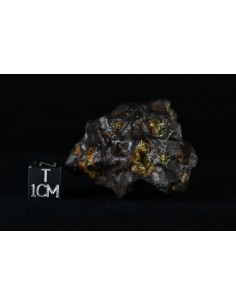
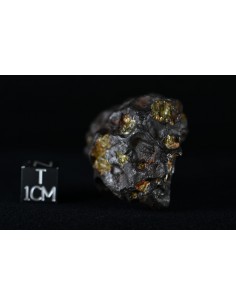
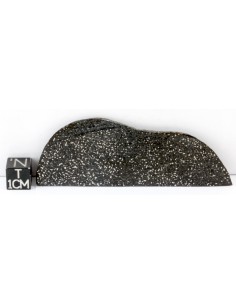
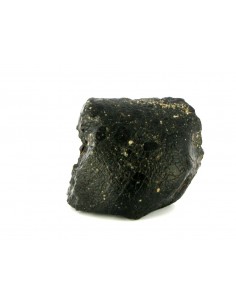
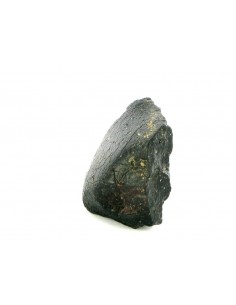
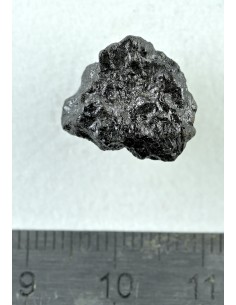
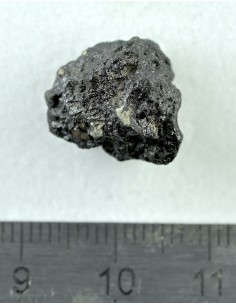
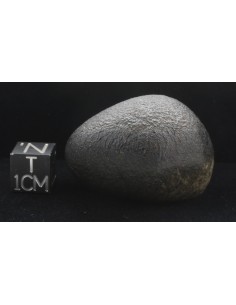
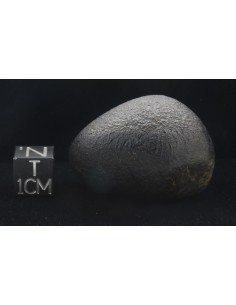
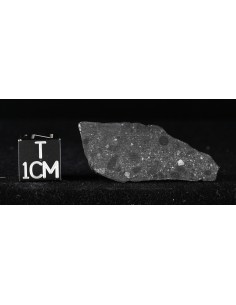
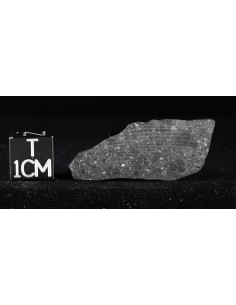
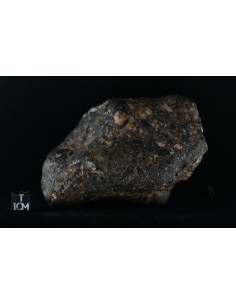
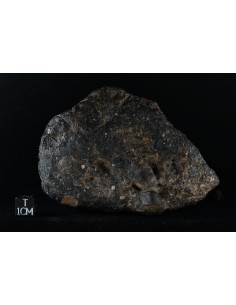
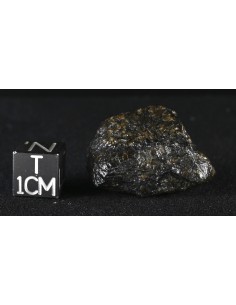
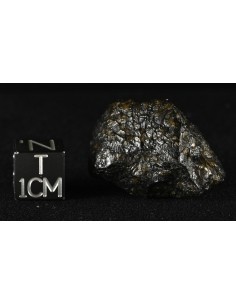
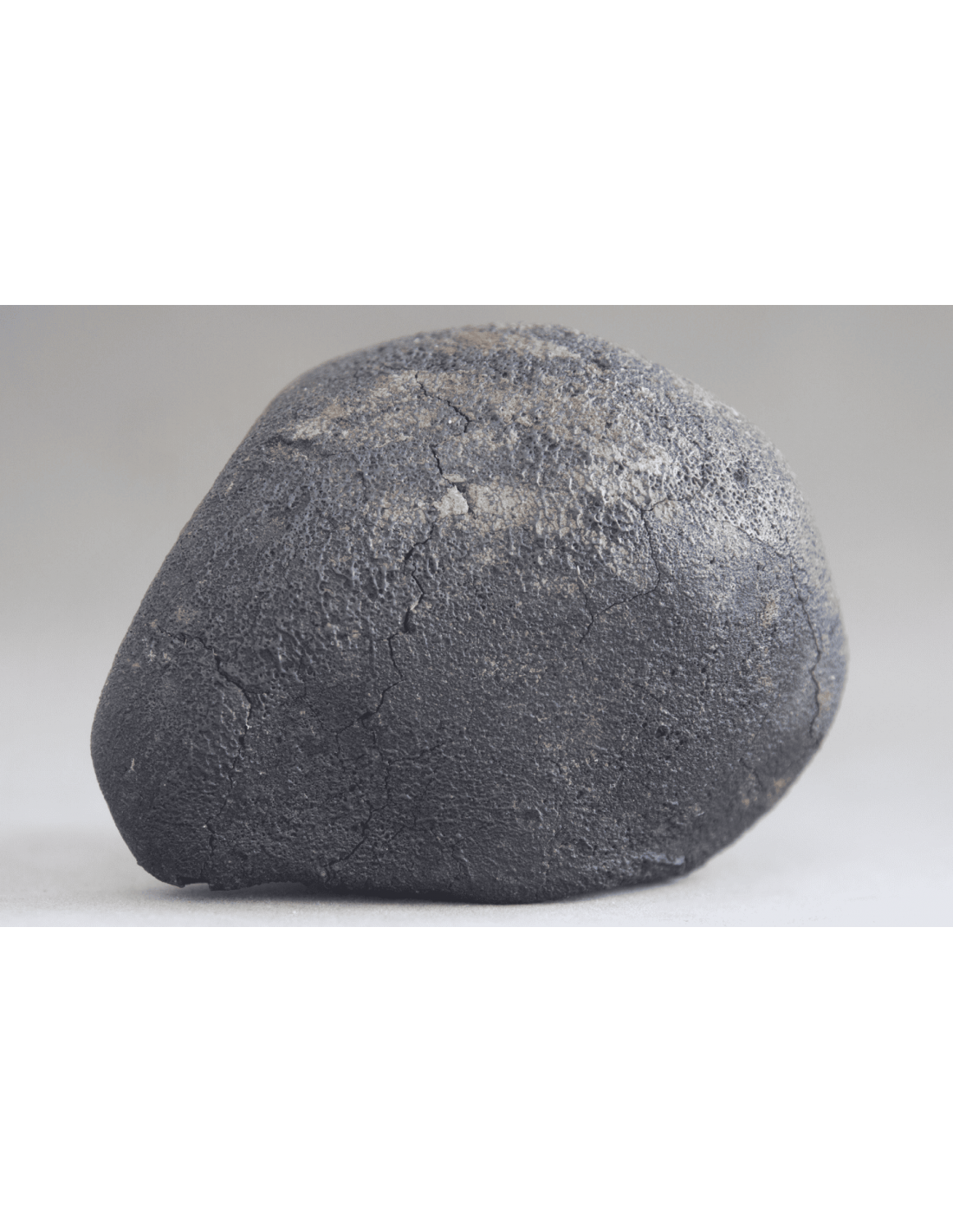
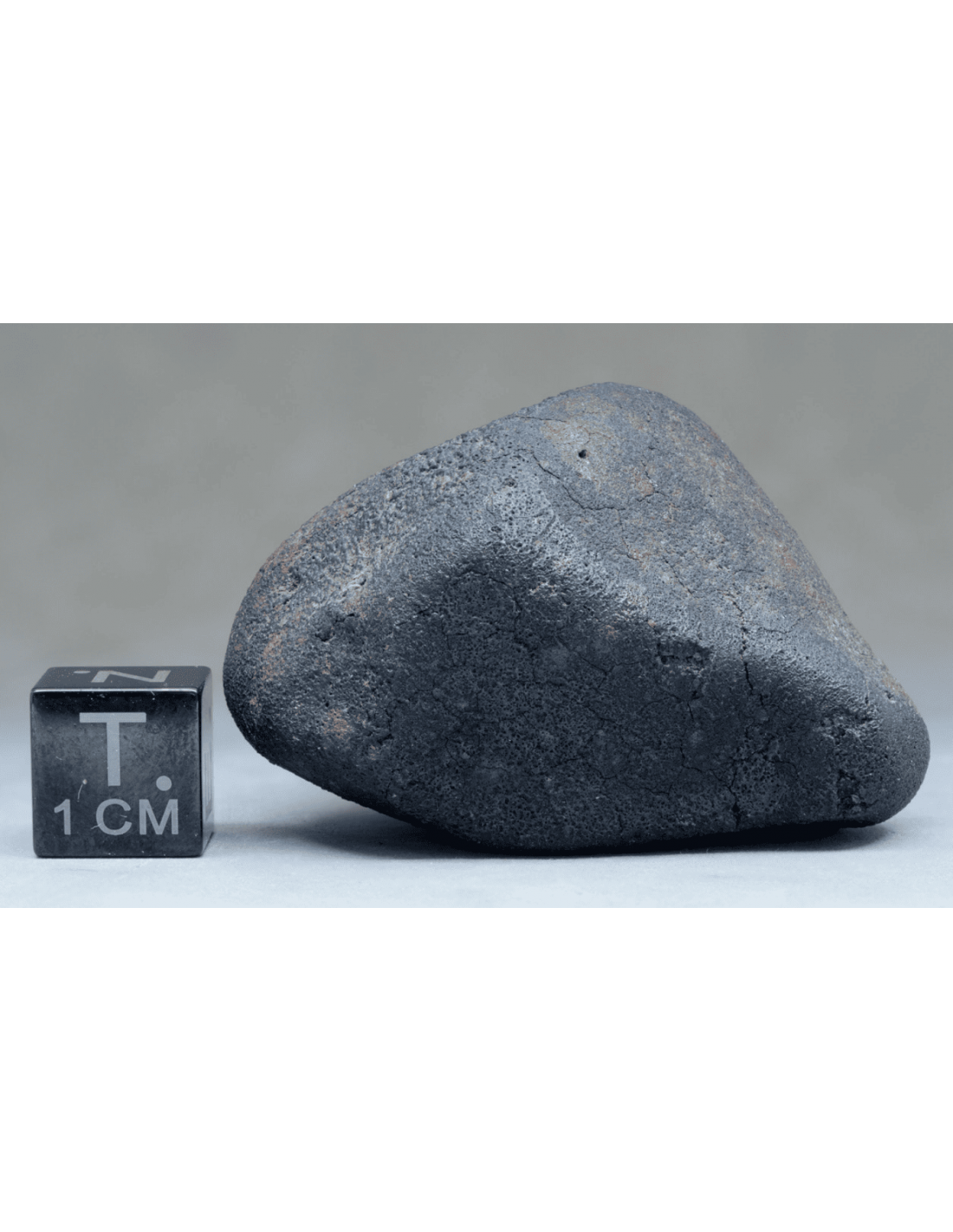
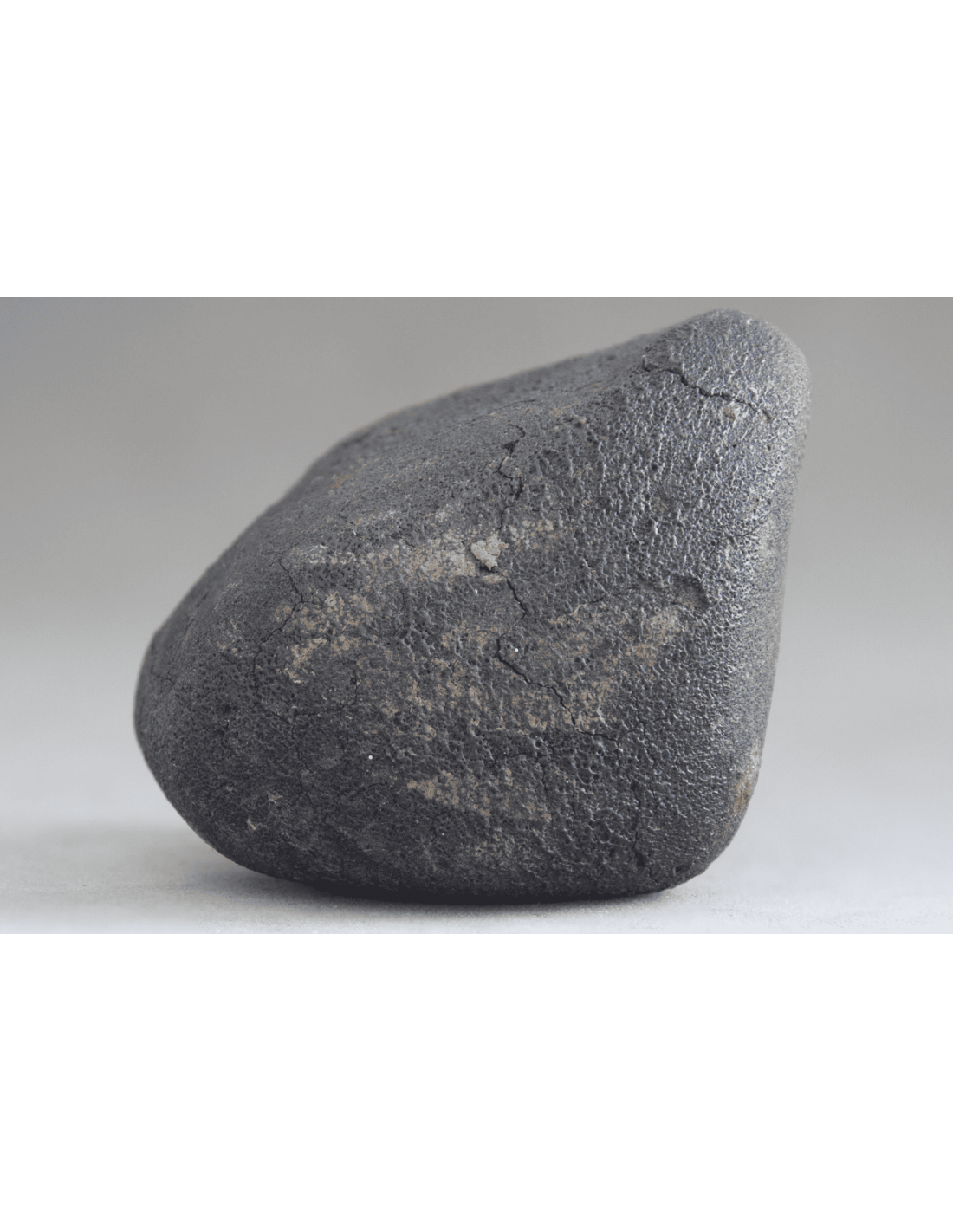
This 42.60 g complete specimen originates from the historic Murchison meteorite fall, which occurred on September 28, 1969, near the town of Murchison in Victoria, Australia. Murchison is one of the most intensively studied meteorites in history and stands as a cornerstone of modern cosmochemistry.
Classified as a CM2 carbonaceous chondrite, Murchison represents a primitive Solar System material that has undergone extensive aqueous alteration on its parent body. Its fine-grained matrix is rich in hydrated minerals and organic compounds, providing direct evidence for the presence of water and complex chemistry in the early Solar System.
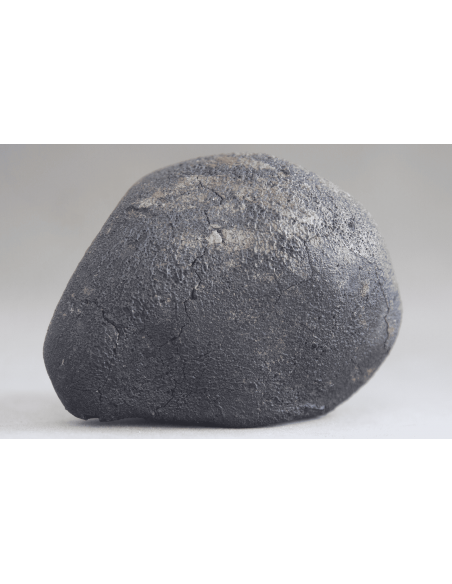
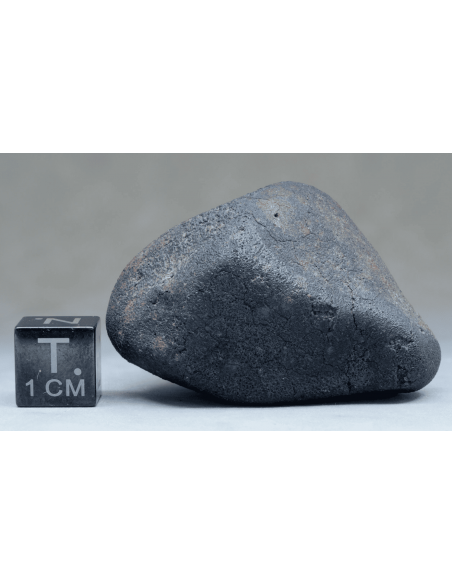
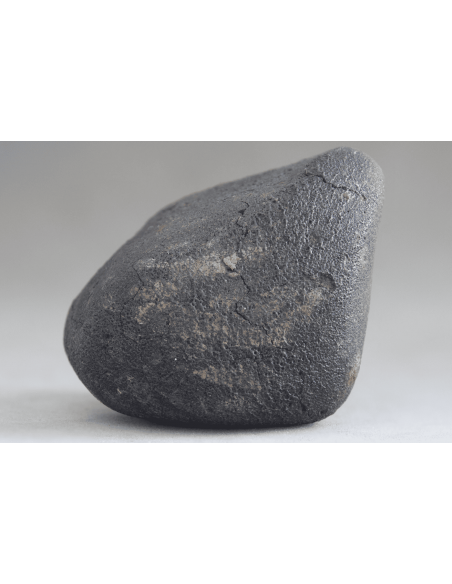
This specimen is particularly noteworthy for being a complete individual with its fusion crust fully preserved. The crust exhibits the characteristic dark, matte appearance typical of CM carbonaceous chondrites, reflecting their low iron content and volatile-rich composition. Such complete individuals are increasingly uncommon due to the inherent fragility of carbonaceous material.
The interior, visible through minor natural edges and surface relief, consists of a dark, fine-grained carbonaceous matrix enclosing chondrules and inclusions that record both nebular formation processes and later aqueous alteration.
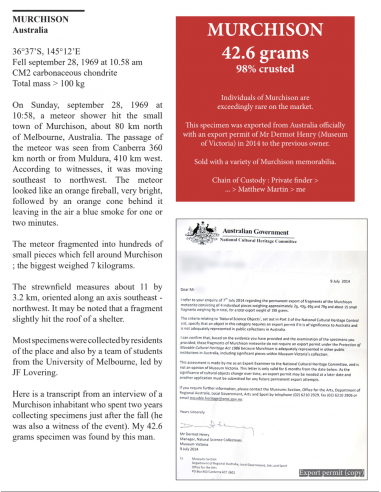
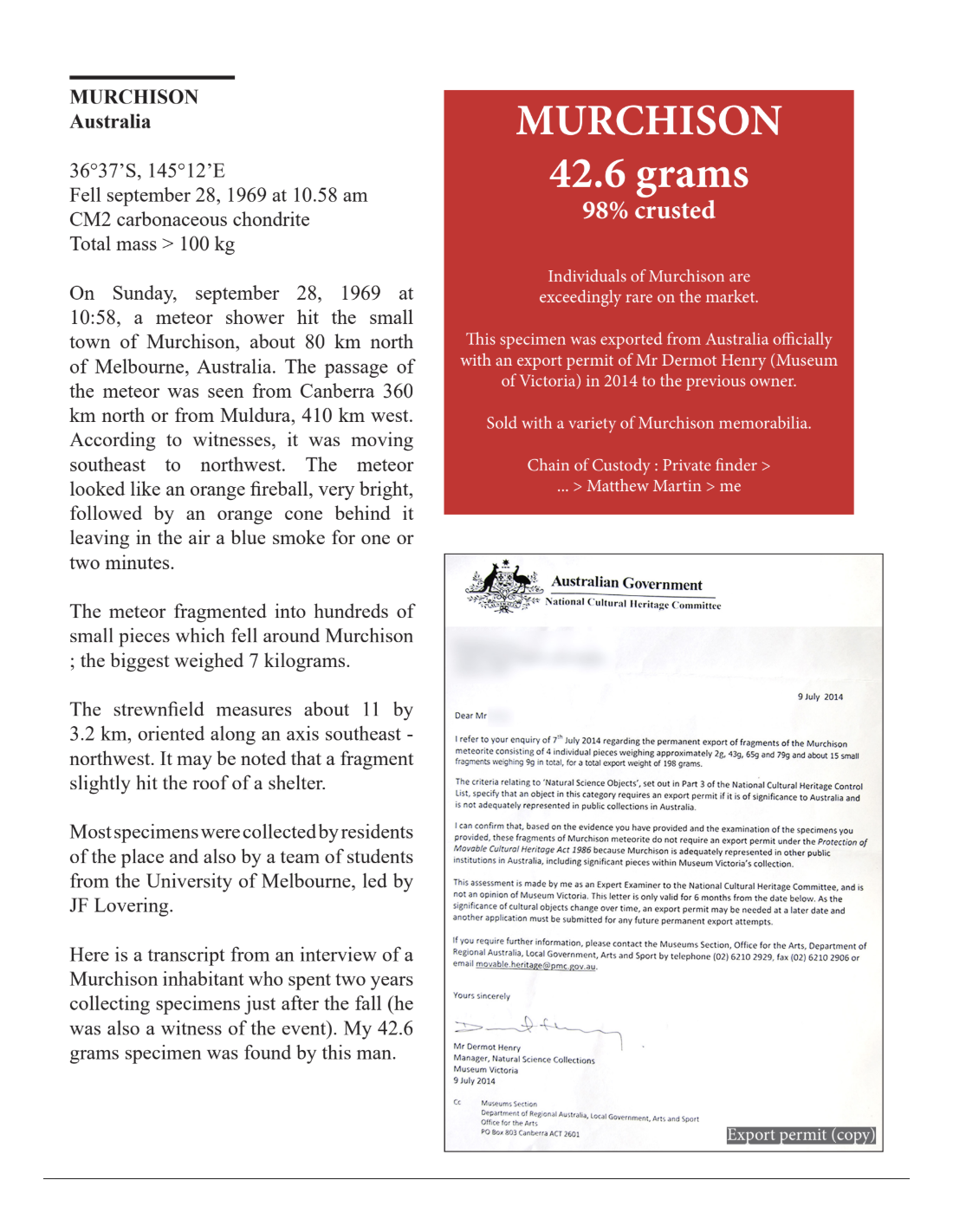
This specimen was officially exported from Australia in 2014 with an export permit issued through Mr. Dermot Henry (Museum of Victoria) to the previous owner. This documented export history is of particular importance, as Australian meteorites are subject to strict cultural and scientific heritage regulations.
Murchison material is widely held in institutional collections, and specimens with clear legal provenance and preserved fusion crust are especially sought after for both research and advanced private collections. The combination of complete form, documented export, and excellent preservation makes this specimen a high-quality reference example of a CM2 carbonaceous chondrite.