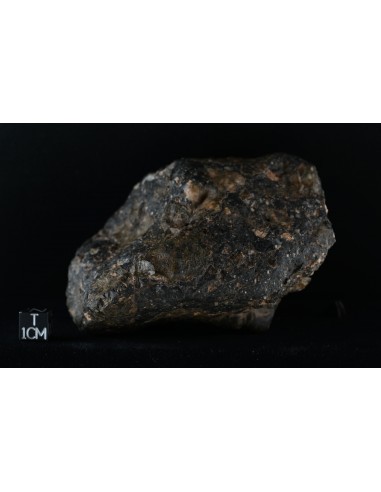
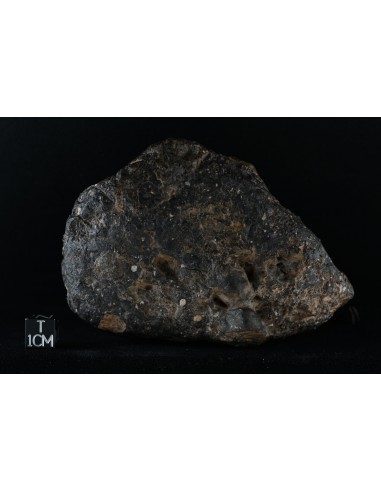
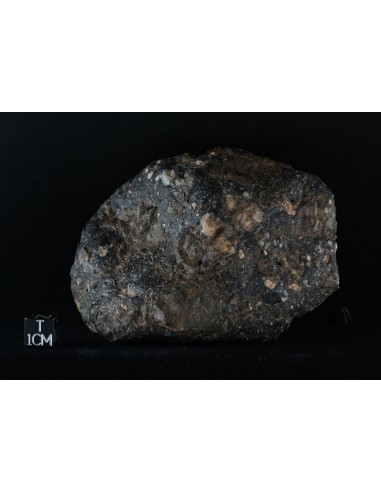
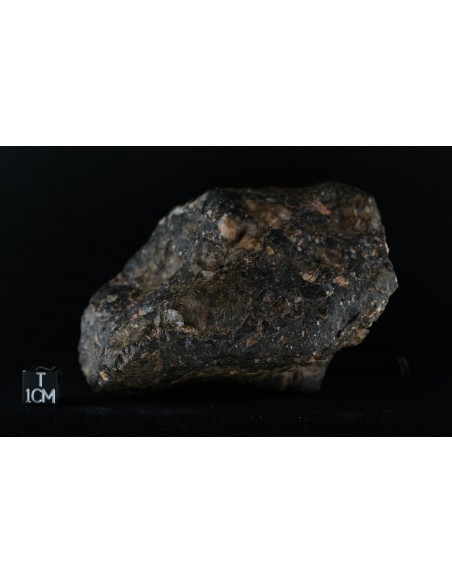
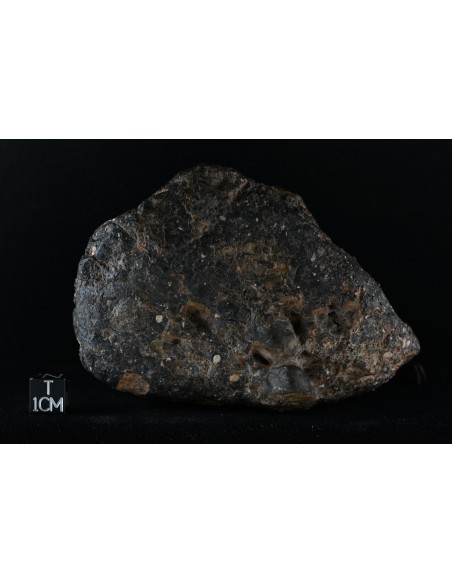
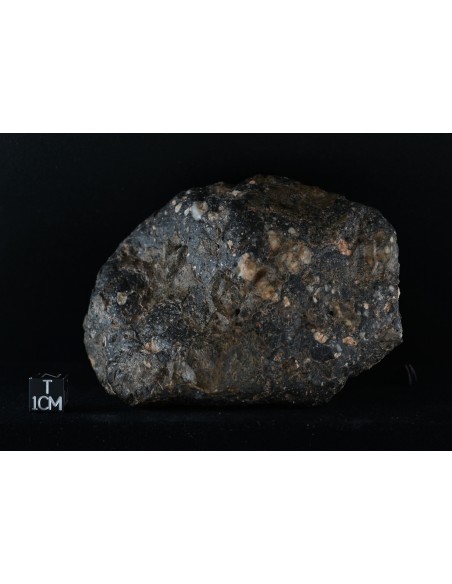
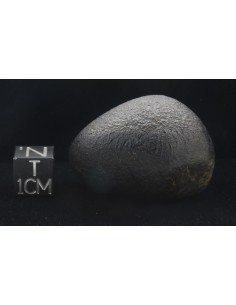
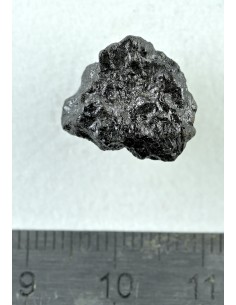
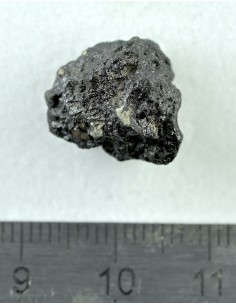
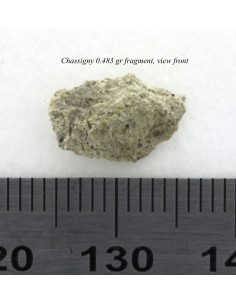
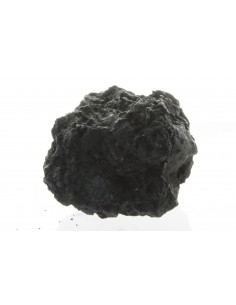
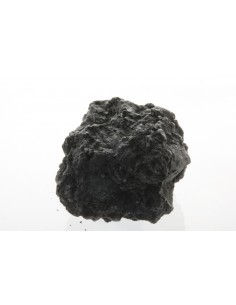
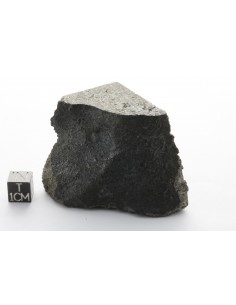
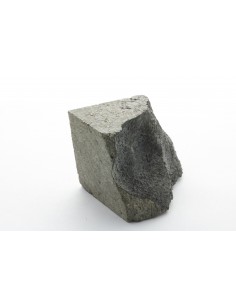
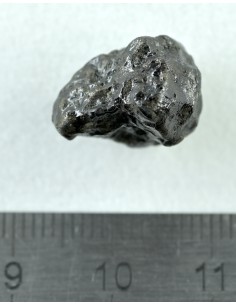
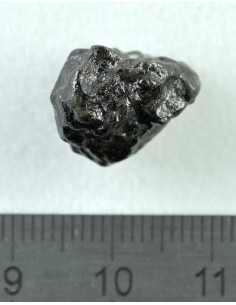
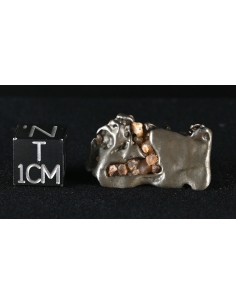
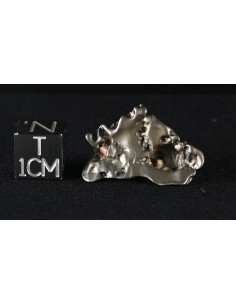
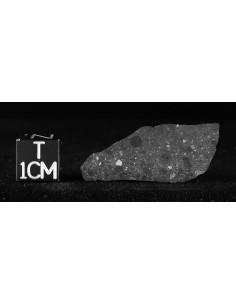
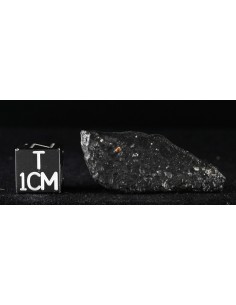
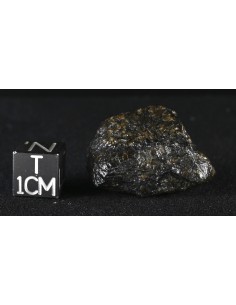
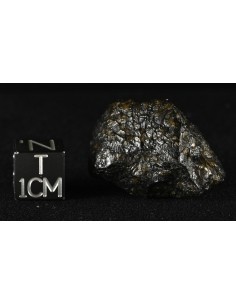
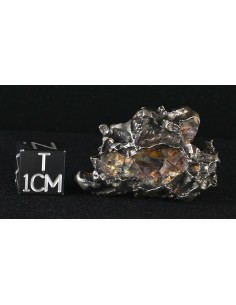
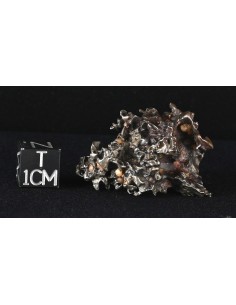
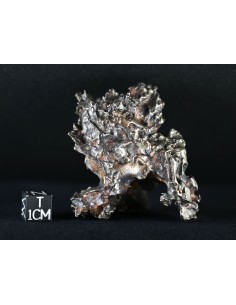
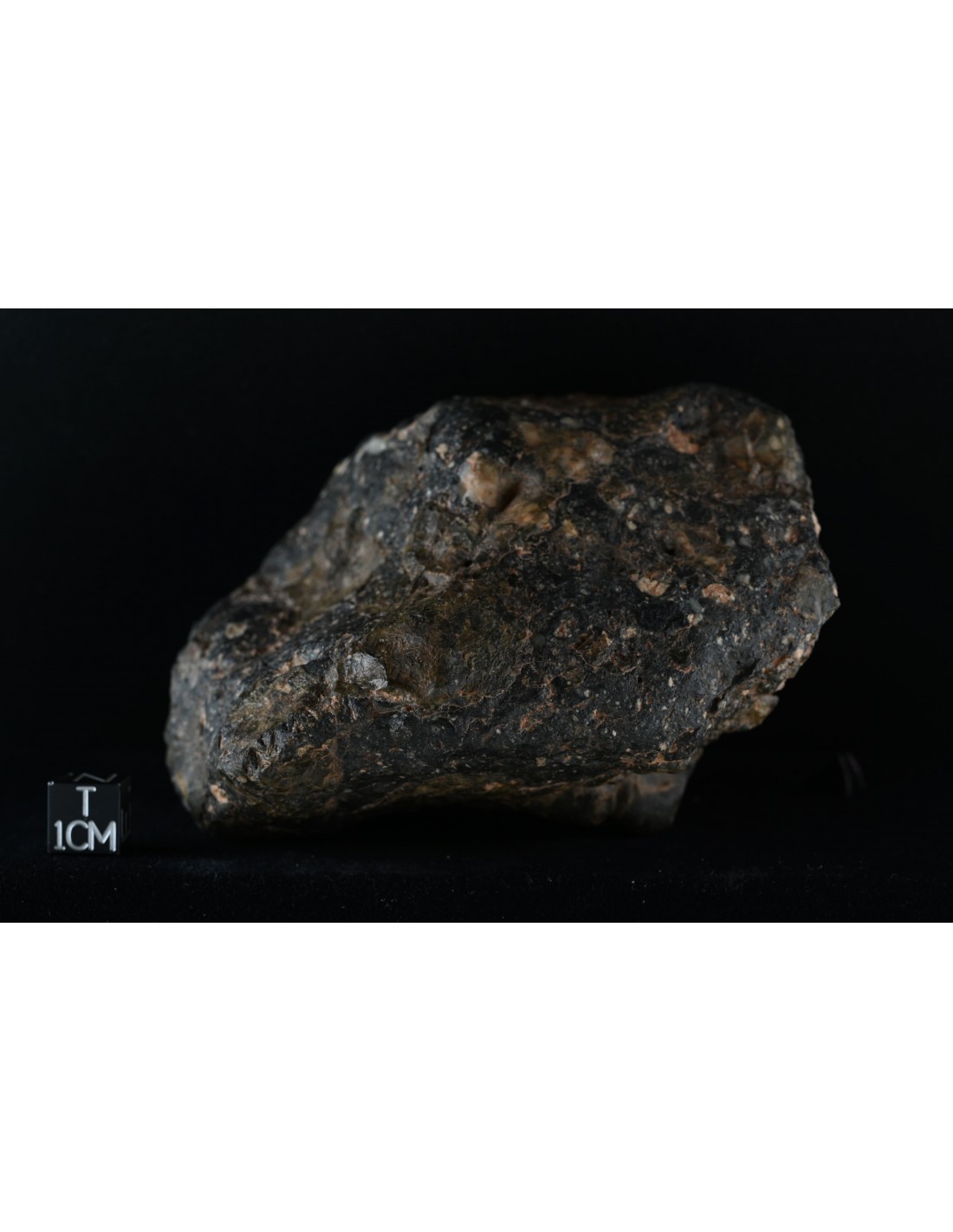
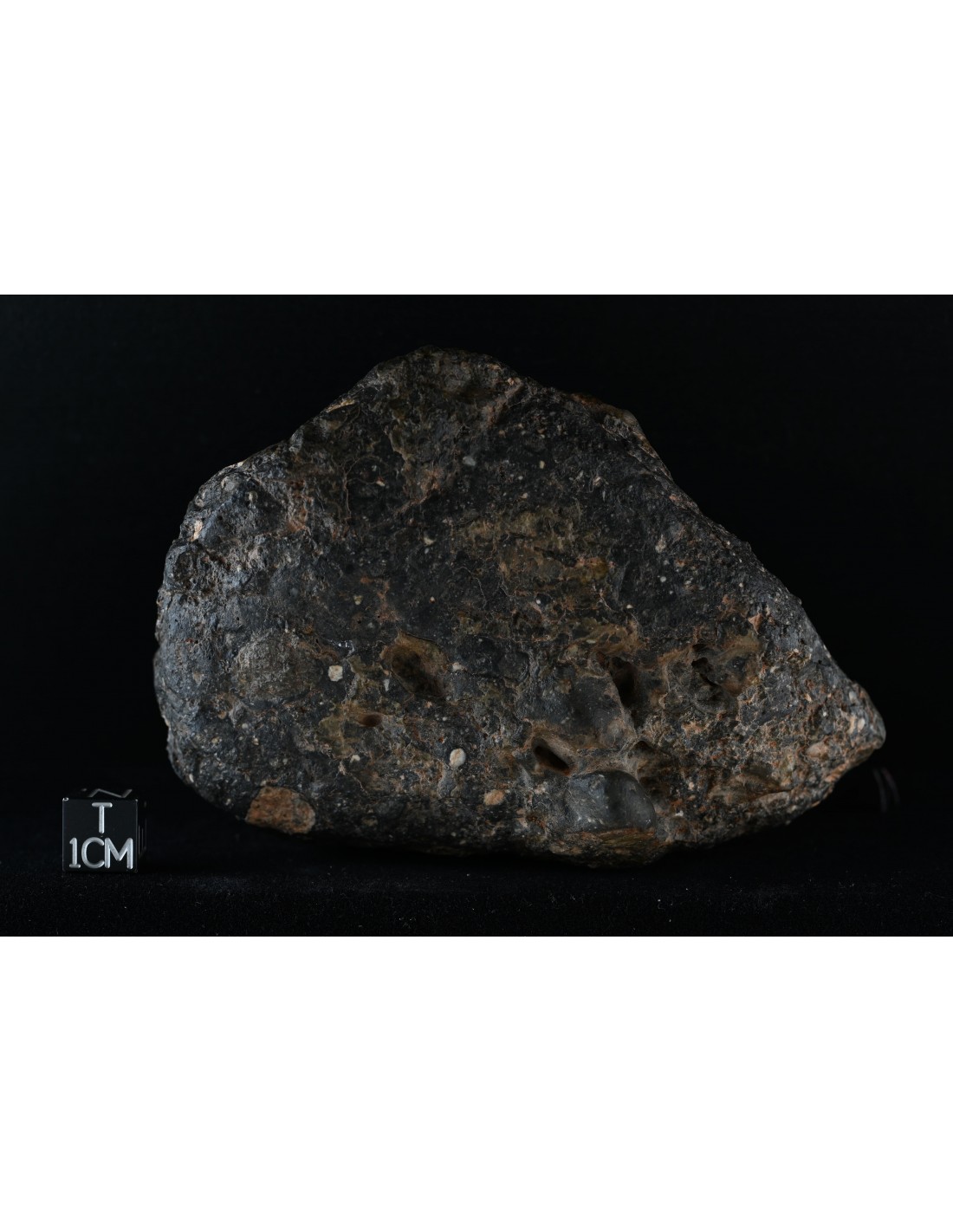
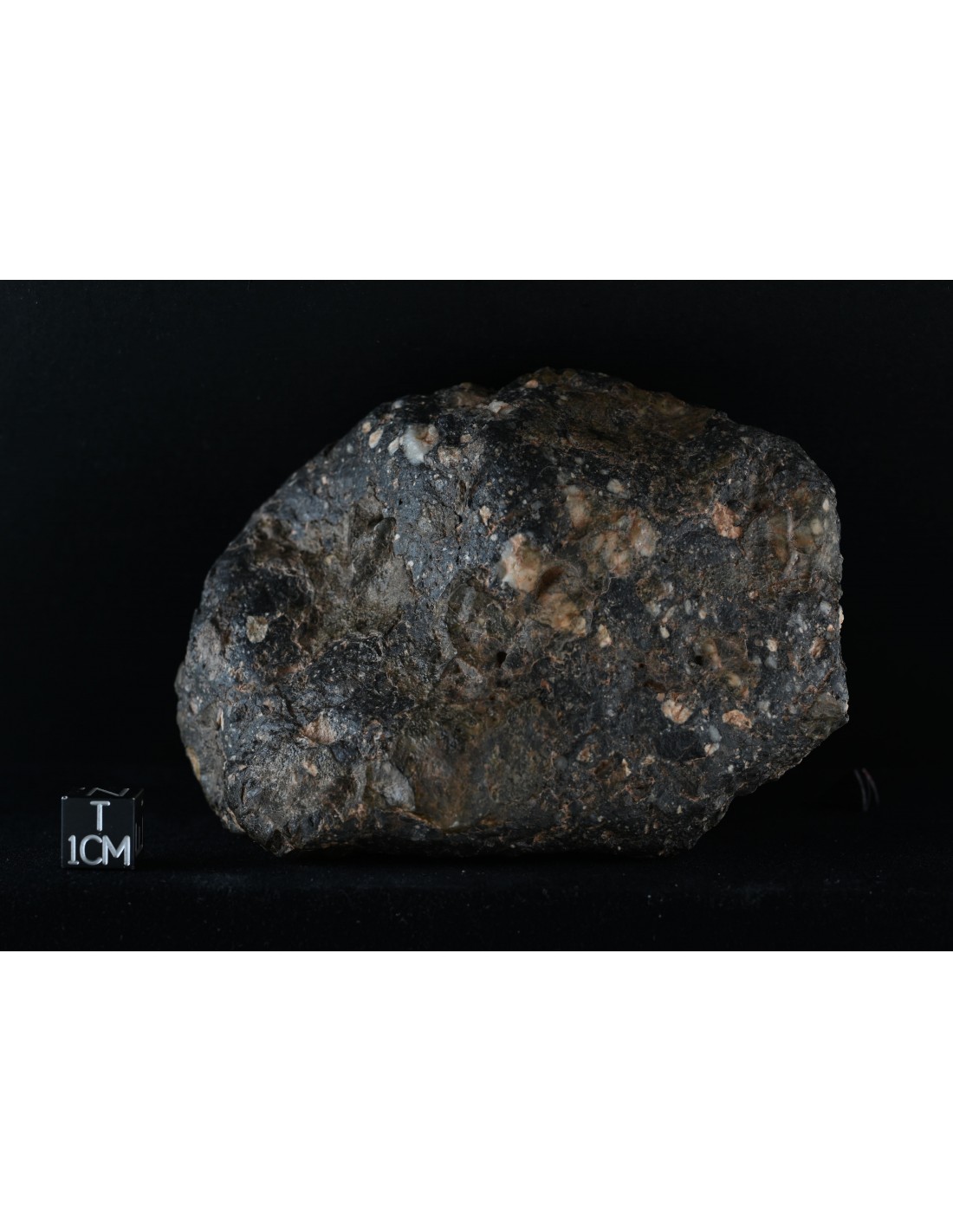
This exceptional 477 g complete lunar meteorite represents a rare and highly instructive example of an anorthositic lunar breccia, preserved as a natural individual with partially retained fusion crust.
What immediately distinguishes this specimen is the presence of uncommon green to chartreuse fusion crust patches, a feature observed only on a very small number of lunar meteorites worldwide. This distinctive coloration is directly related to the extremely low iron content of anorthositic lunar material. Unlike most meteorites — whose black fusion crust results from iron-rich compositions, often dominated by iron oxides — anorthositic lunar meteorites melt and vitrify differently during atmospheric entry, producing this rare pale green to olive-toned crust.
The meteorite is fully intact, with no cutting or polishing, preserving its original external morphology. The brecciated internal structure is clearly visible at the surface, revealing a complex aggregation of lithic fragments formed through repeated impact processes on the lunar crust. This texture provides direct insight into the violent impact history of the Moon’s ancient highlands.
The specimen has been analyzed and verified using X-ray fluorescence (XRF), confirming its lunar composition. At this stage, the meteorite has not yet been officially classified through submission to the Meteoritical Society. In accordance with standard scientific protocol, a 20 g sample is required for formal classification and publication in the Meteoritical Bulletin. This sampling and submission can be carried out upon request by the future owner, allowing the specimen to remain complete unless scientific declaration is desired.
Preserved in its natural state and displaying one of the most diagnostic features of anorthositic lunar meteorites, this specimen stands as a rare opportunity to acquire a visually striking, scientifically significant, and museum-grade lunar meteorite.