Shopping Cart
There are no more meteorites in your cart
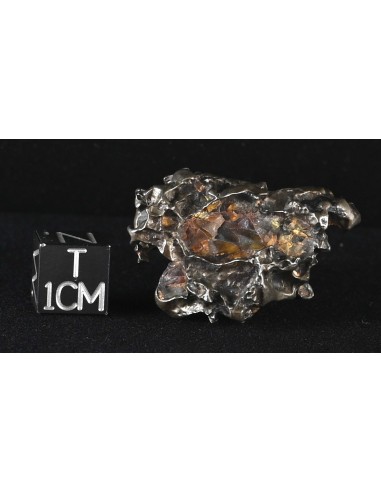
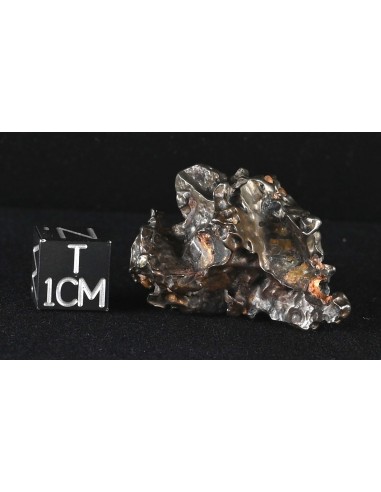
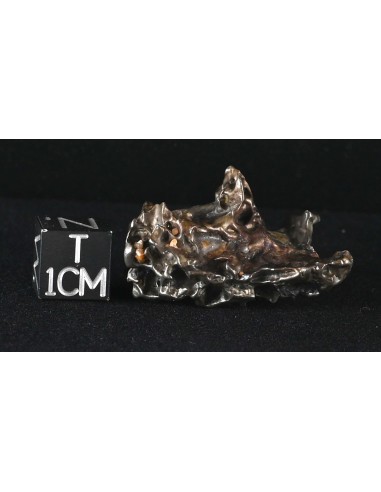
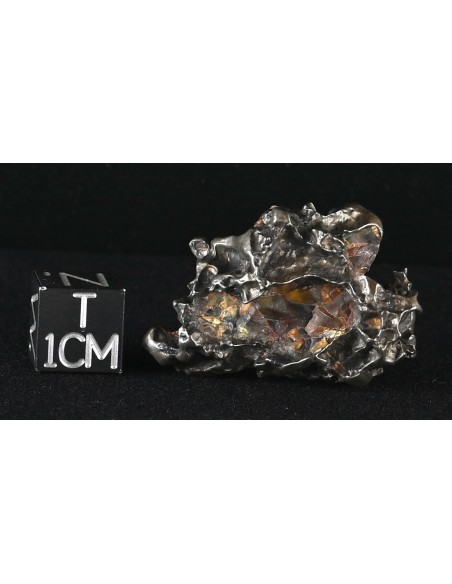
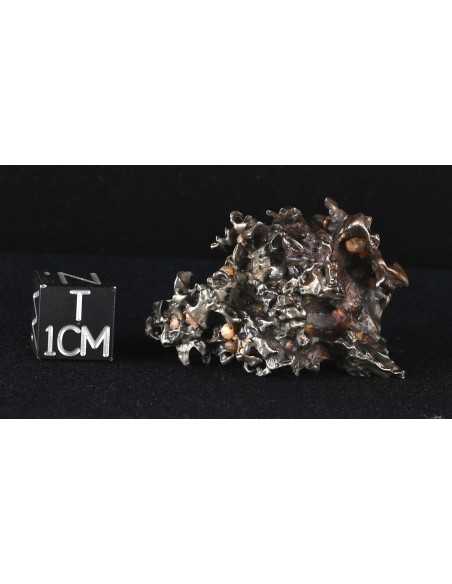
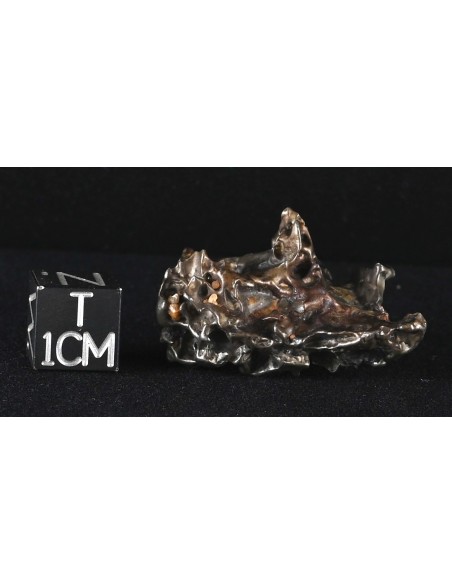
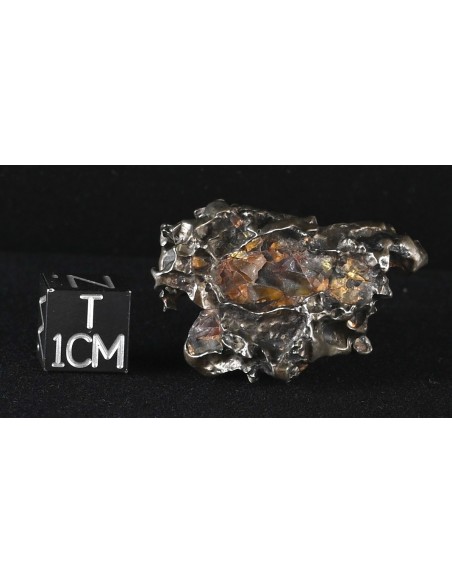
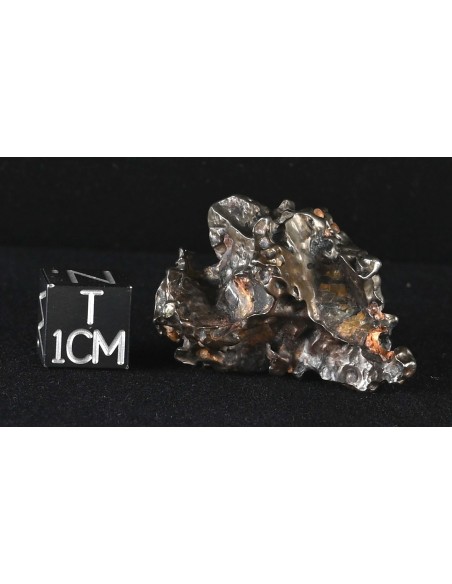
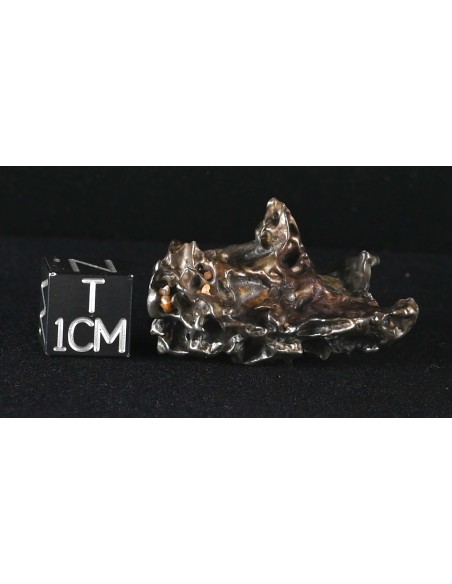
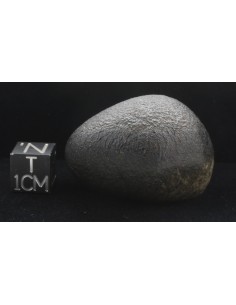
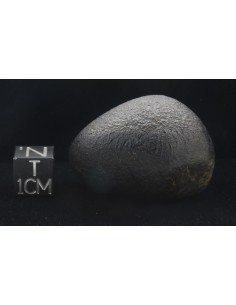
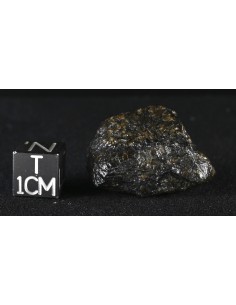
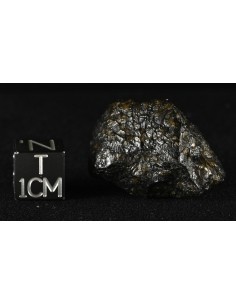
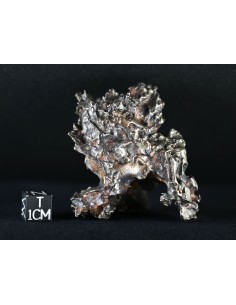
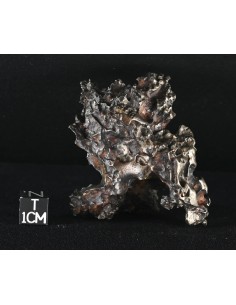
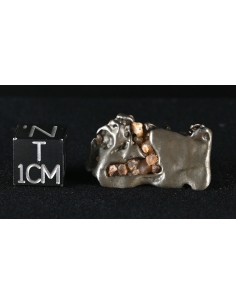
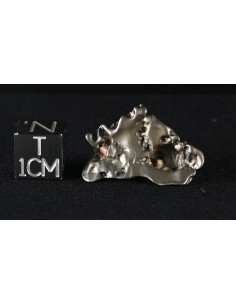
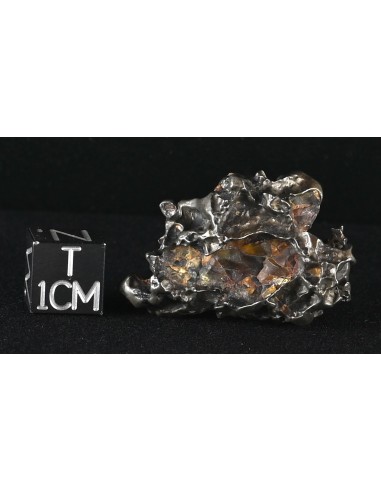
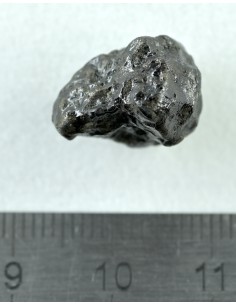
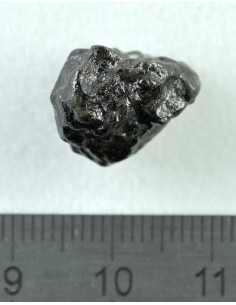
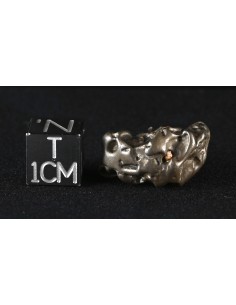
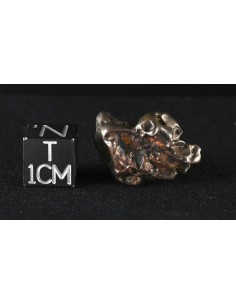
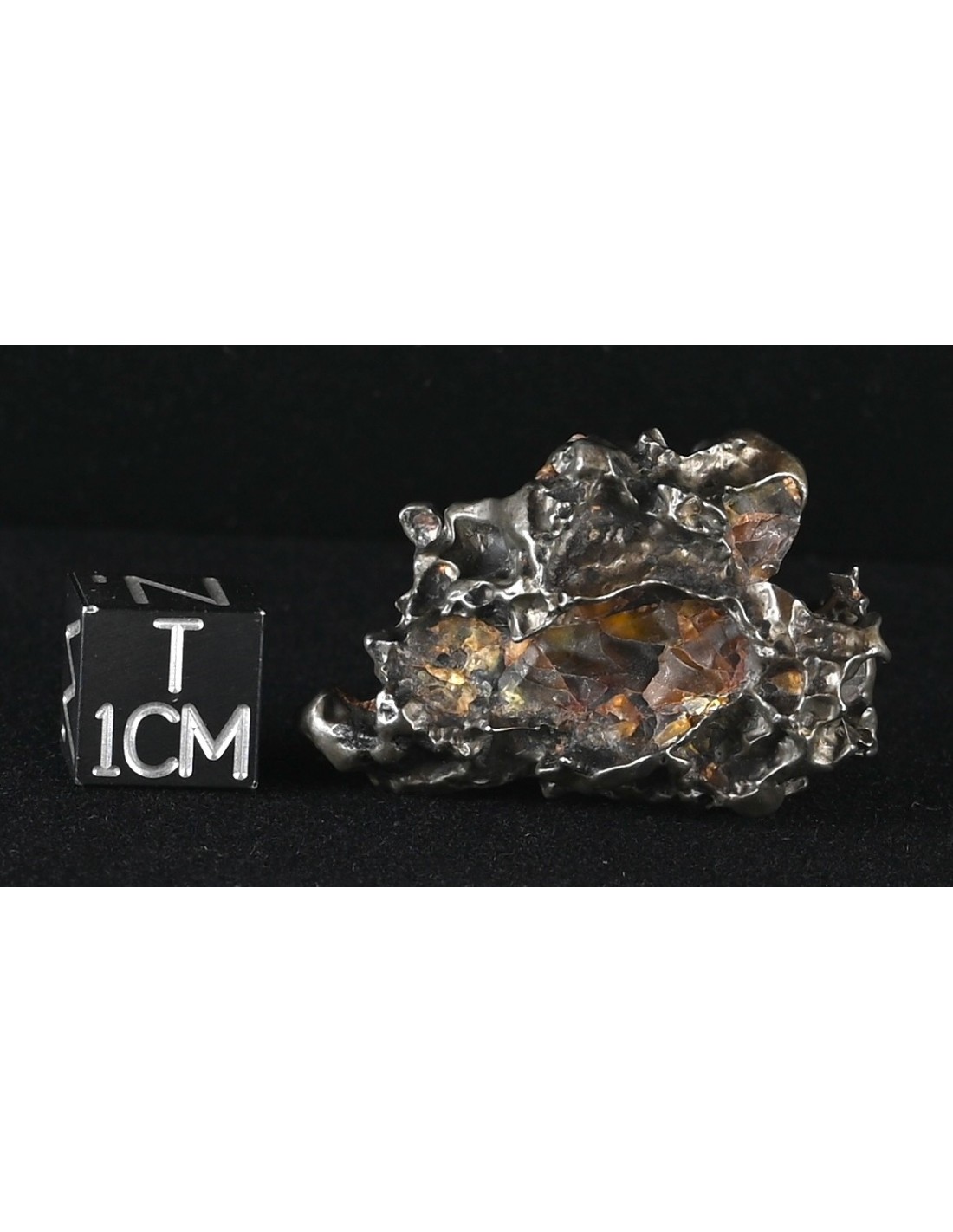
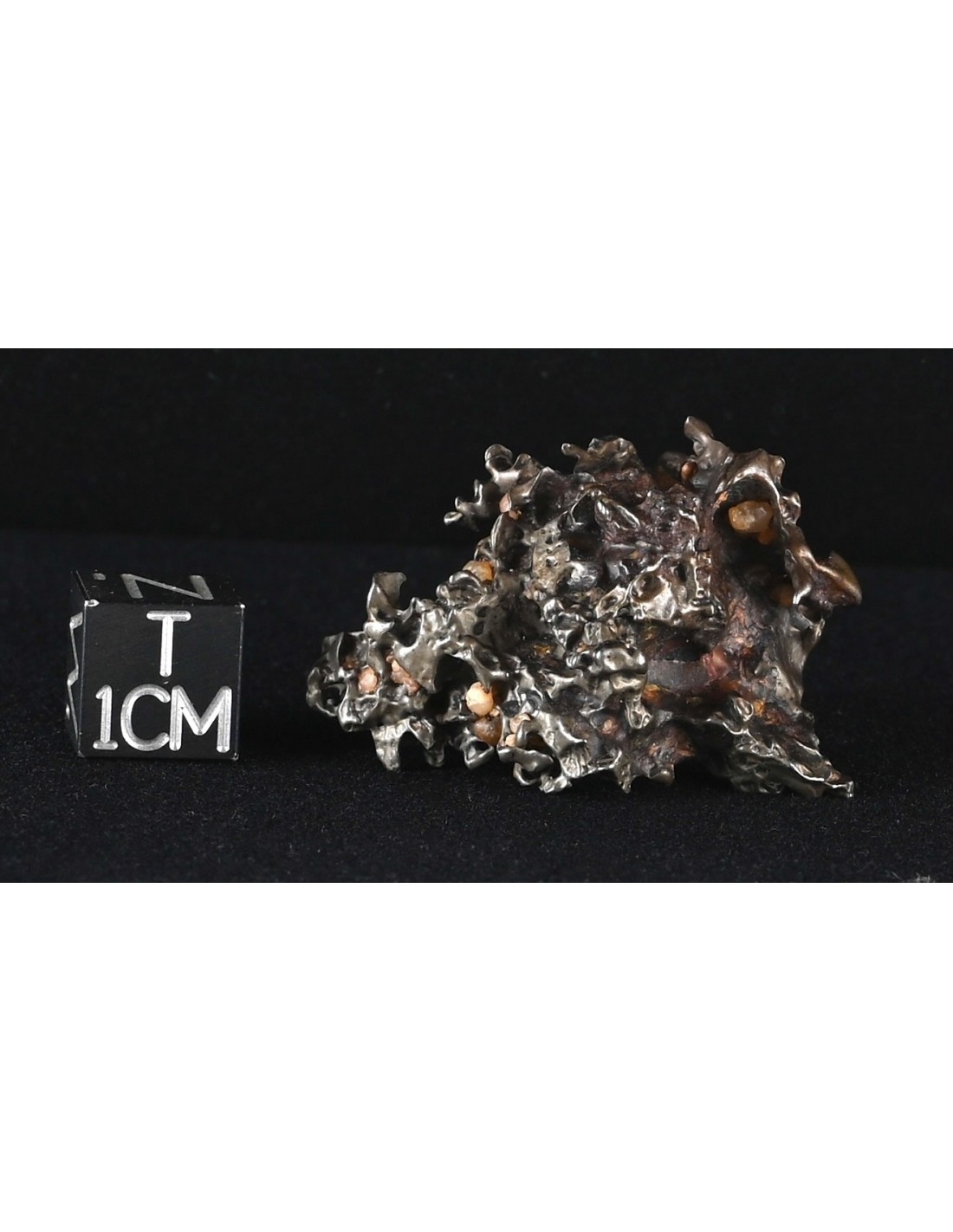
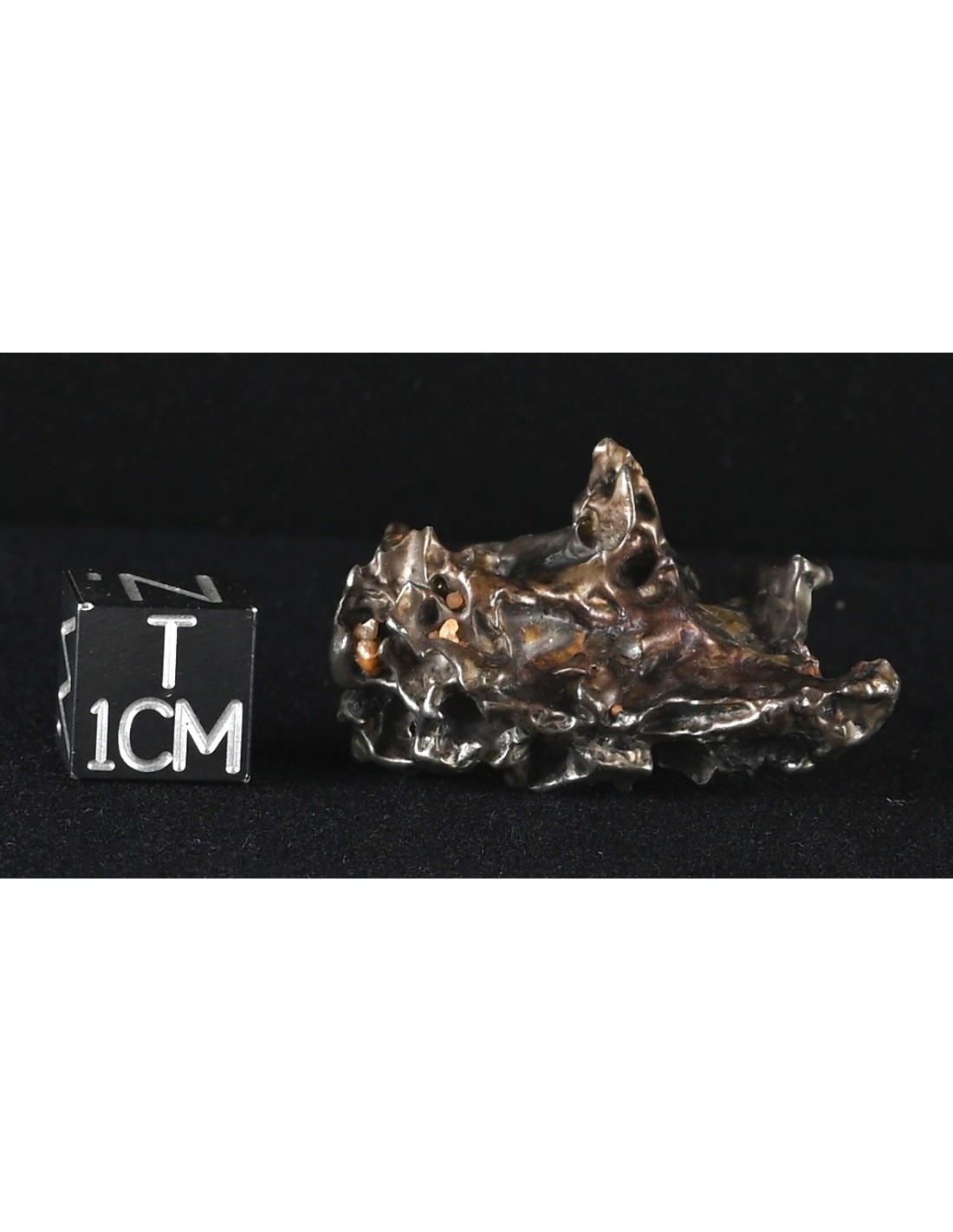
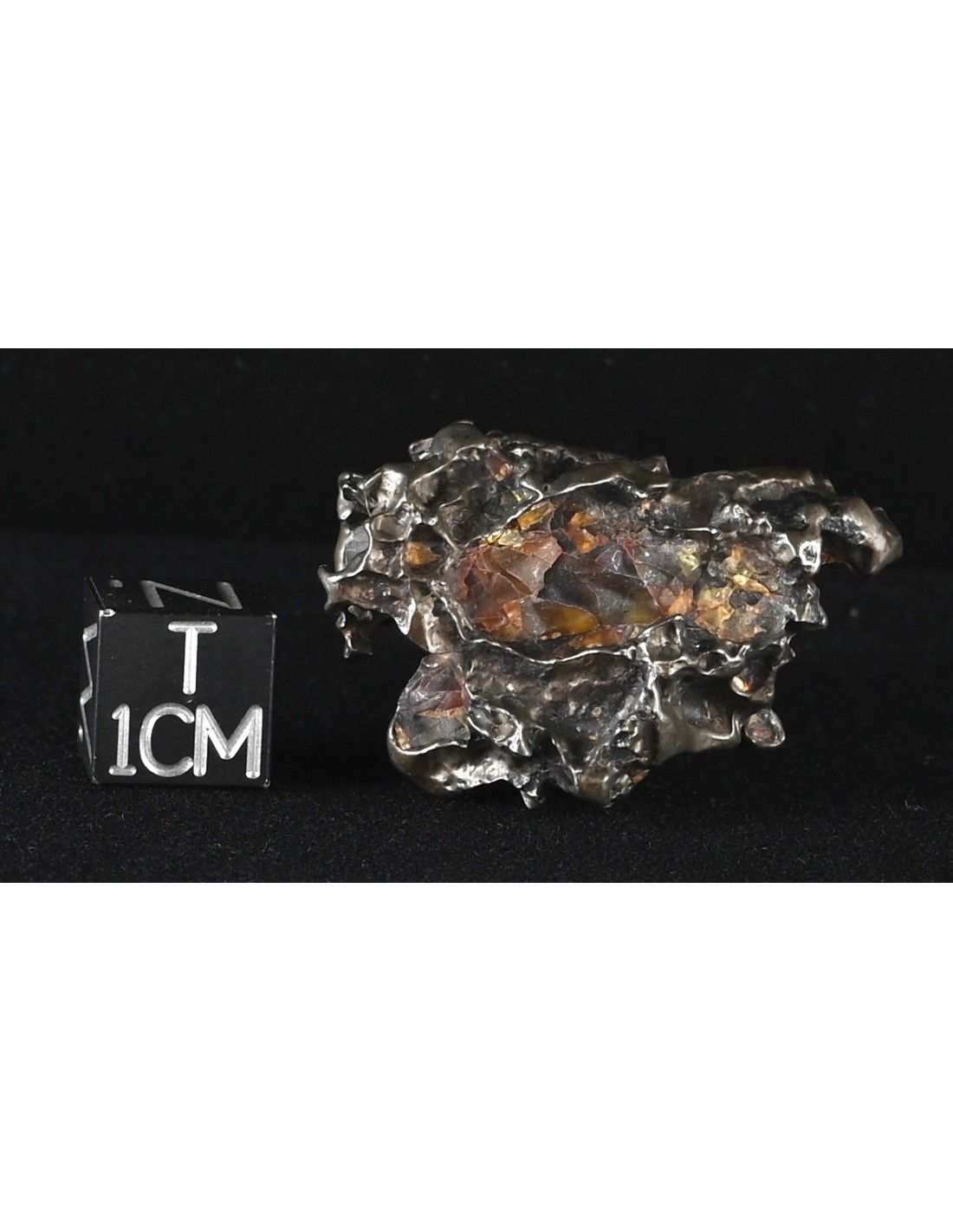
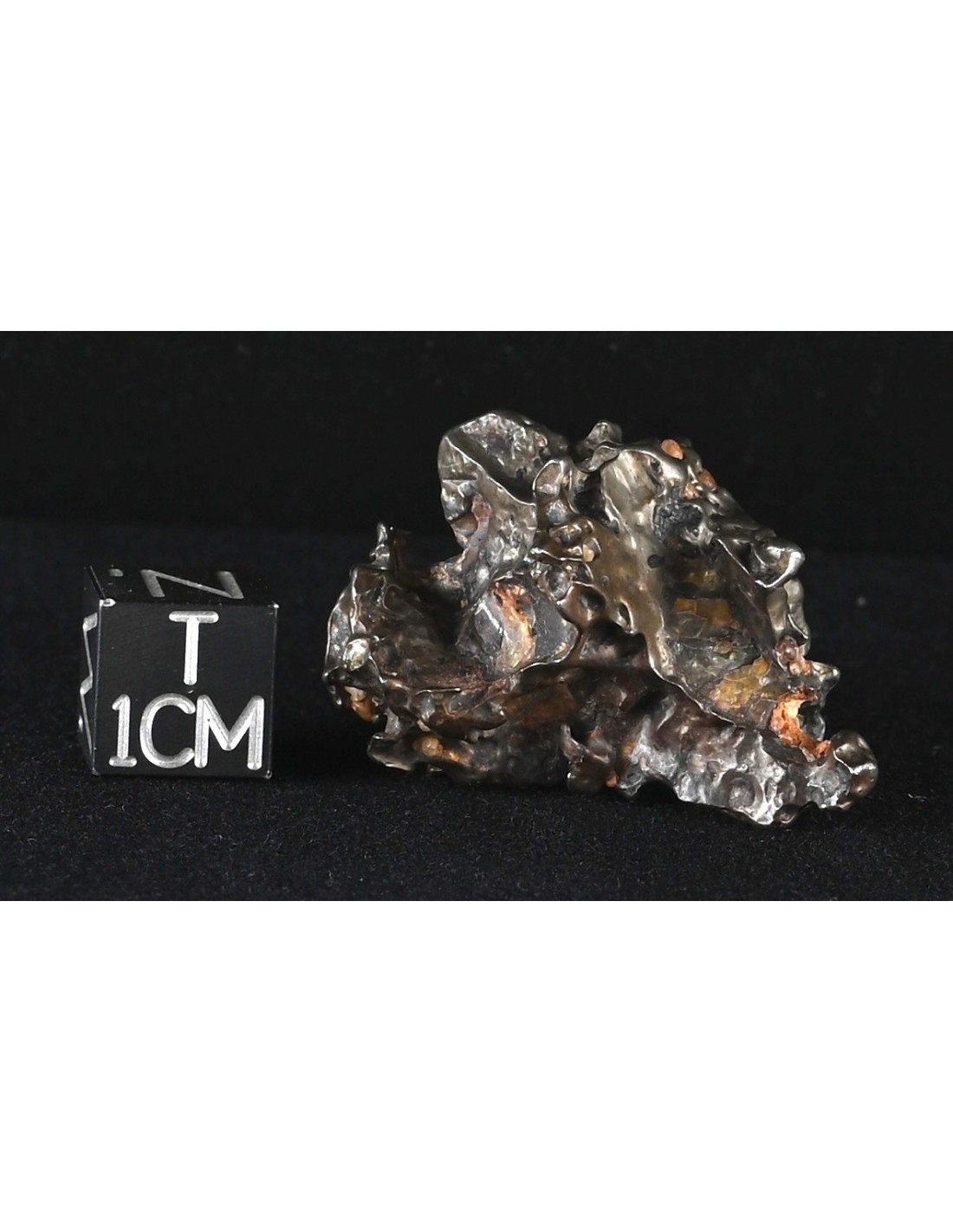
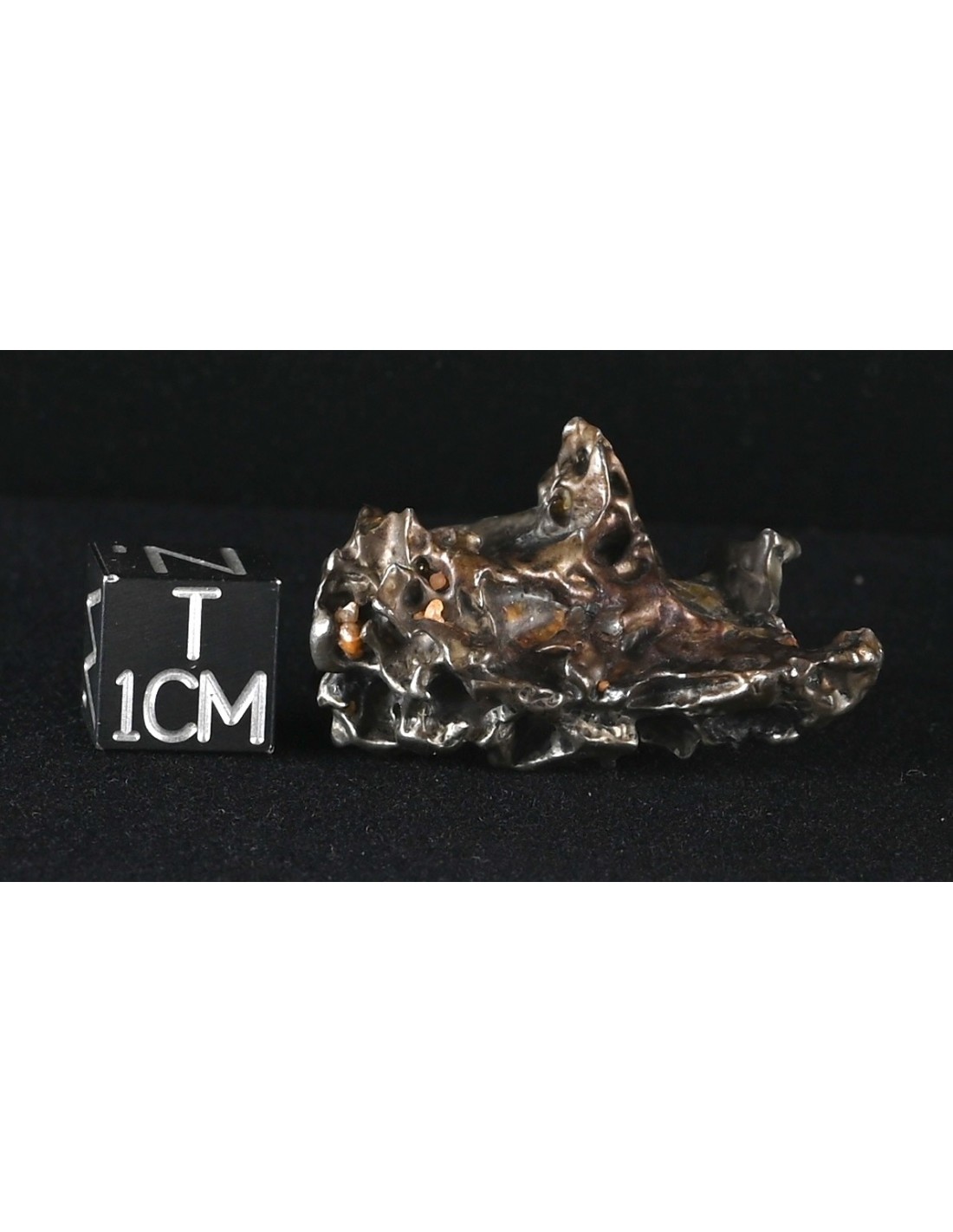
A compact 16.67 g golden pallasite individual featuring open cavities where olivine crystals once resided, revealing a striking metallic structure shaped by natural weathering.
This 16.67 g golden pallasite stands out for its dense, compact form combined with a highly expressive surface marked by open cavities and metallic relief.
Over time, the original olivine crystals have been partially removed by natural processes, leaving behind irregular voids that expose the iron-nickel matrix. These cavities offer a direct view into the internal architecture of the pallasite, transforming the specimen into a naturally sculpted object.
The surface is defined by a network of sharp metallic ridges and protrusions, giving the piece a dynamic texture and a strong visual identity. These features highlight the resilience of the metallic phase compared to the more fragile silicates, creating a contrast between absence and structure.
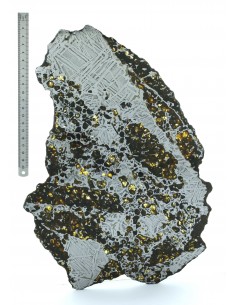
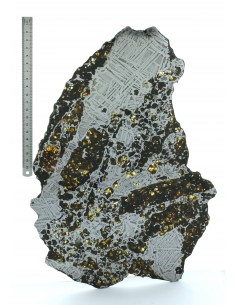
Within some protected recesses, residual olivine fragments remain visible, showing warm golden to slightly translucent tones. These preserved areas provide a subtle chromatic contrast against the darker metallic background.
Despite its modest size, this specimen has a notable presence, with a morphology that invites close observation from multiple angles. It is both a geological fragment and a natural sculpture, shaped by time and environment.
Pallasites originate from the boundary between the metallic core and silicate mantle of differentiated asteroids.
This specimen illustrates:
Such individuals provide insight into both planetary formation and terrestrial alteration processes.