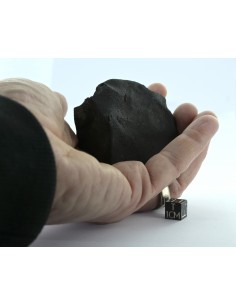
CM Carbonaceous Chondrites
CM carbonaceous chondrites are among the most scientifically important meteorites known. Rich in hydrated minerals, organic compounds, and primitive Solar System material, they provide direct insight into the earliest stages of planetary formation and the role of water within primitive asteroids.
The designation “CM” refers to the Mighei-type carbonaceous chondrites, named after the meteorite fall of Mighei in Ukraine. These meteorites are characterized by extensive aqueous alteration, meaning their parent asteroids once contained liquid water circulating through the rock billions of years ago.
CM chondrites are especially important in cosmochemistry because they preserve extraterrestrial organic molecules, hydrated silicates, fine-grained primitive matrices, and isotopic signatures dating back to the formation of the Solar System approximately 4.56 billion years ago.
Primitive Water-Rich Meteorites
CM chondrites formed within primitive carbonaceous asteroids during the earliest stages of Solar System history.
Unlike differentiated meteorites that experienced melting and internal restructuring, CM meteorites remained relatively primitive and preserve abundant evidence of aqueous processes occurring inside their parent bodies.
Their matrices contain hydrated minerals such as phyllosilicates formed through prolonged interaction with liquid water. This makes CM meteorites essential for understanding the history of water in the early Solar System.
Organic Compounds and Prebiotic Chemistry
CM carbonaceous chondrites are famous for containing a wide variety of extraterrestrial organic compounds.
Studies of CM meteorites such as Murchison revealed amino acids, hydrocarbons, and other complex carbon-bearing molecules formed naturally in space.
These discoveries significantly influenced theories suggesting that primitive asteroids and meteorites may have contributed organic material relevant to prebiotic chemistry on the early Earth.
Mineralogy and Texture
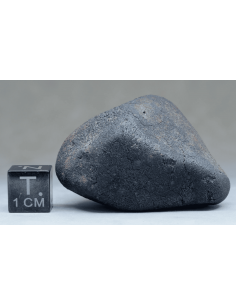
CM chondrites typically display dark fine-grained matrices with scattered chondrules and metallic grains.
Because aqueous alteration partially transformed the original minerals, many CM meteorites exhibit subdued chondrule boundaries compared to less altered carbonaceous groups.
Common features include:
- Hydrated silicates
- Fine-grained dark matrix
- Primitive chondrules
- Magnetite
- Sulfides
- Organic-rich material
- Occasional CAIs
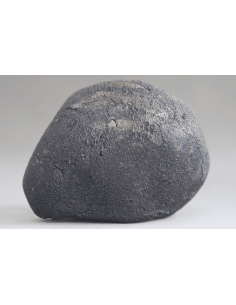
Fresh CM falls often display fragile black fusion crusts and relatively soft internal textures compared to ordinary chondrites.
The Murchison Meteorite
The most famous CM carbonaceous chondrite is undoubtedly the Murchison meteorite, which fell in Australia in 1969.
Murchison became one of the most extensively studied meteorites in history due to its exceptional abundance of organic compounds and primitive materials.
Its study revolutionized understanding of extraterrestrial organic chemistry and established CM meteorites as key objects in astrobiology and cosmochemistry.
Scientific Importance
CM carbonaceous chondrites are fundamental to several areas of planetary science:
- Origin of water in the inner Solar System
- Extraterrestrial organic chemistry
- Primitive asteroid evolution
- Aqueous alteration processes
- Early Solar System chronology
- Preservation of primitive nebular material
Their isotopic compositions and mineralogy provide essential constraints on the formation conditions of primitive asteroids and the evolution of volatile-rich bodies.
Appearance and Collector Interest
CM chondrites are highly sought after by advanced collectors because of their scientific importance and rarity in fresh condition.
Collectors particularly value specimens displaying:
- Fresh black fusion crust
- Minimal terrestrial weathering
- Visible chondrules
- Documented falls
- Research significance
- Historical provenance
Well-preserved CM meteorites are often fragile and sensitive to humidity, making stable specimens increasingly difficult to obtain over time.
CM Chondrites and Modern Space Missions
Primitive hydrated asteroids similar to CM parent bodies are central targets for modern asteroid exploration missions.
Sample-return missions such as OSIRIS-REx and Hayabusa2 focus on primitive carbonaceous asteroids because these bodies preserve information about water, organics, and the earliest Solar System materials.
Authentic CM Carbonaceous Chondrites
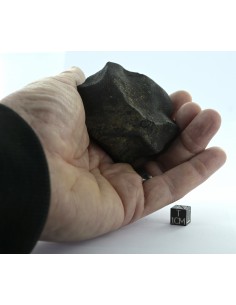
Authentic CM carbonaceous chondrites available to collectors may include complete individuals, crusted fragments, slices, and research specimens.
Each specimen preserves material formed during the earliest history of the Solar System and offers direct scientific connection to primitive asteroid processes and extraterrestrial organic chemistry.