Shopping Cart
There are no more meteorites in your cart
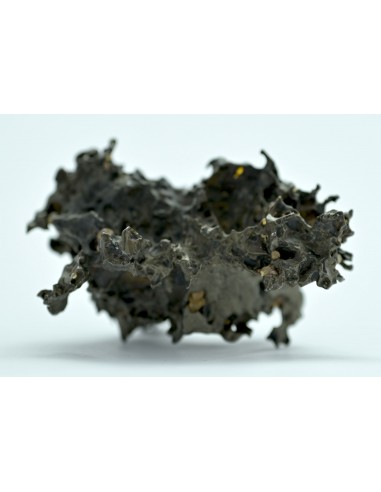
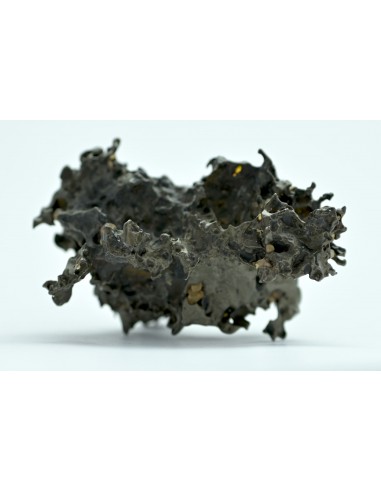
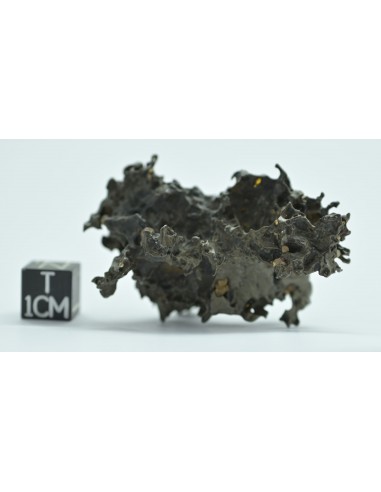
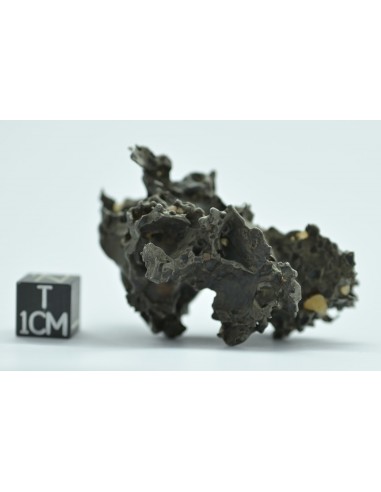
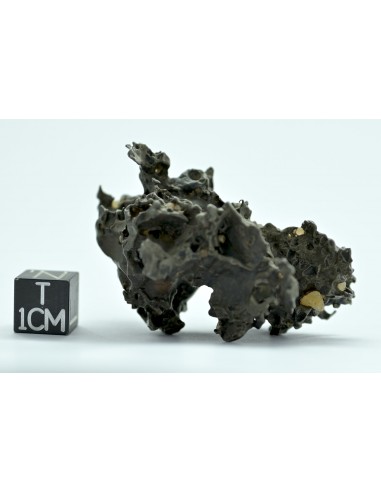
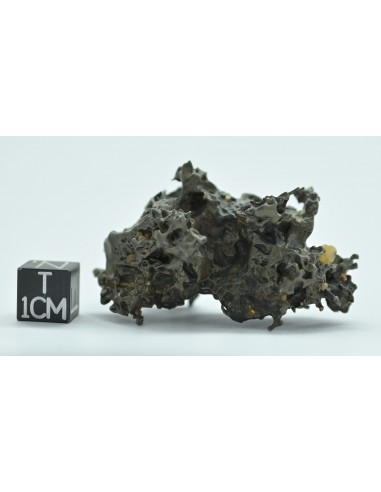
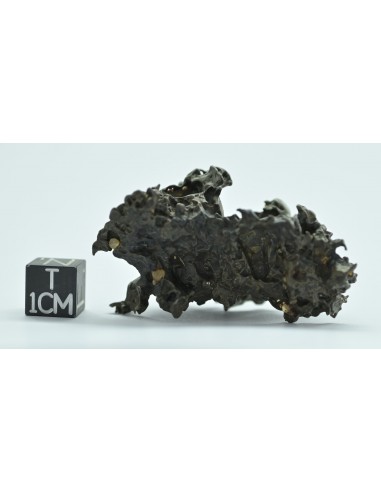
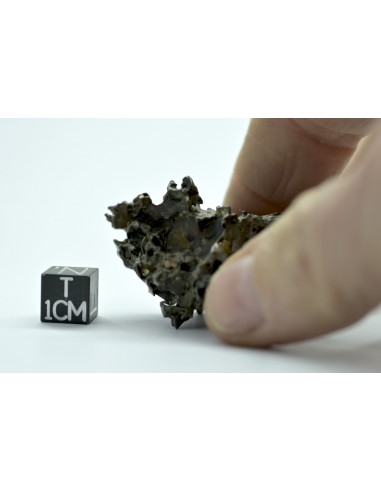
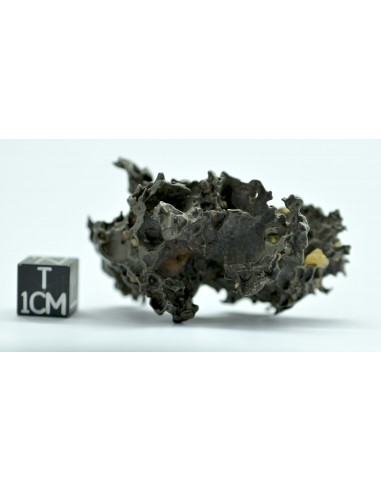
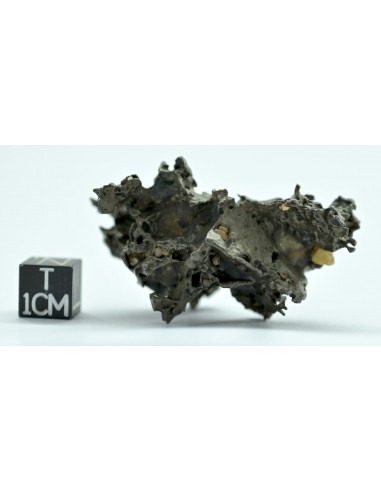
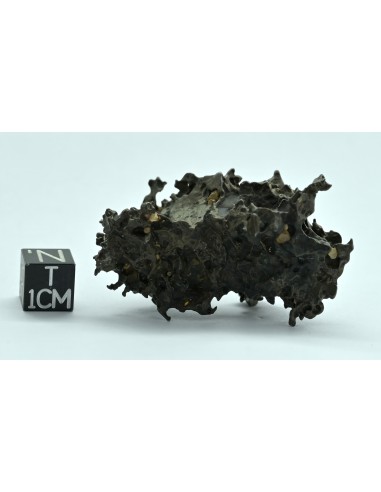
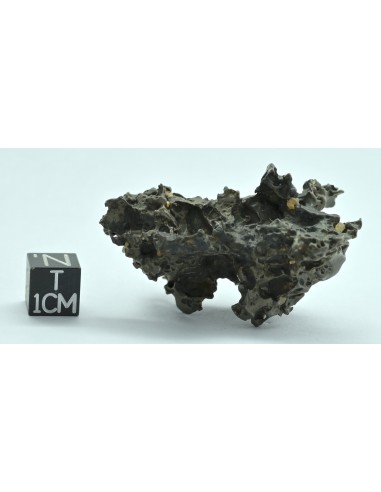
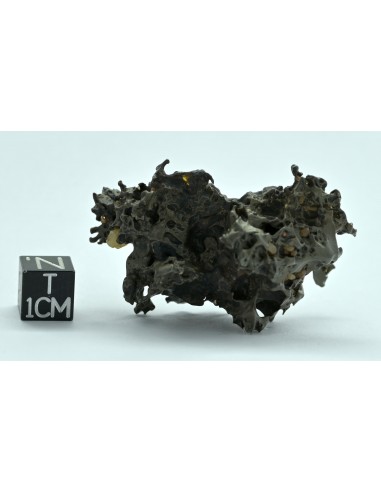
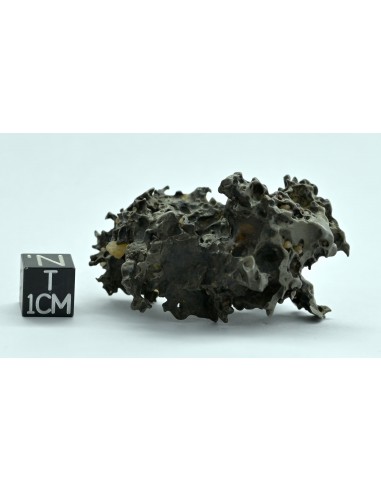
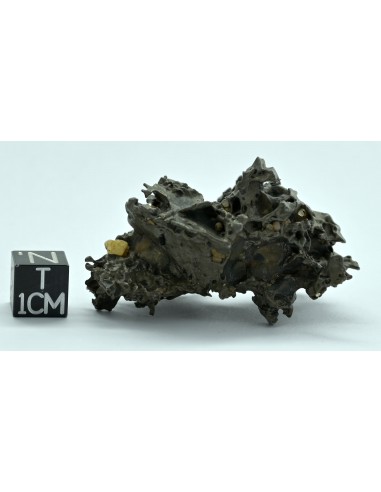
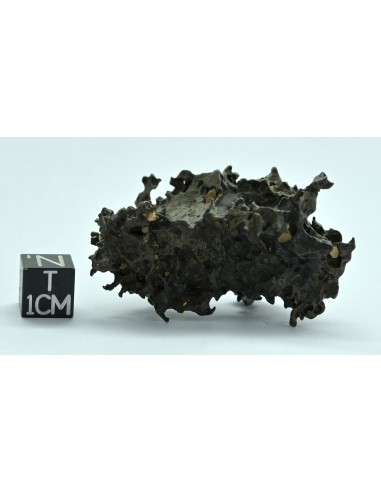
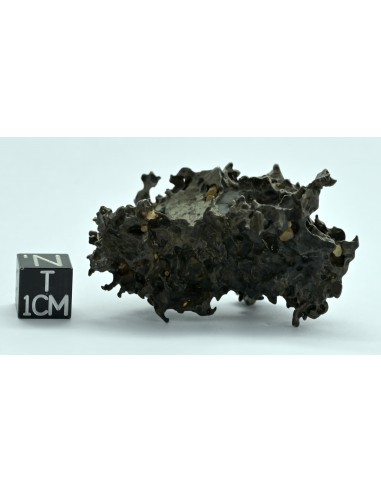
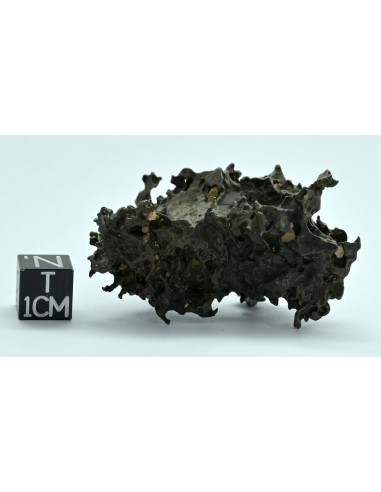
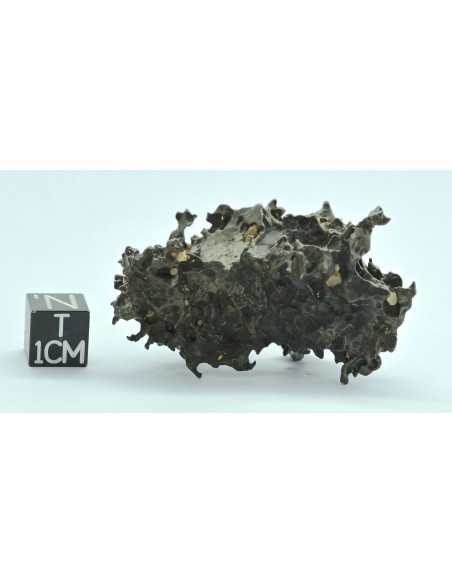
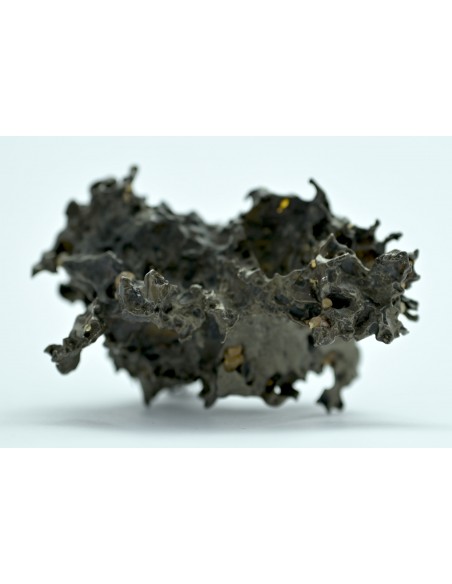
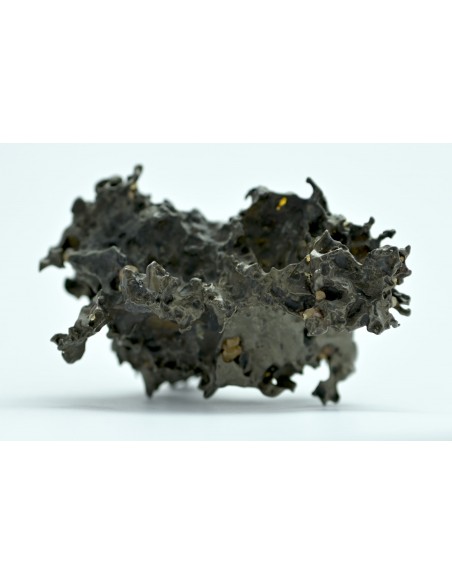
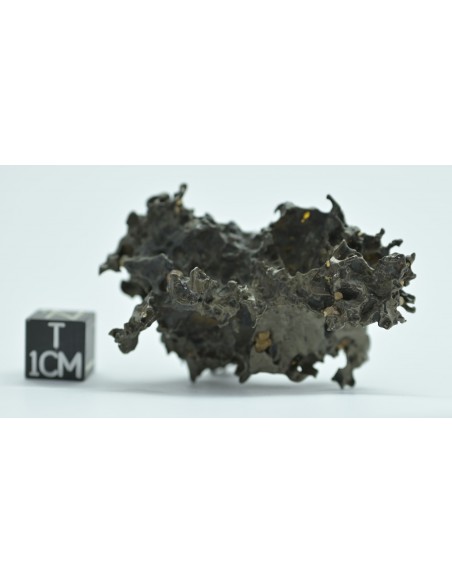
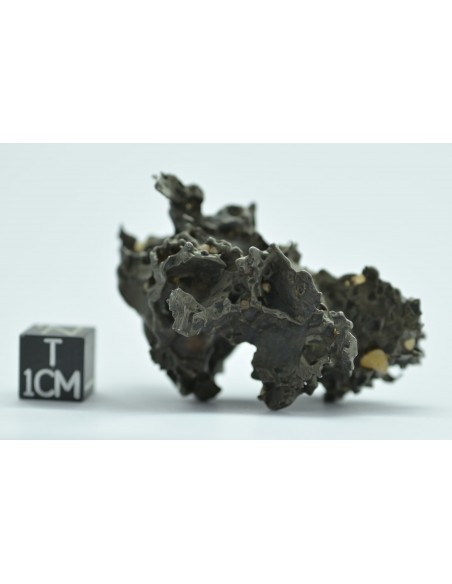
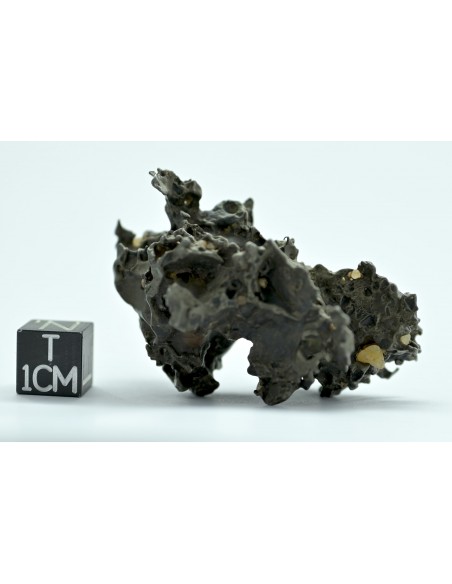
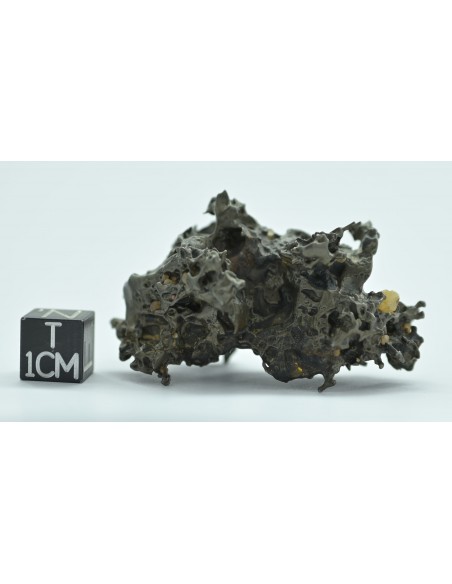
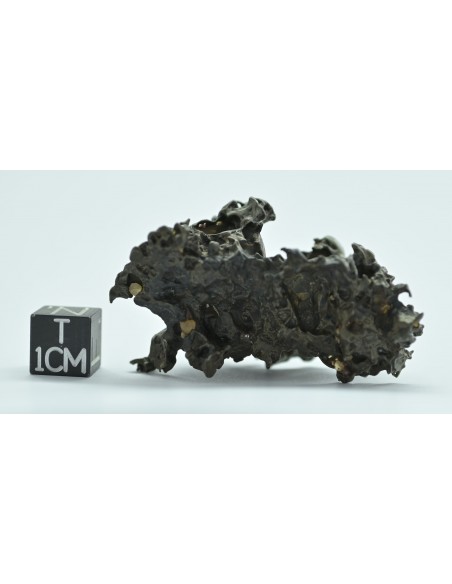
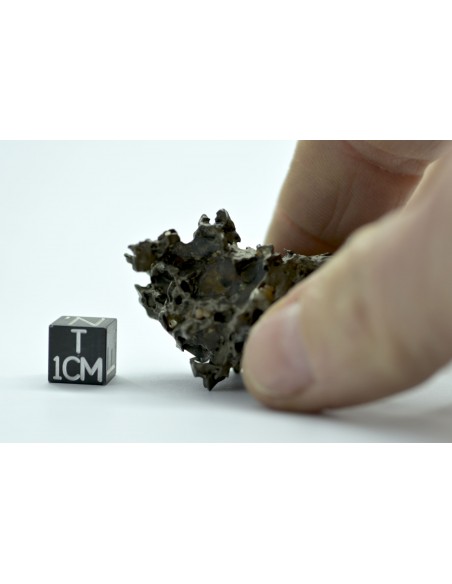
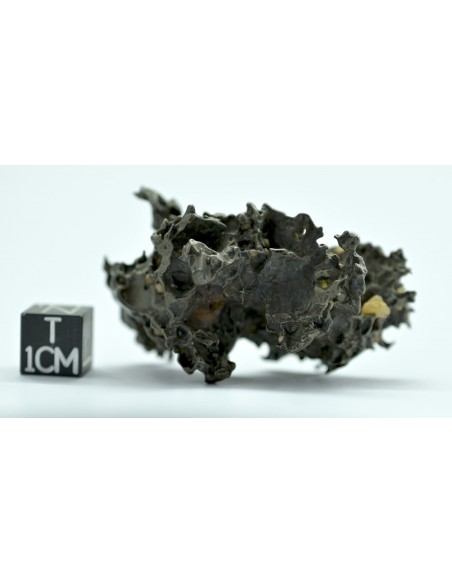
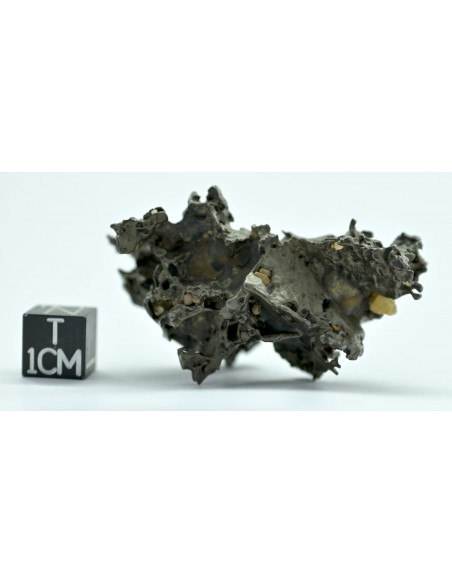
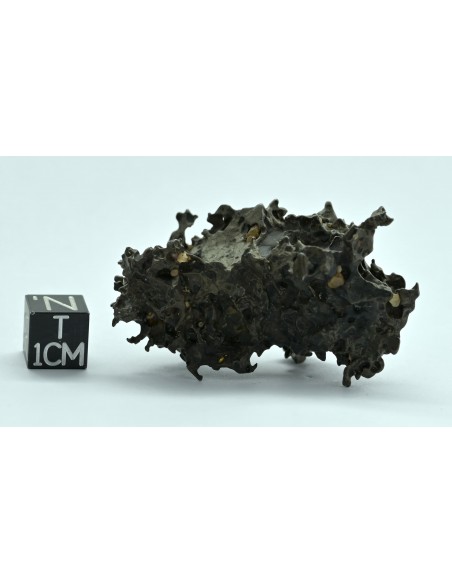
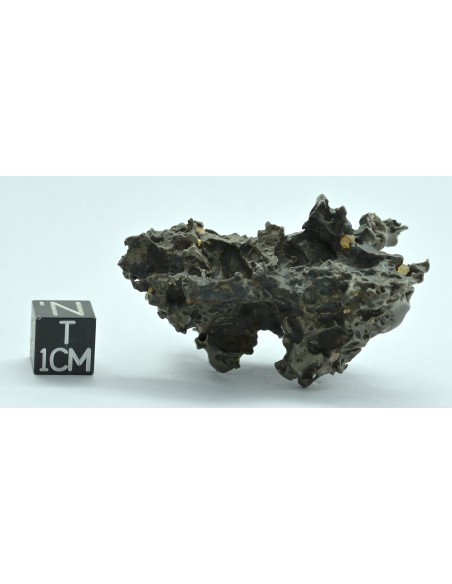
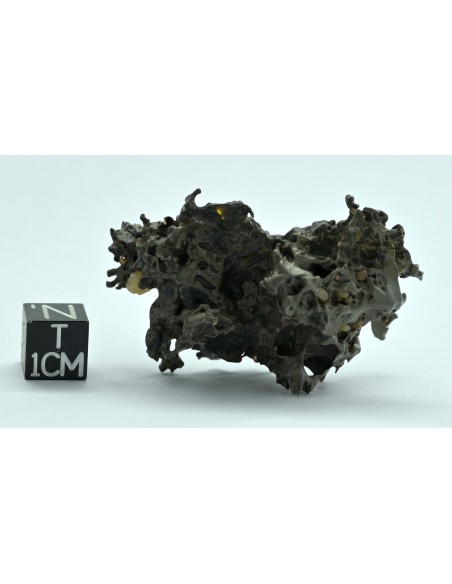
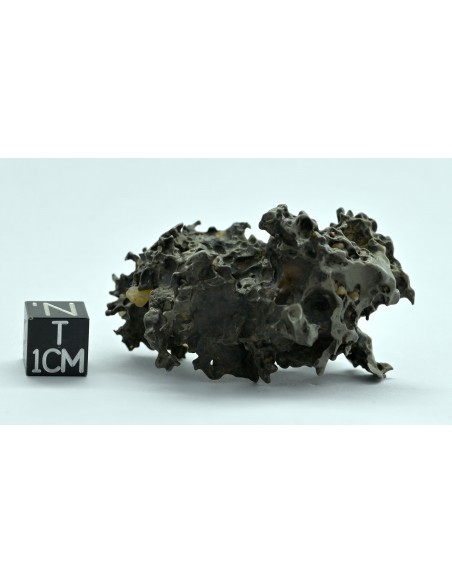
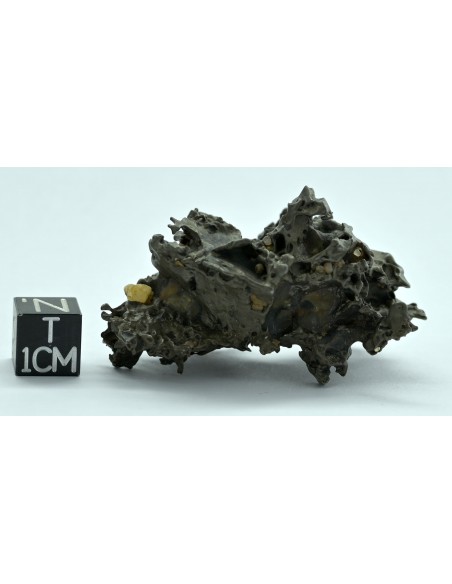
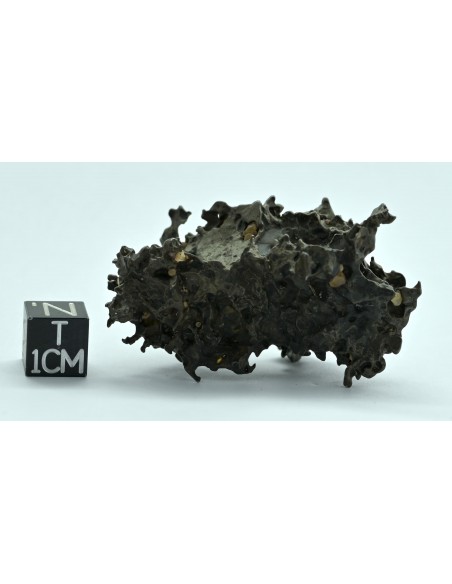
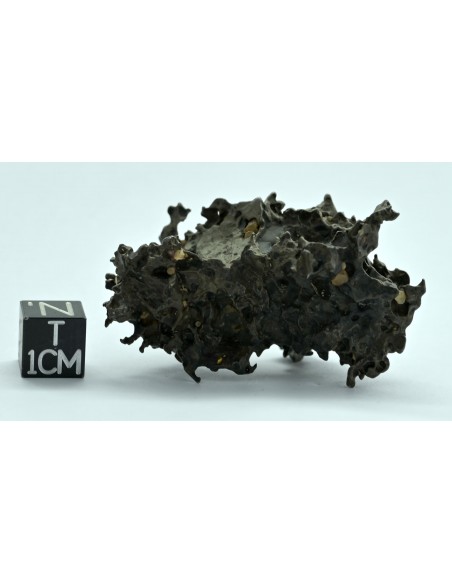
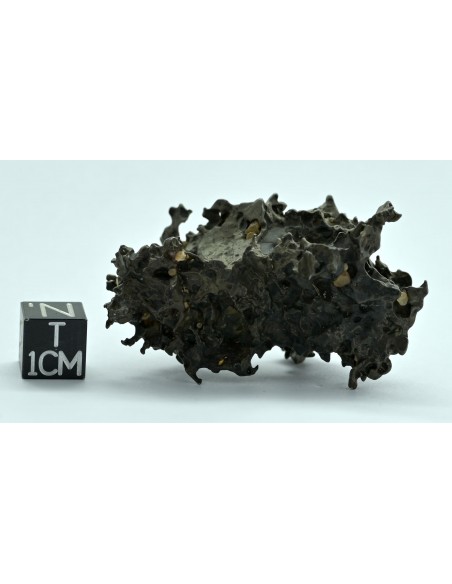
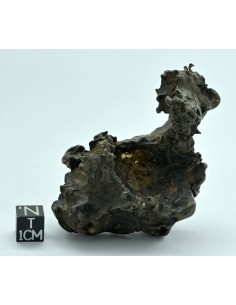
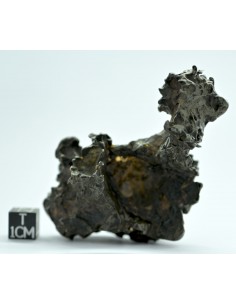
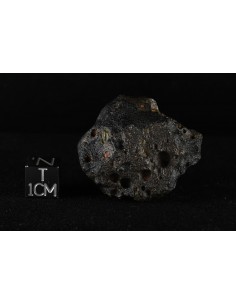
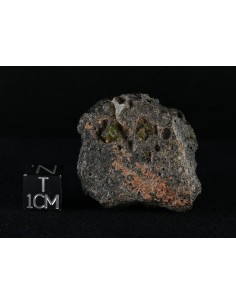
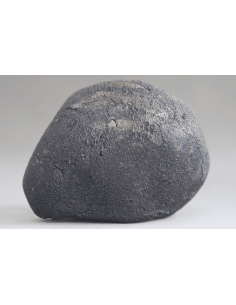
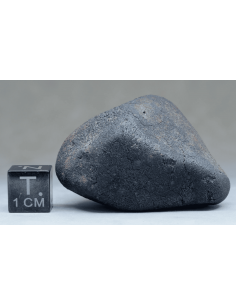
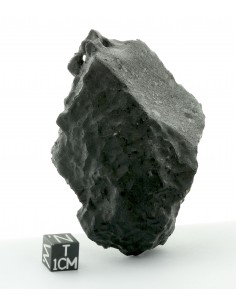
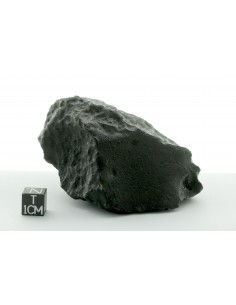
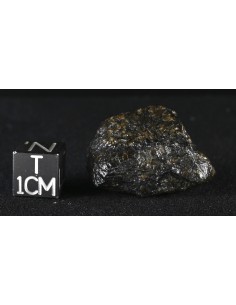
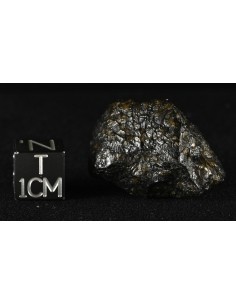
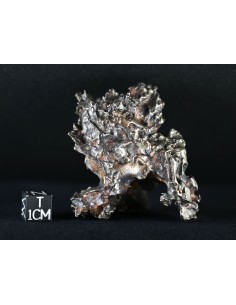
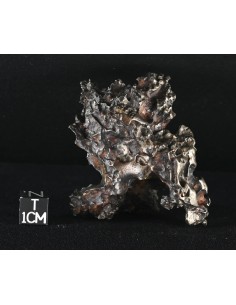
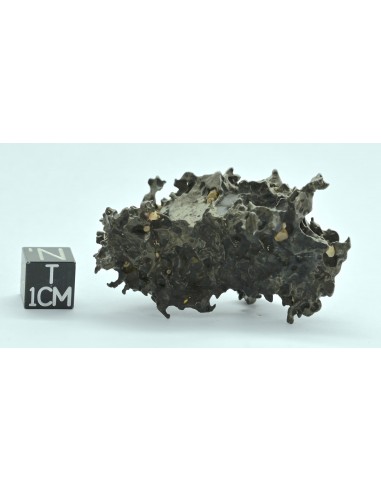
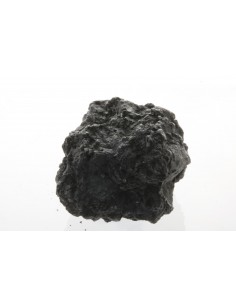
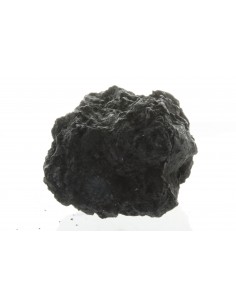
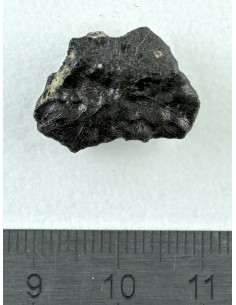
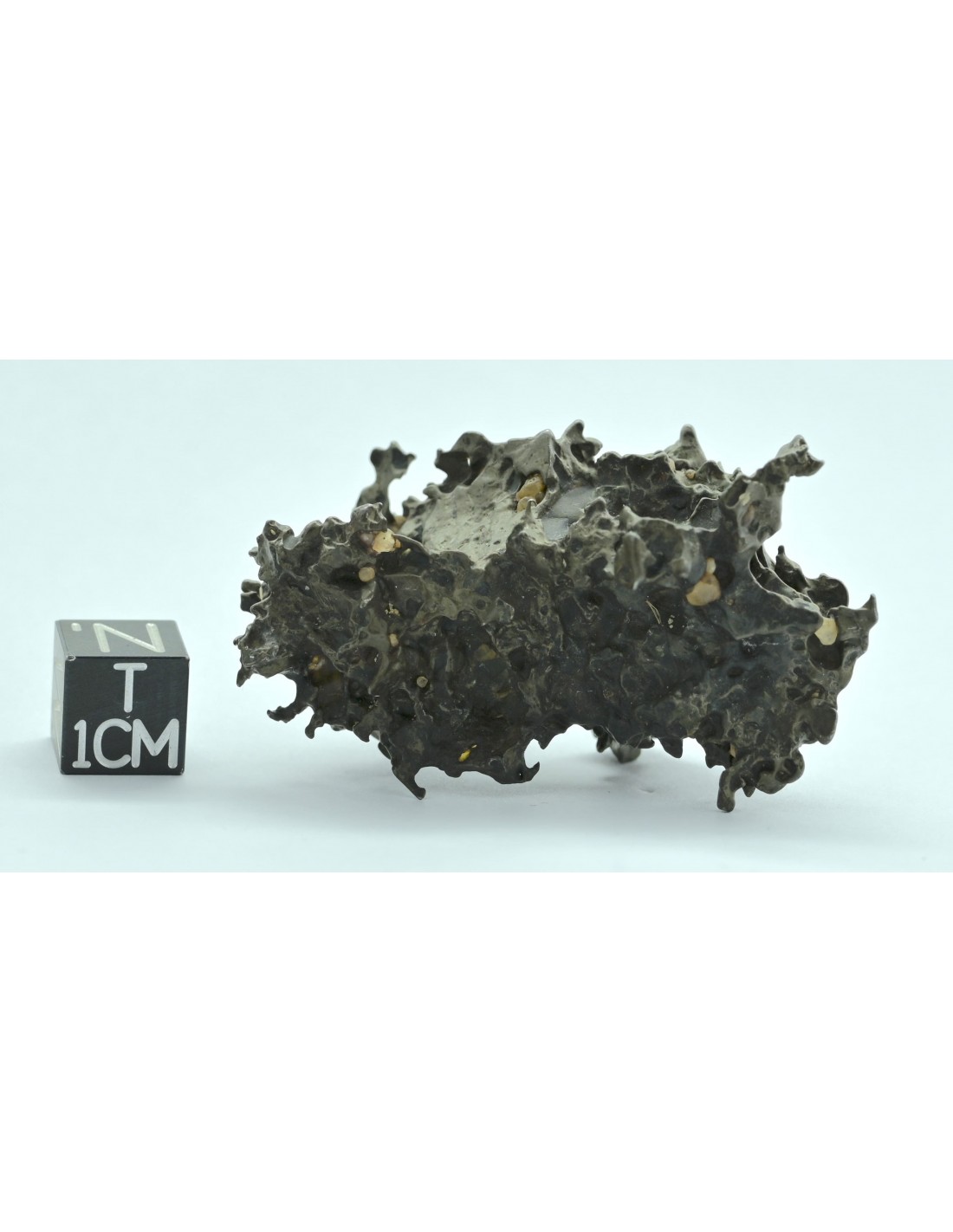
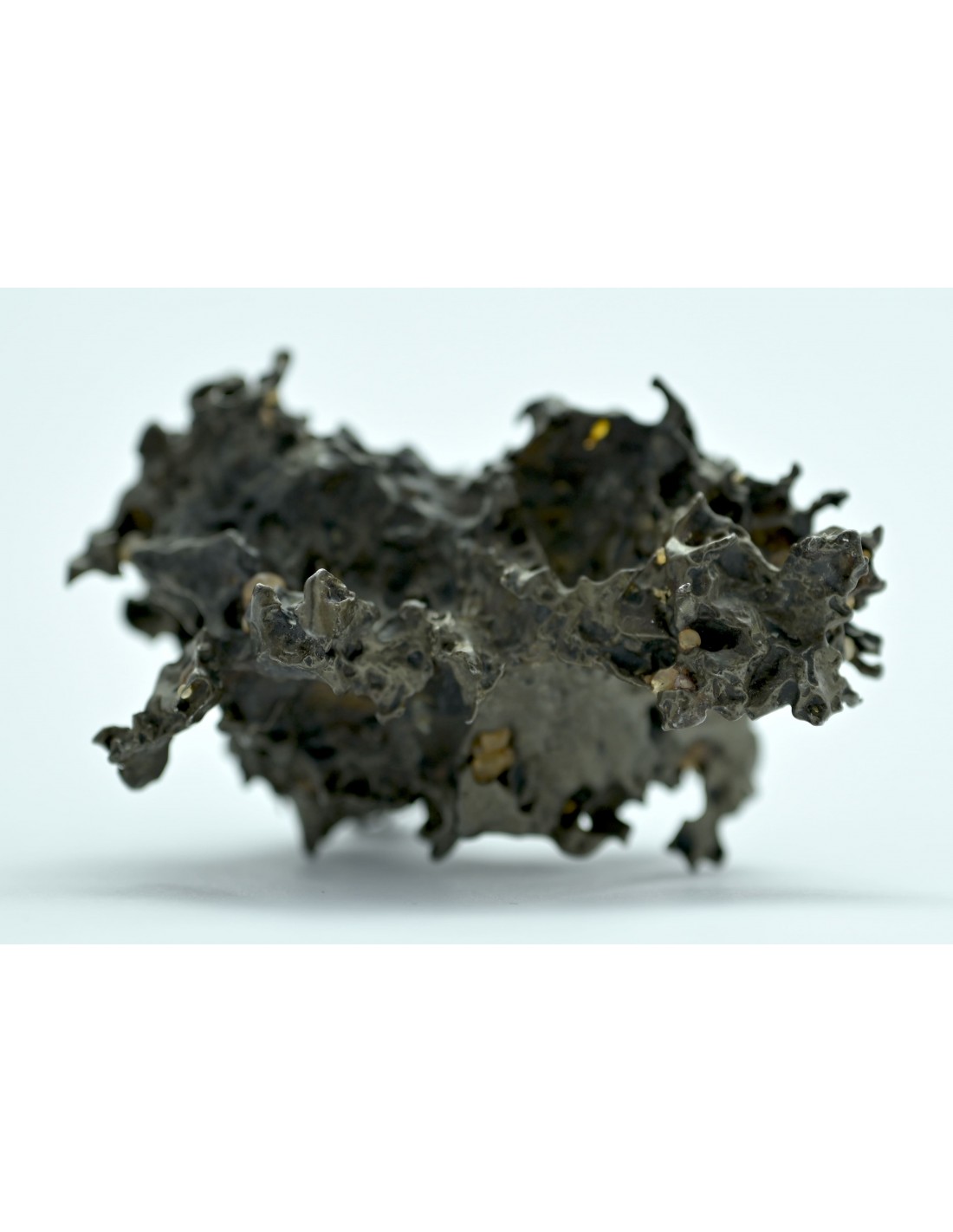
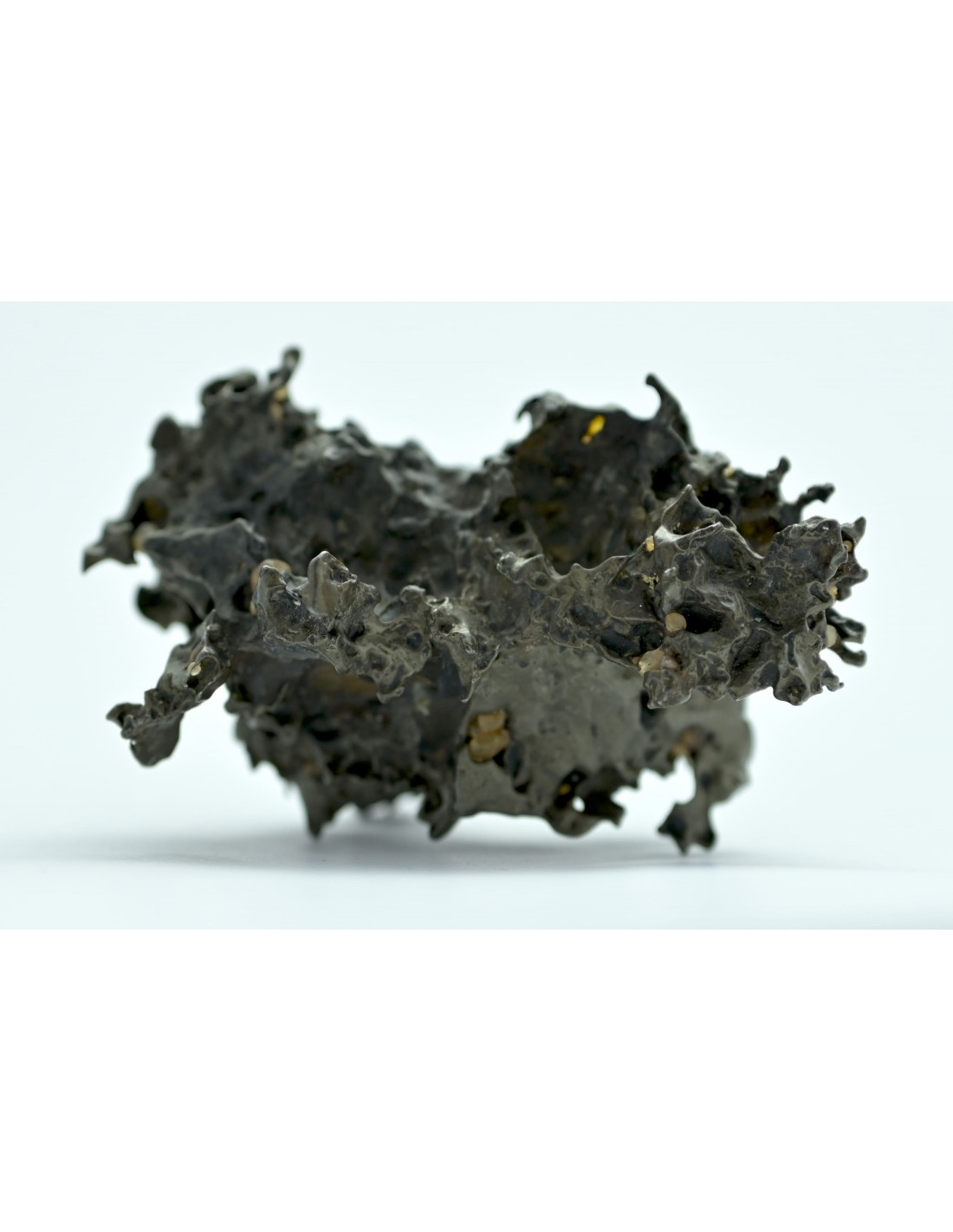
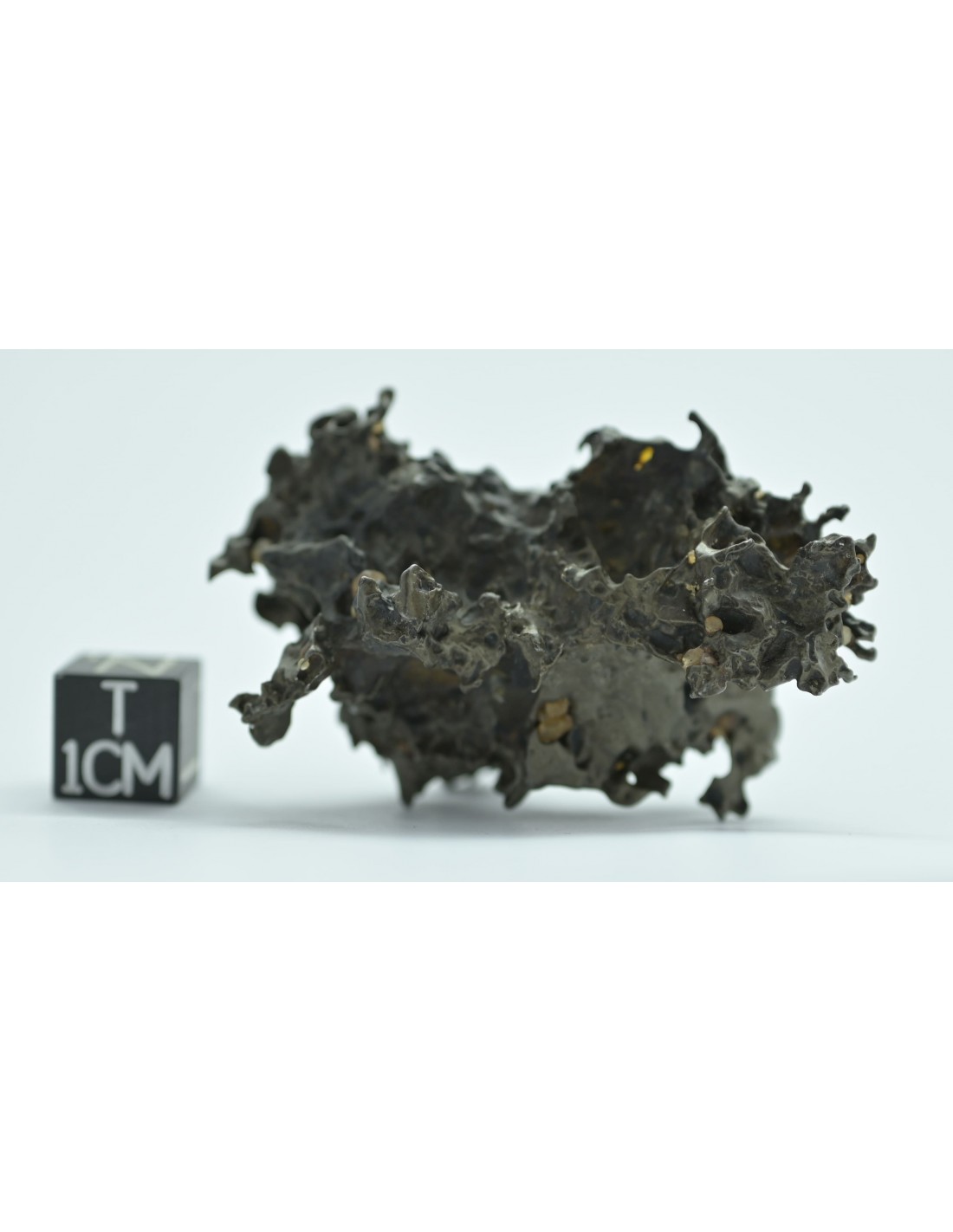
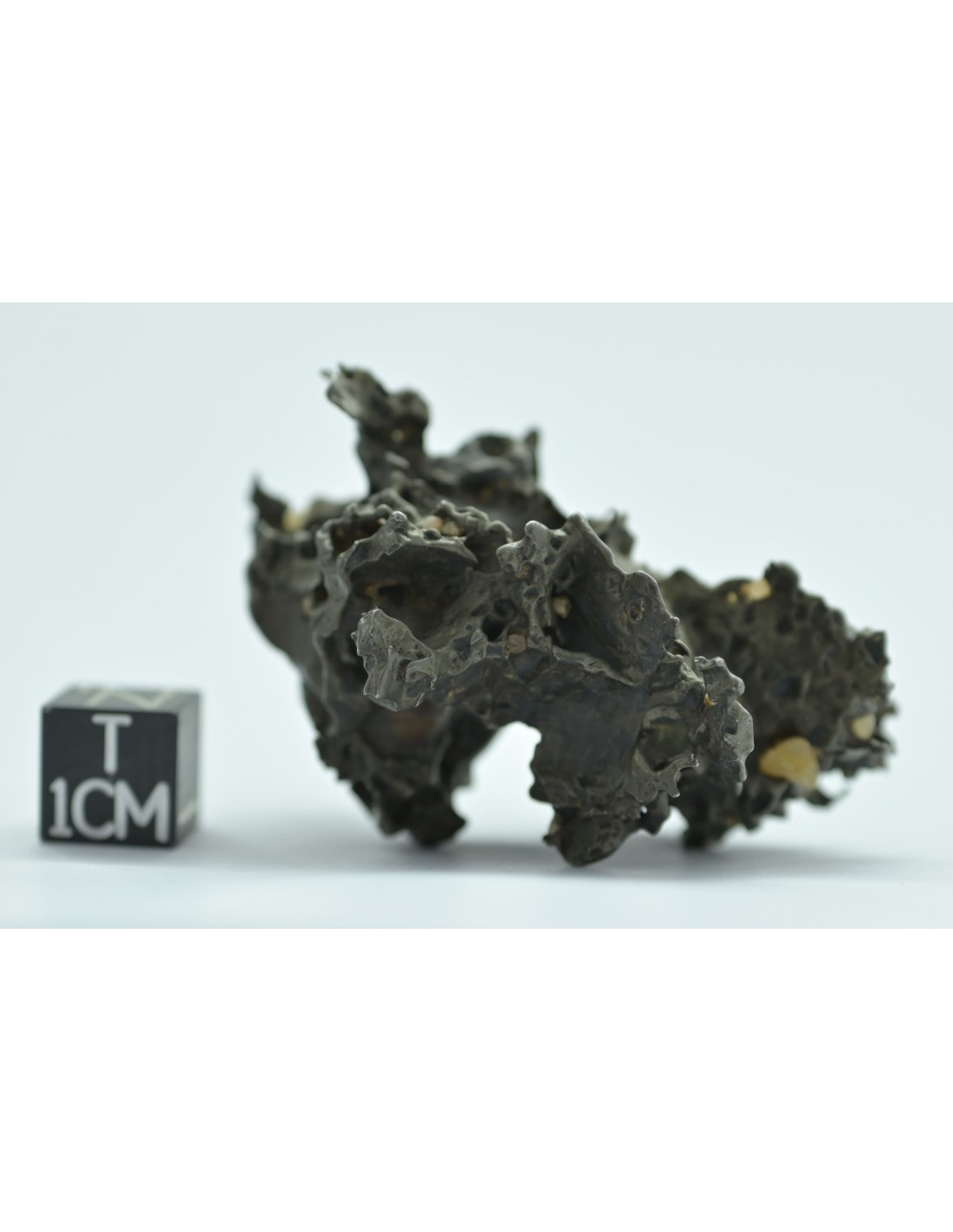
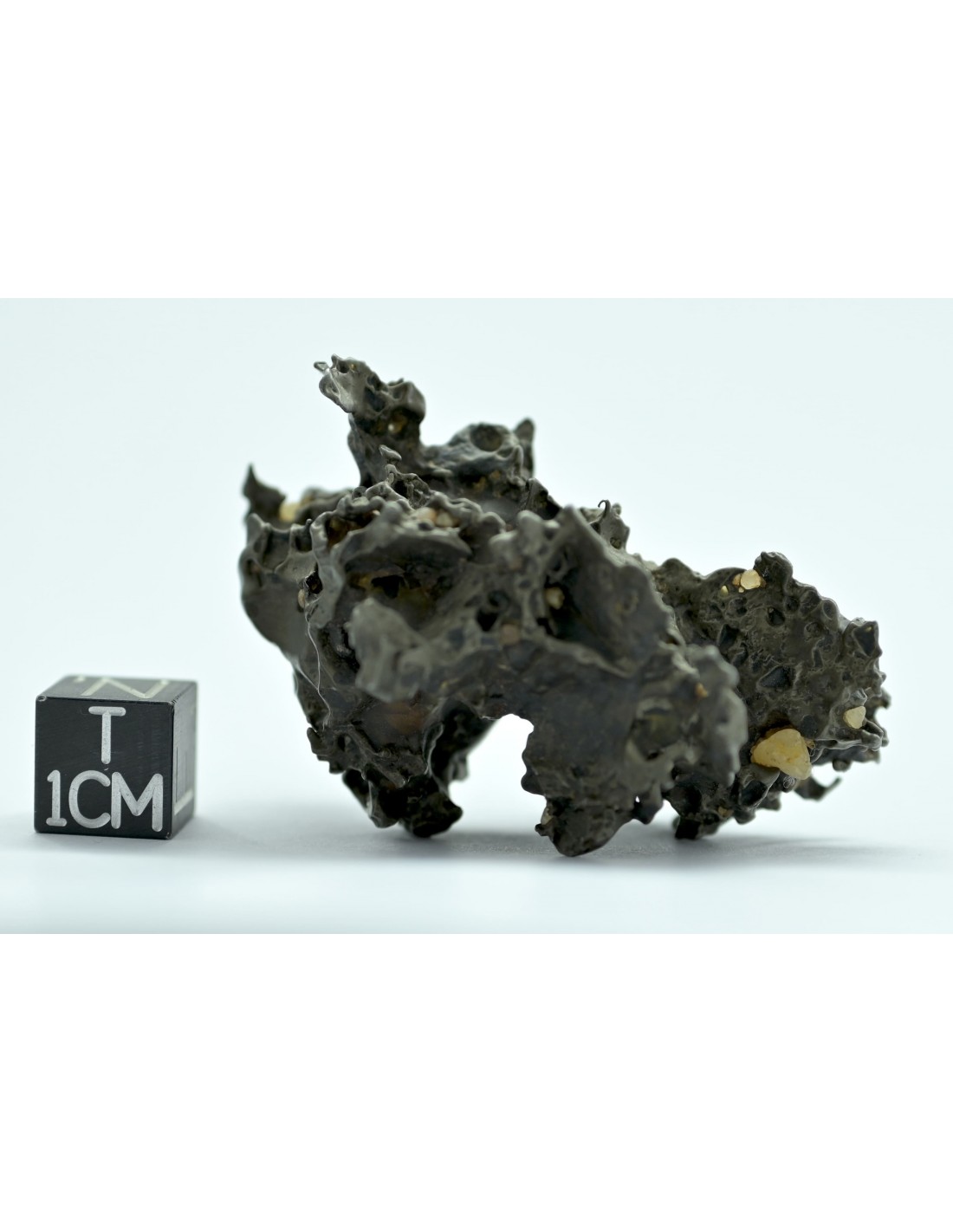
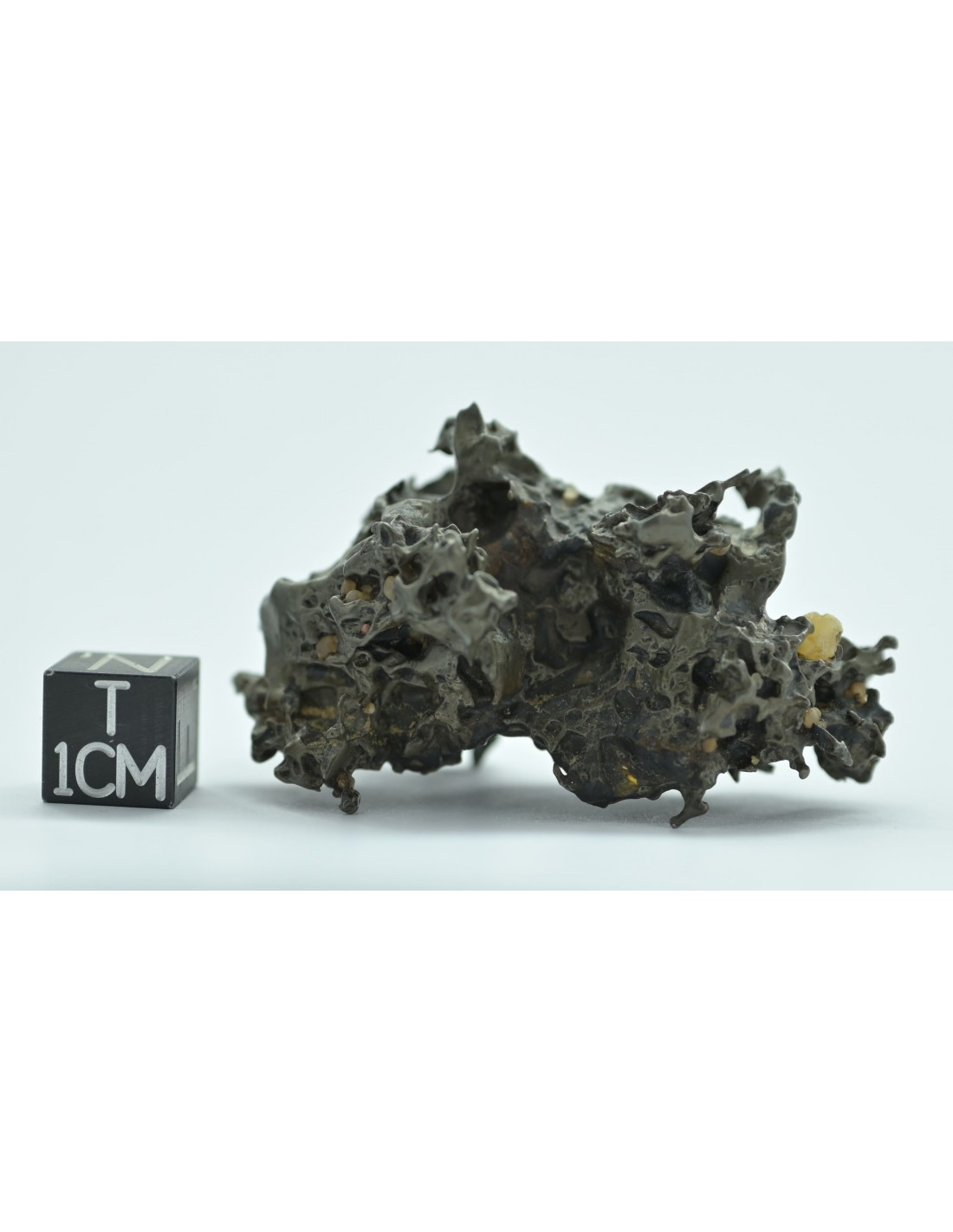
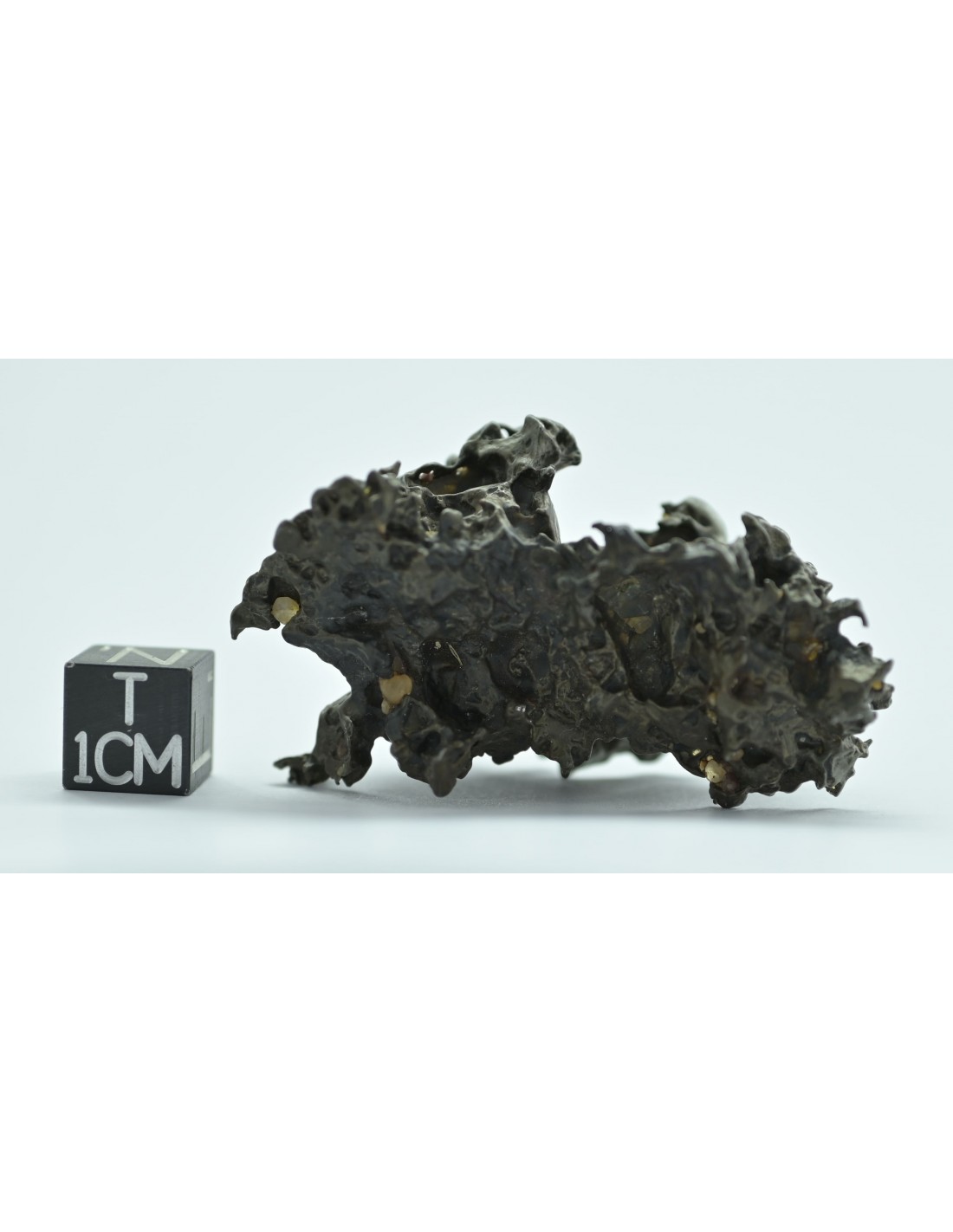
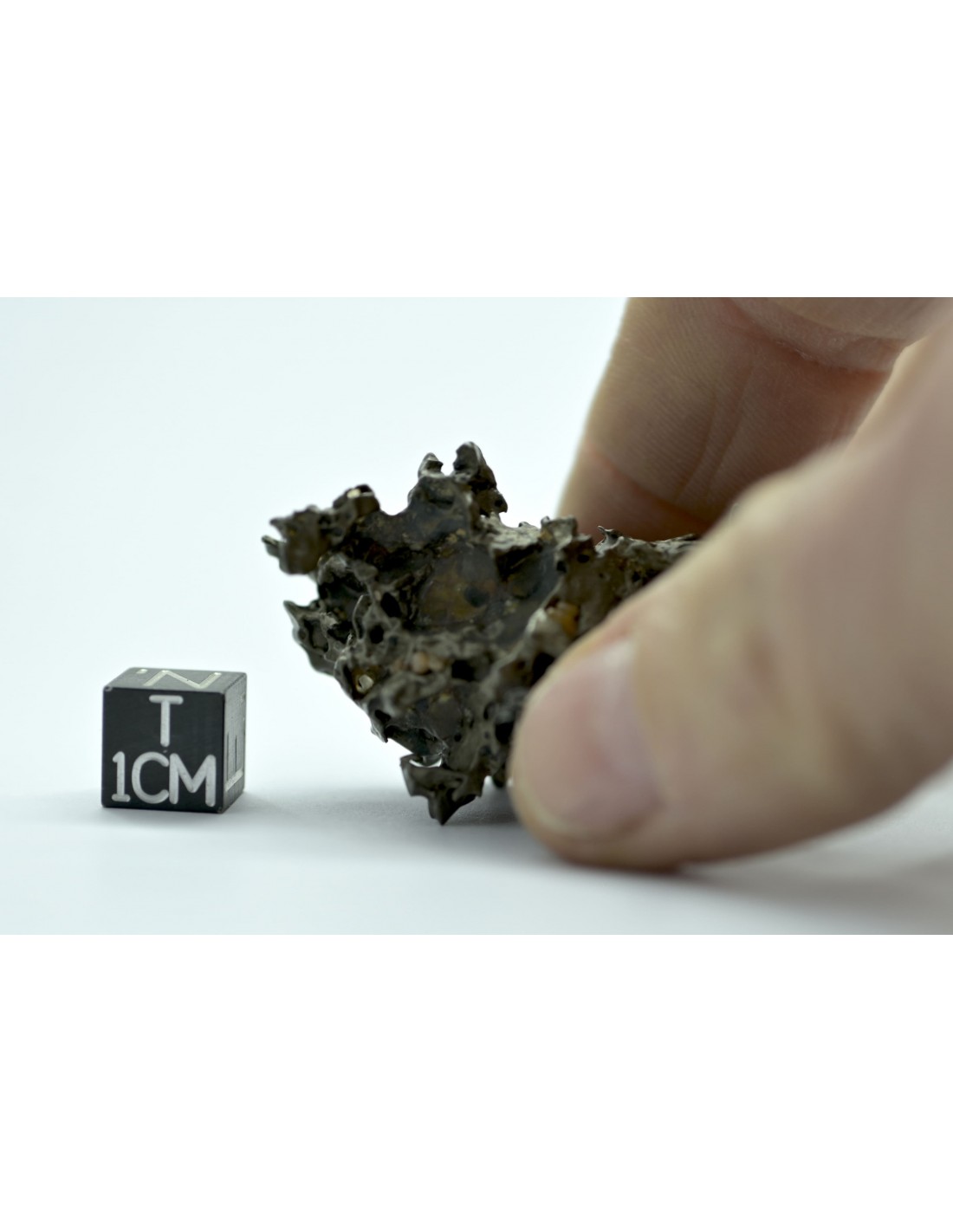
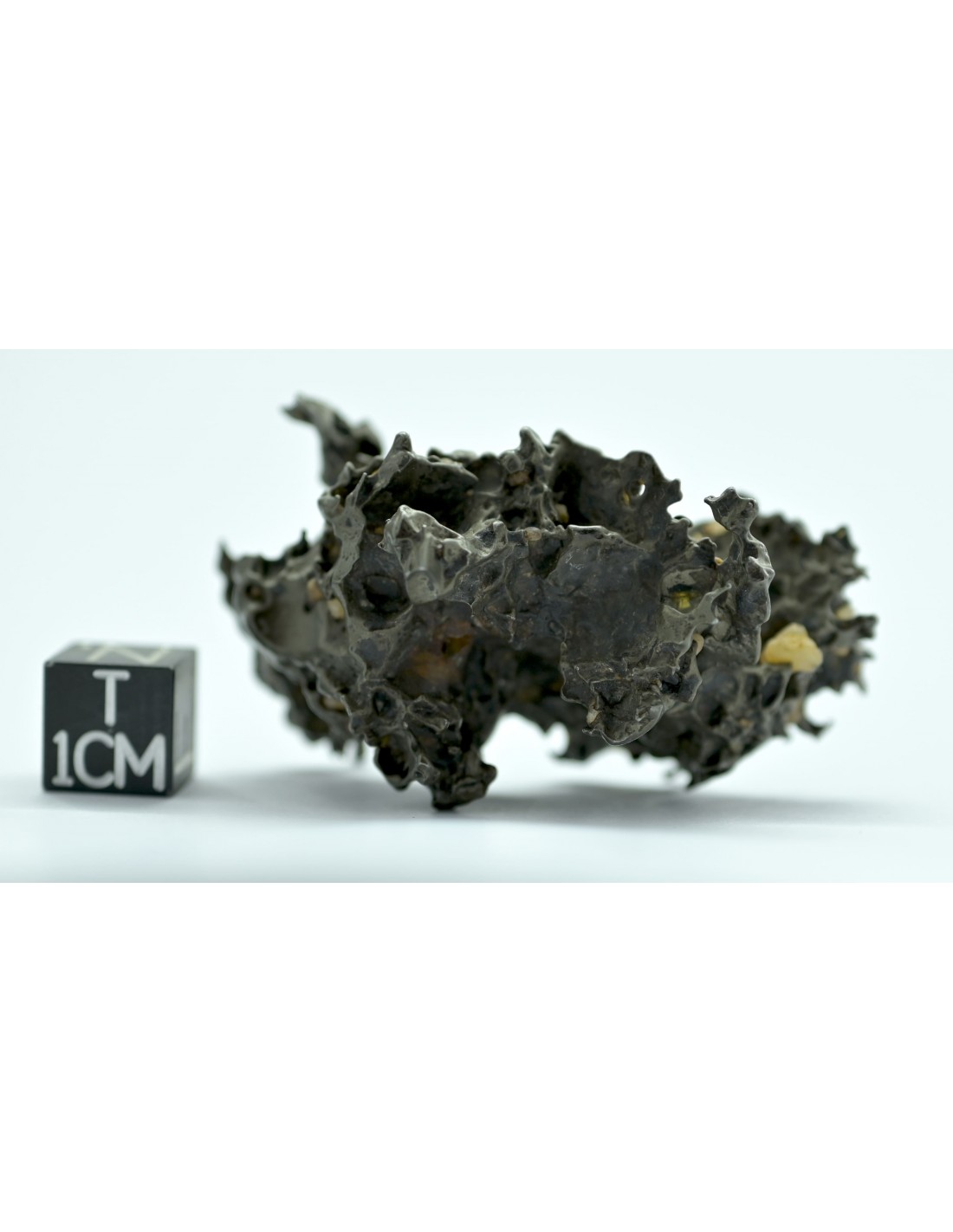
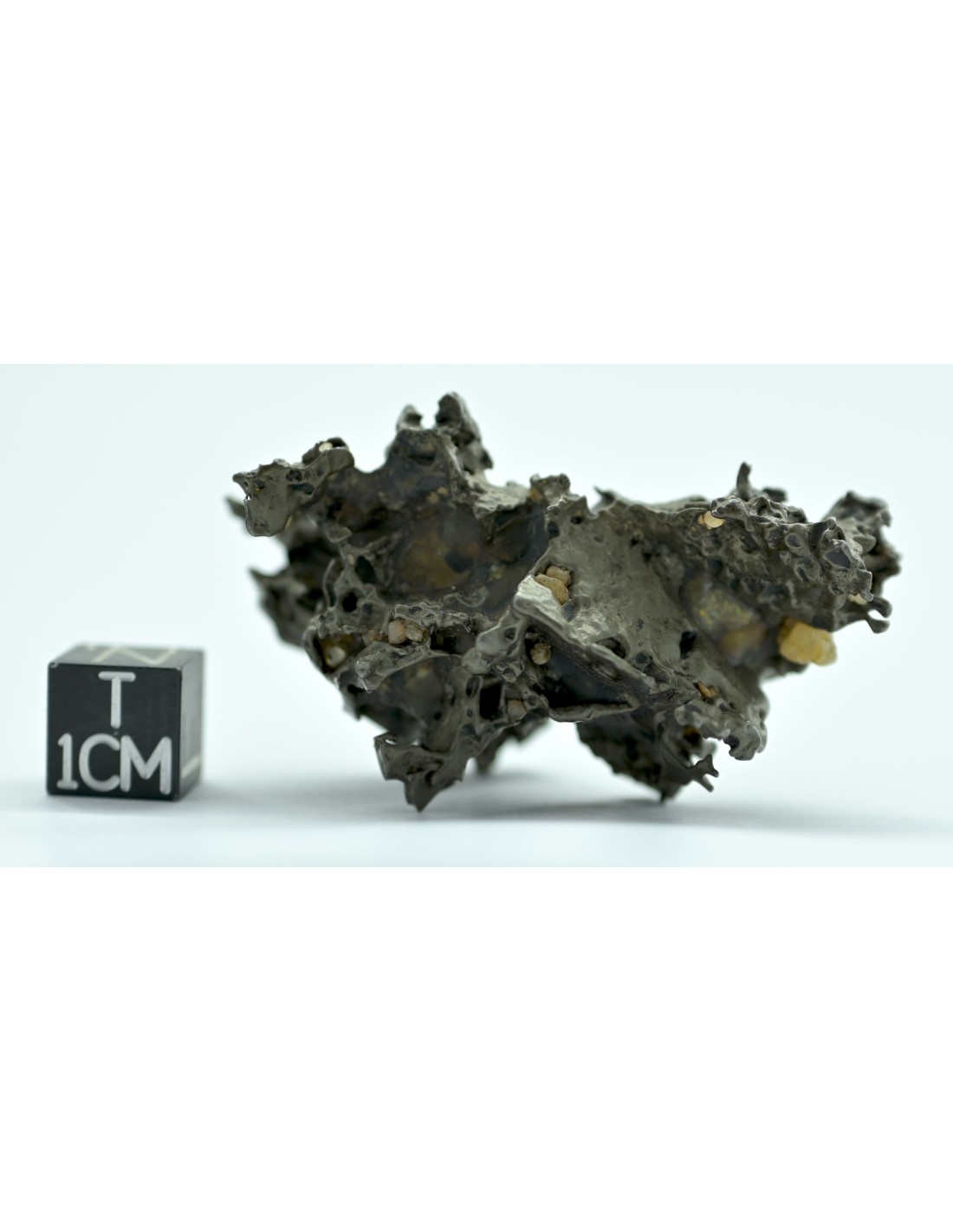
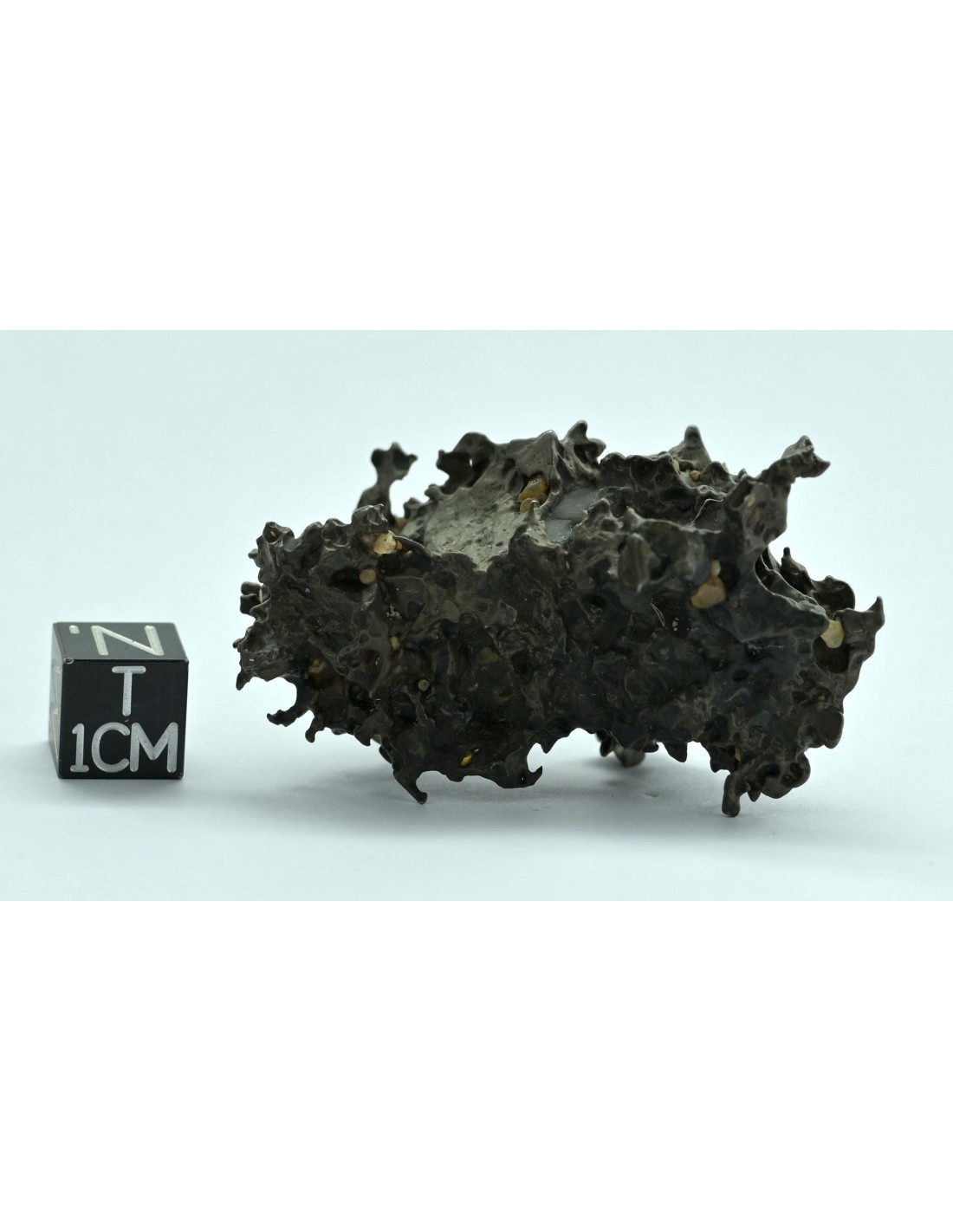
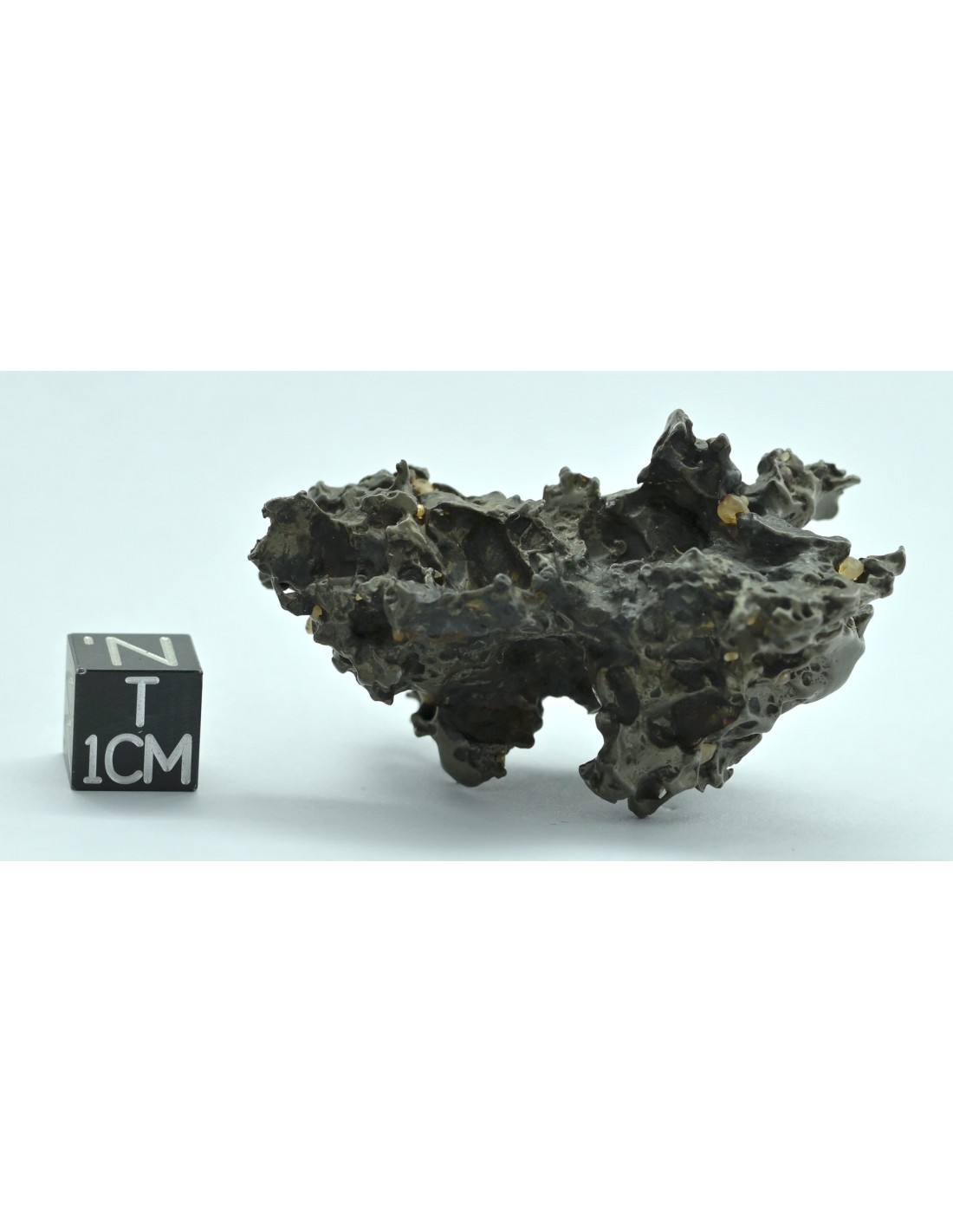
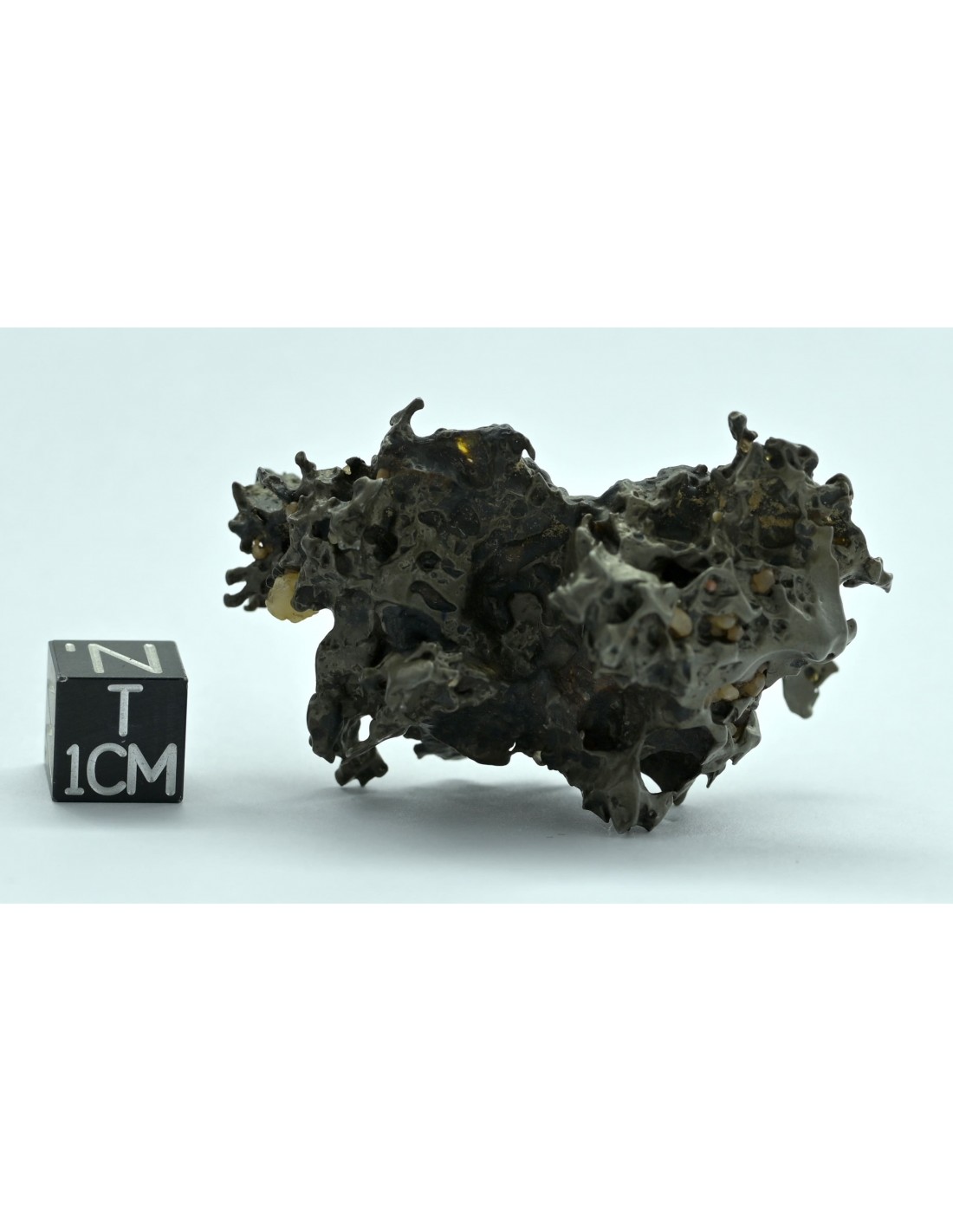
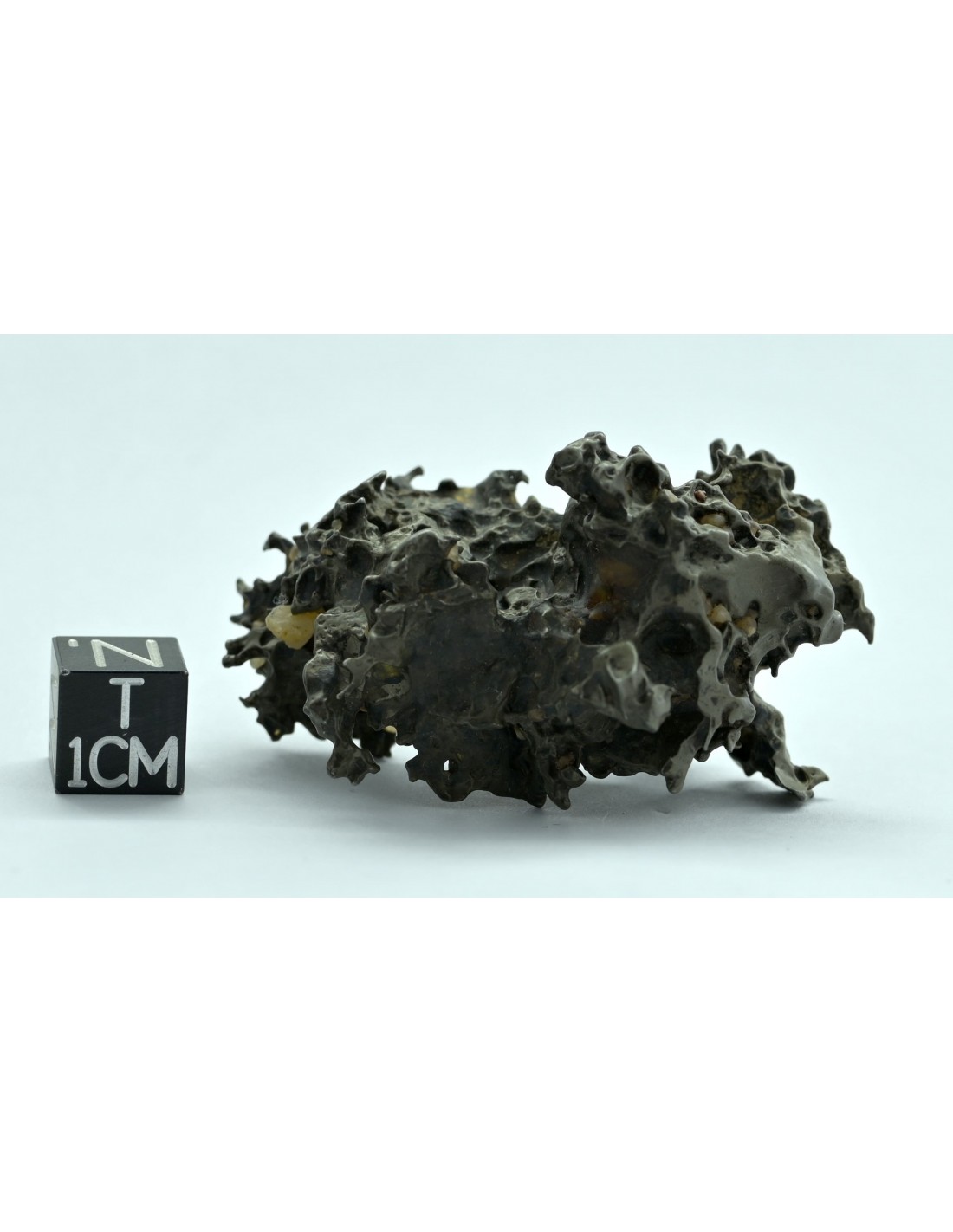
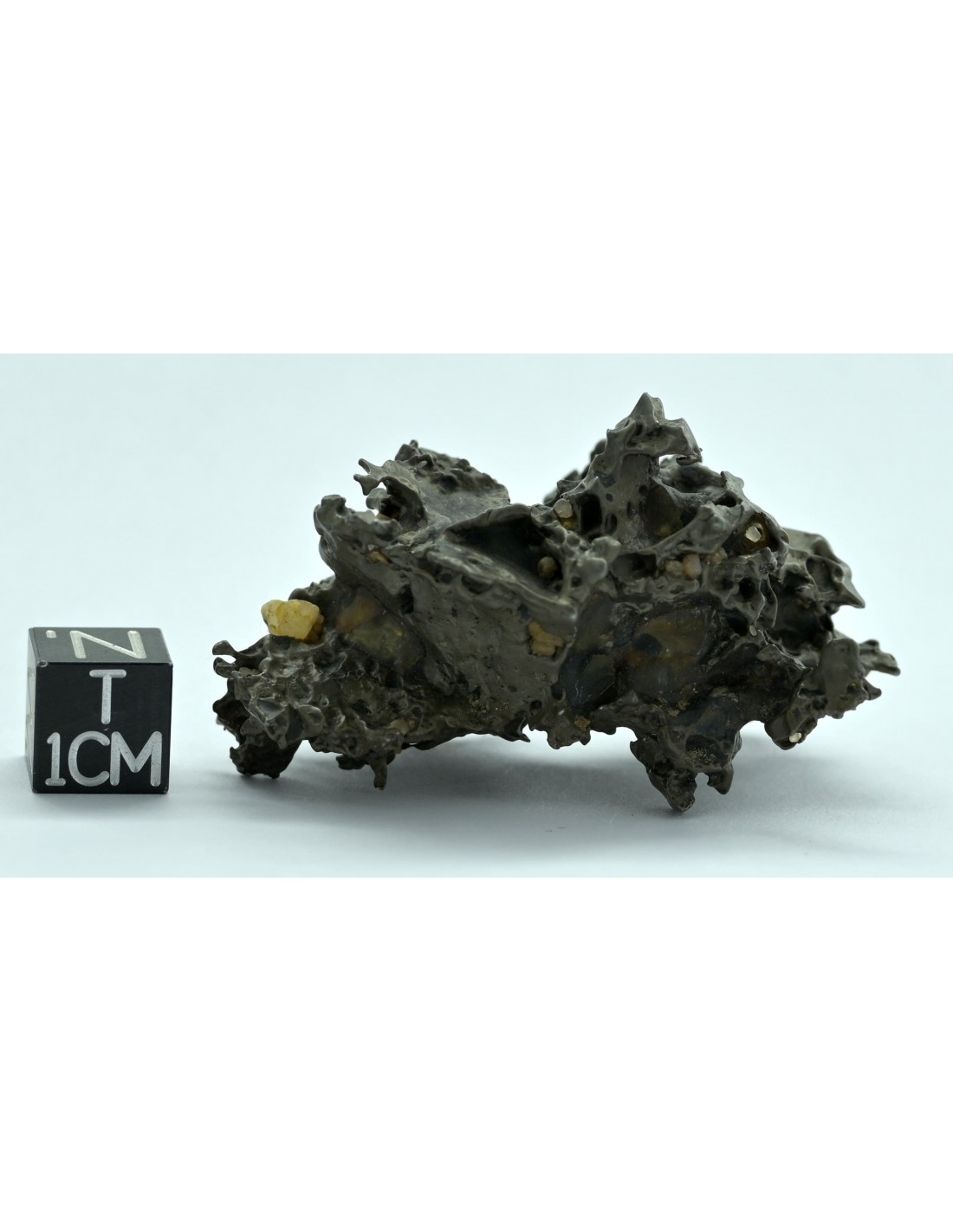
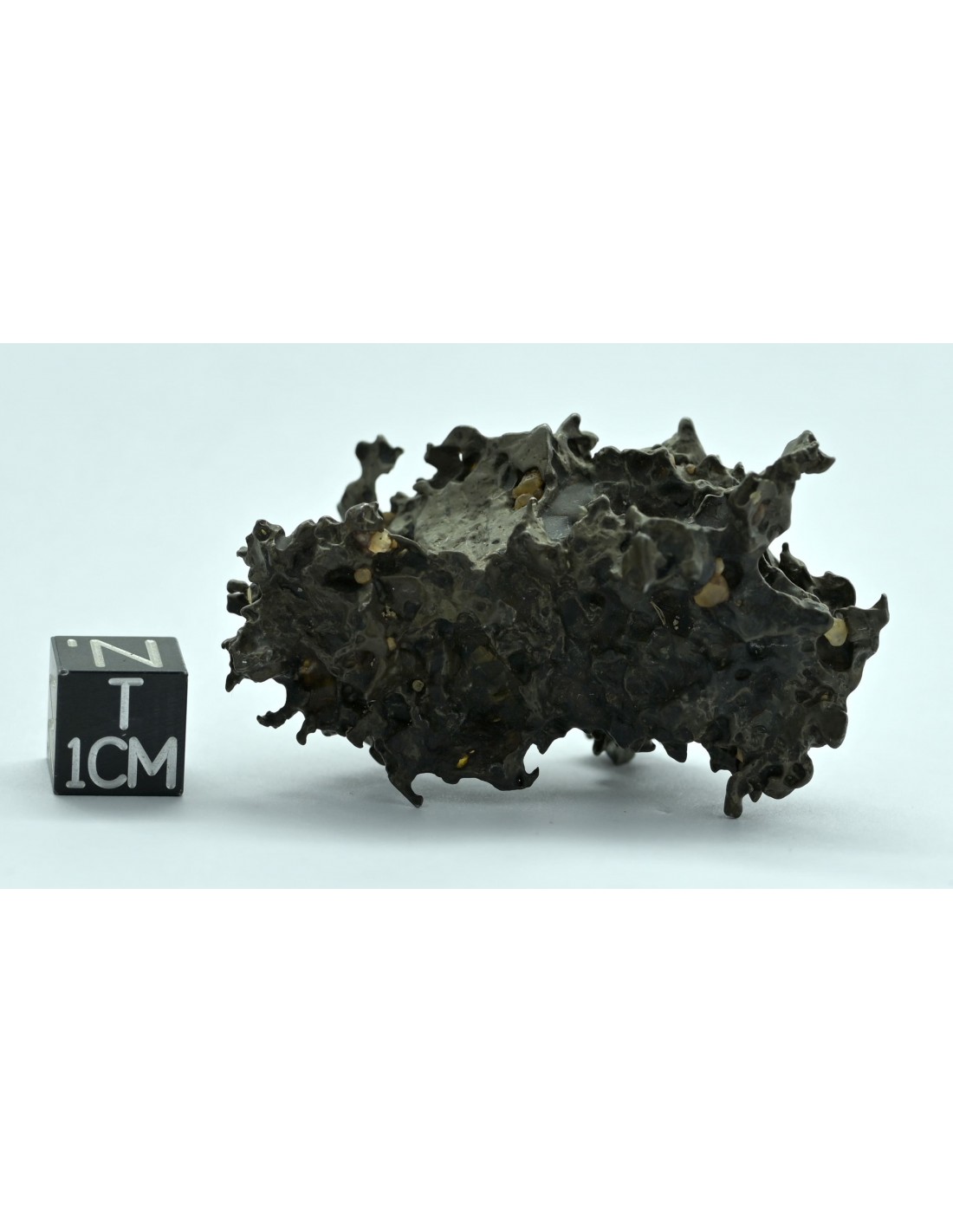
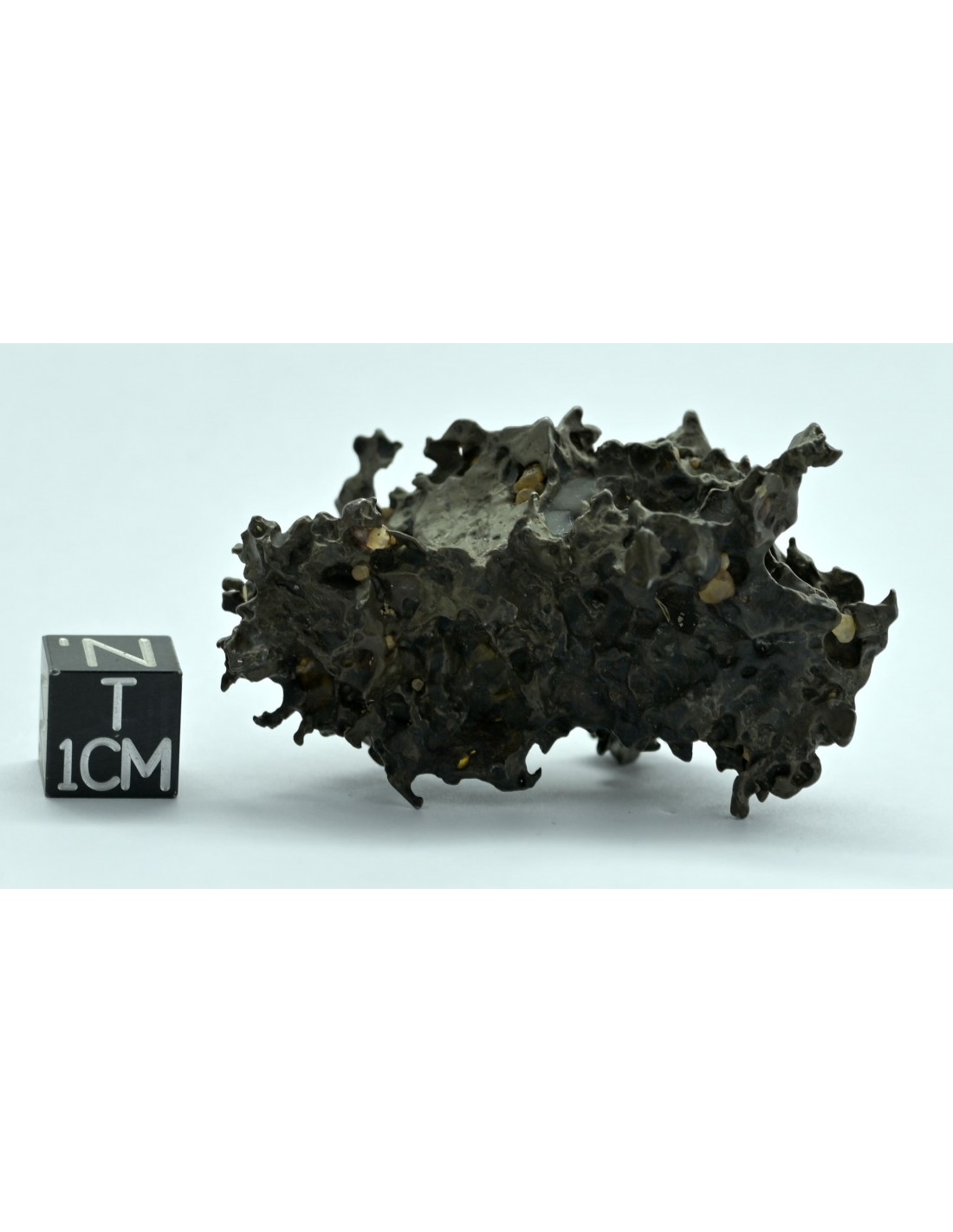
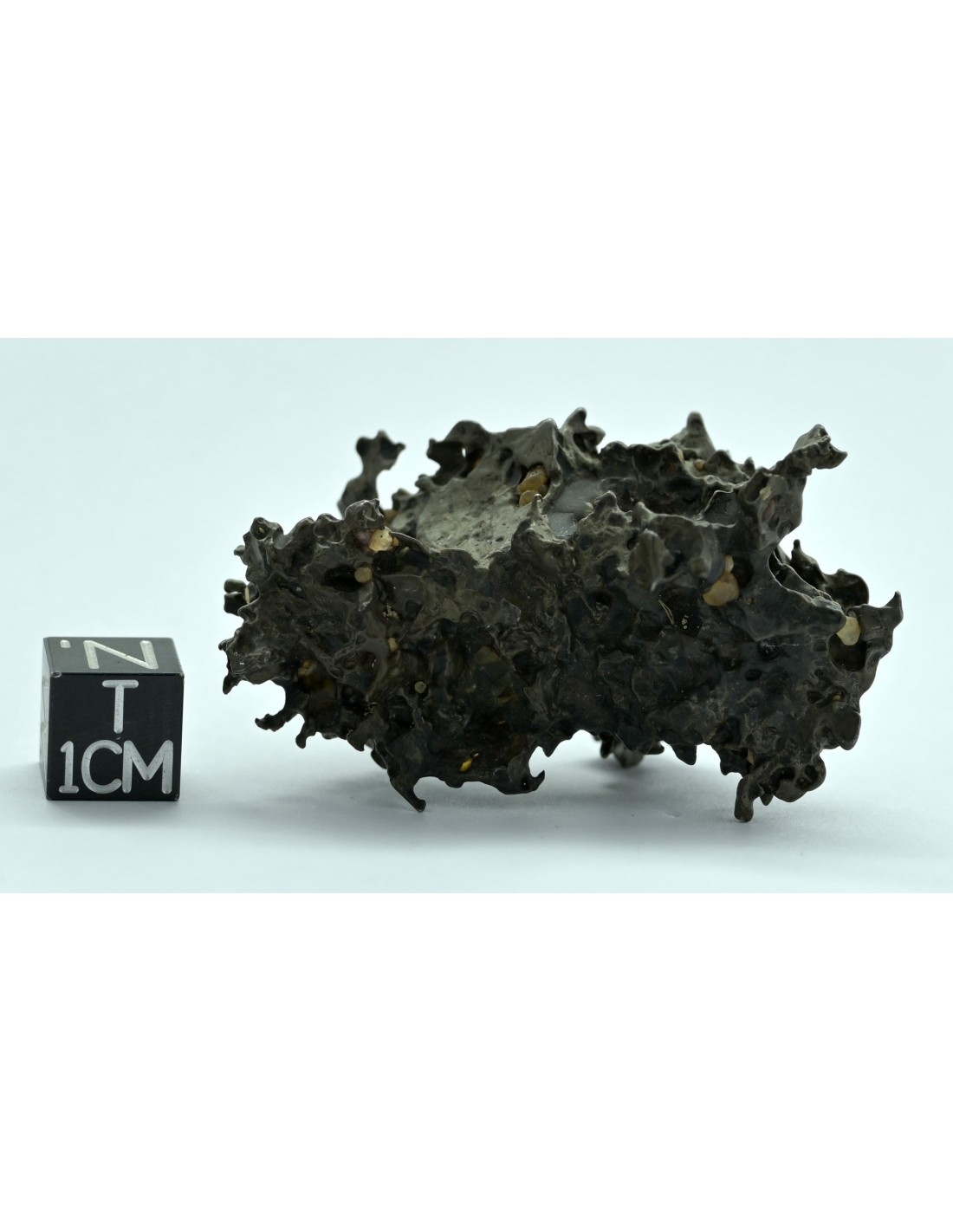
This 50.20 gram pallasite is a natural individual displaying a highly sculptural morphology, with a golden desert patina and numerous exposed olivine grains preserved within protected cavities. The surface is characterized by sharp metallic spikes formed through the removal of olivines by long-term desert weathering. Coarse beige sand grains remain locally trapped within interstitial spaces, highlighting the specimen’s prolonged exposure to aeolian processes and enhancing its natural, unaltered character.
This 50.20 g pallasite is a striking natural individual, distinguished by its highly irregular, sculptural morphology and the visible presence of olivine crystals emerging directly at the surface.
The metallic matrix has developed a characteristic golden desert patina, typical of prolonged exposure in arid environments, giving the specimen a warm tonal range that contrasts with darker, fusion-altered areas. Embedded within this metal framework, translucent to opaque olivine grains, displaying yellow to orange hues, remain visible in protected recesses and cavities, where they have been preserved from extensive weathering.
In contrast, several open areas and interstitial spaces contain coarse, light beige sand grains, which have become naturally trapped within the structure. These grains, originating from the surrounding desert environment, emphasize the long-term exposure of the specimen and provide a clear visual distinction from the preserved olivines.
One of the most remarkable features of this specimen is the presence of numerous metallic spikes — sharp, protruding structures formed as the surrounding olivine crystals were progressively removed through long-term desert weathering and wind-driven abrasion. These spikes represent the residual metallic framework of the pallasite, now revealed in relief, and give the specimen its distinctive, almost organic appearance.
The overall structure is open and complex, with cavities, ridges, and protrusions resulting from the combined effects of atmospheric ablation and aeolian erosion. Unlike polished sections, this natural individual offers a direct and unaltered view of the metal–silicate relationship, shaped entirely by natural processes.
The interplay between metallic surfaces, preserved olivines, trapped desert sands, and these characteristic spikes gives the piece a dynamic, three-dimensional presence, making it both scientifically informative and visually exceptional.