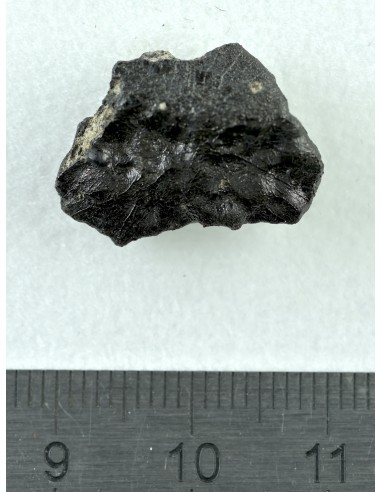
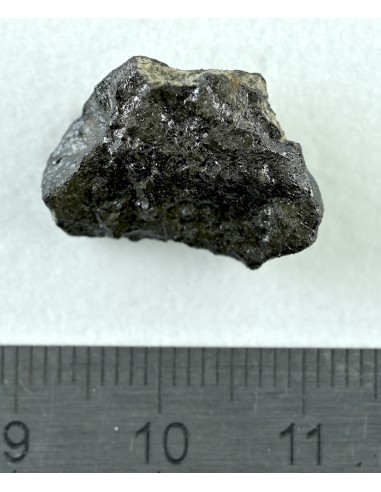
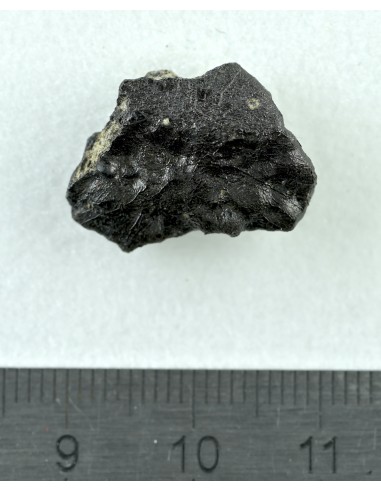
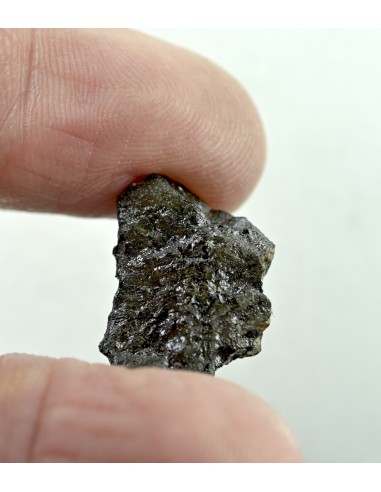
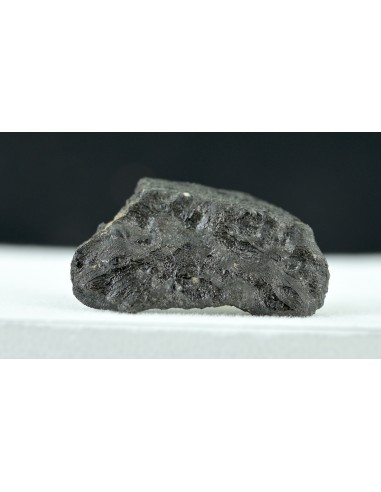
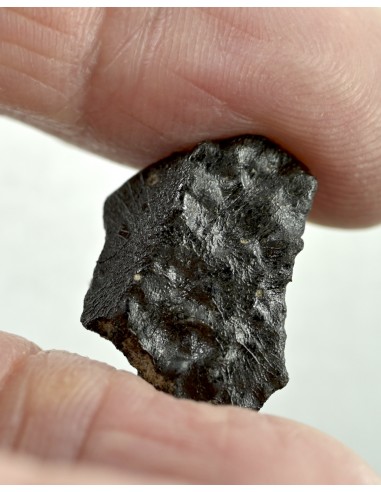
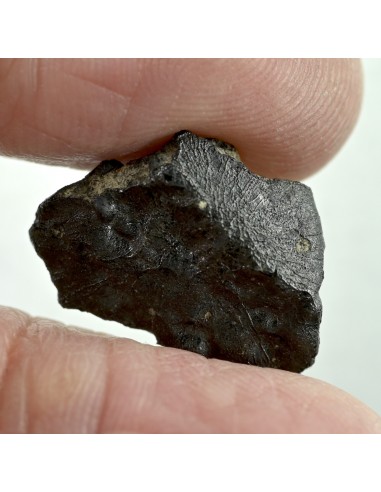
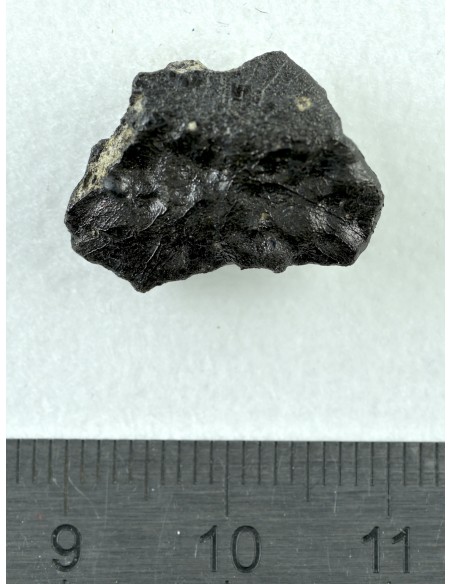
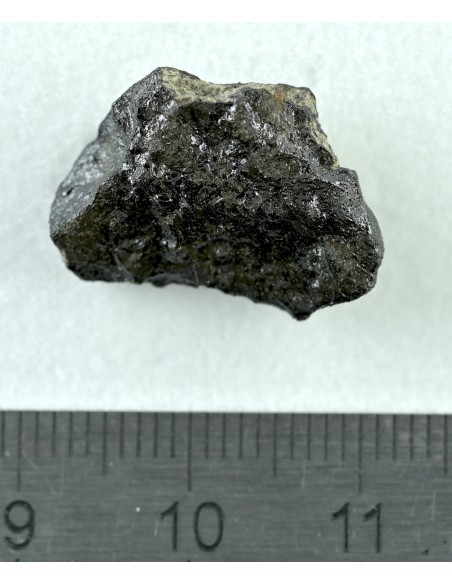
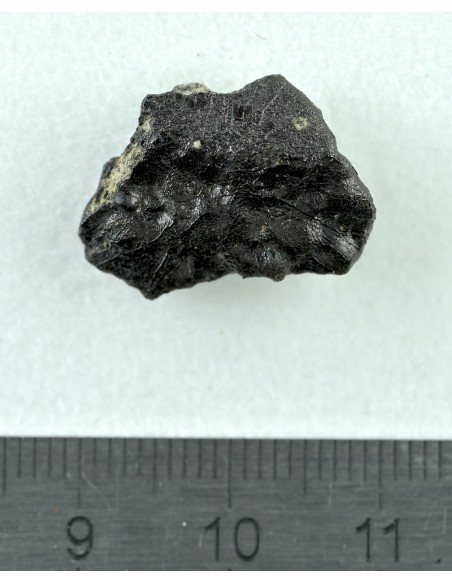
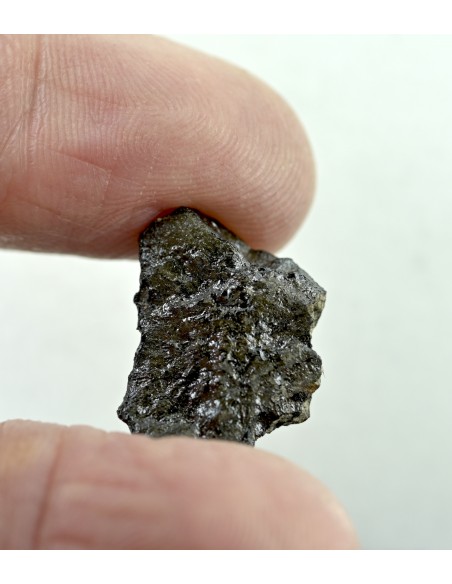
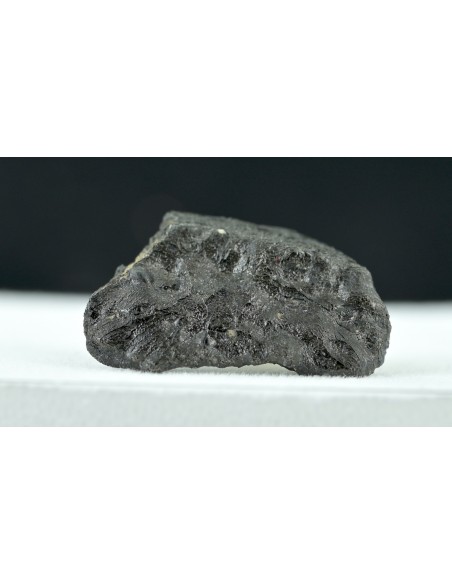
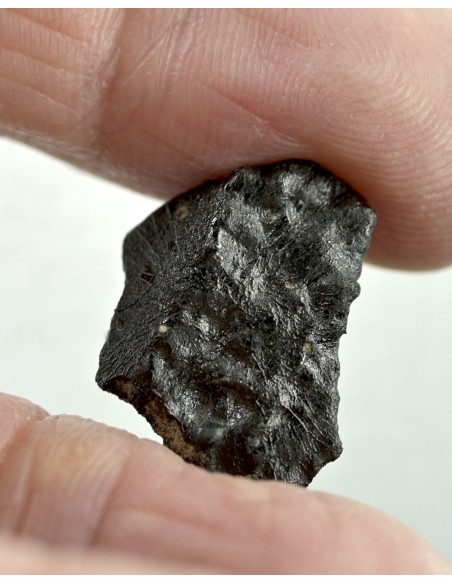
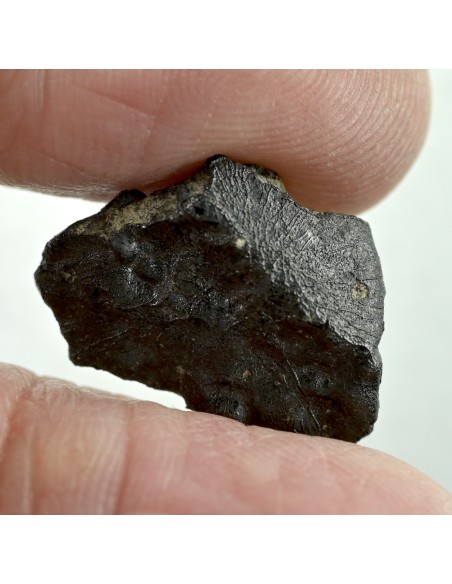
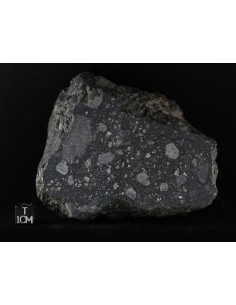
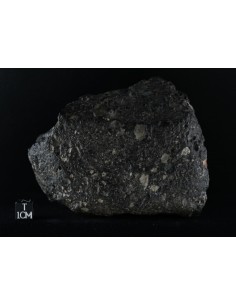
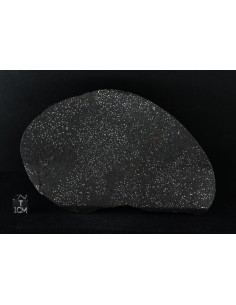
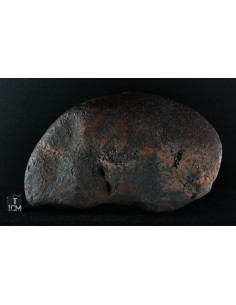
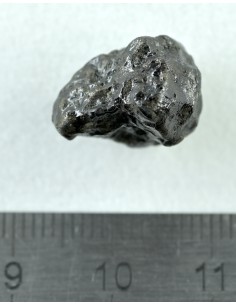
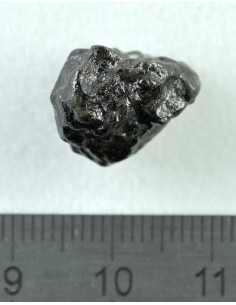
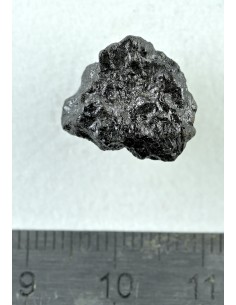
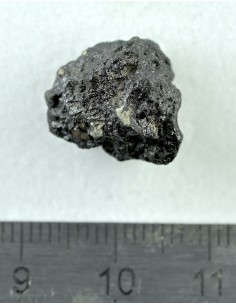
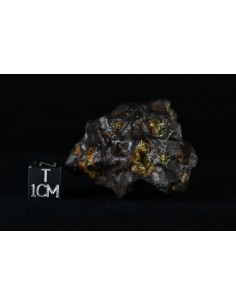
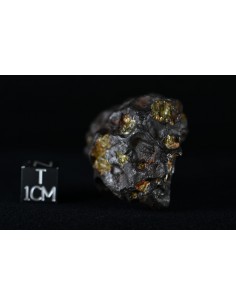
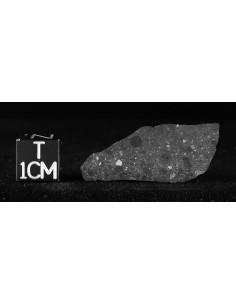
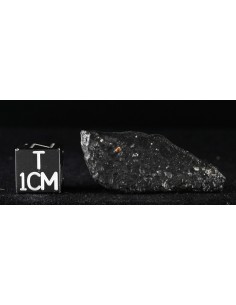
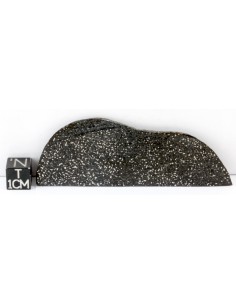
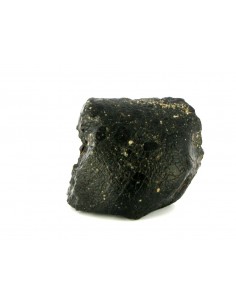
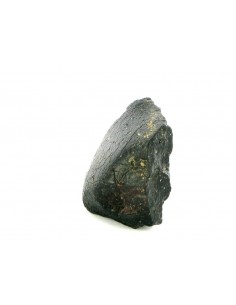
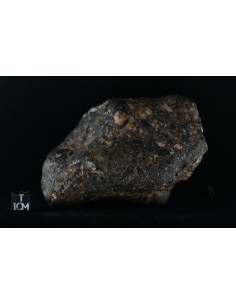
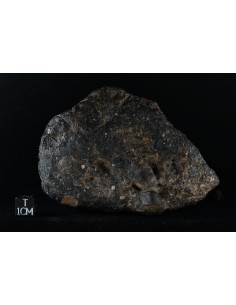
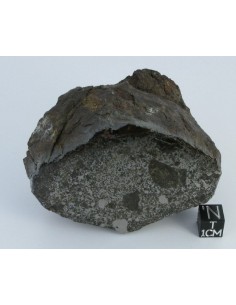
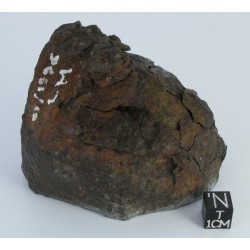
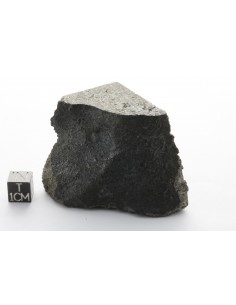
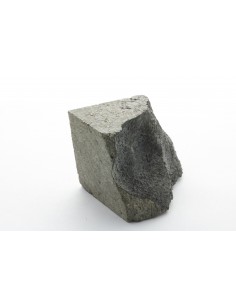
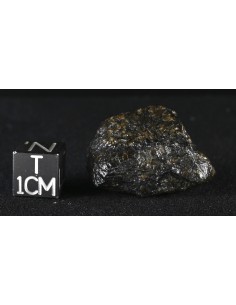
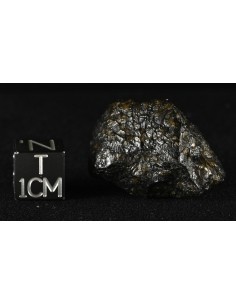
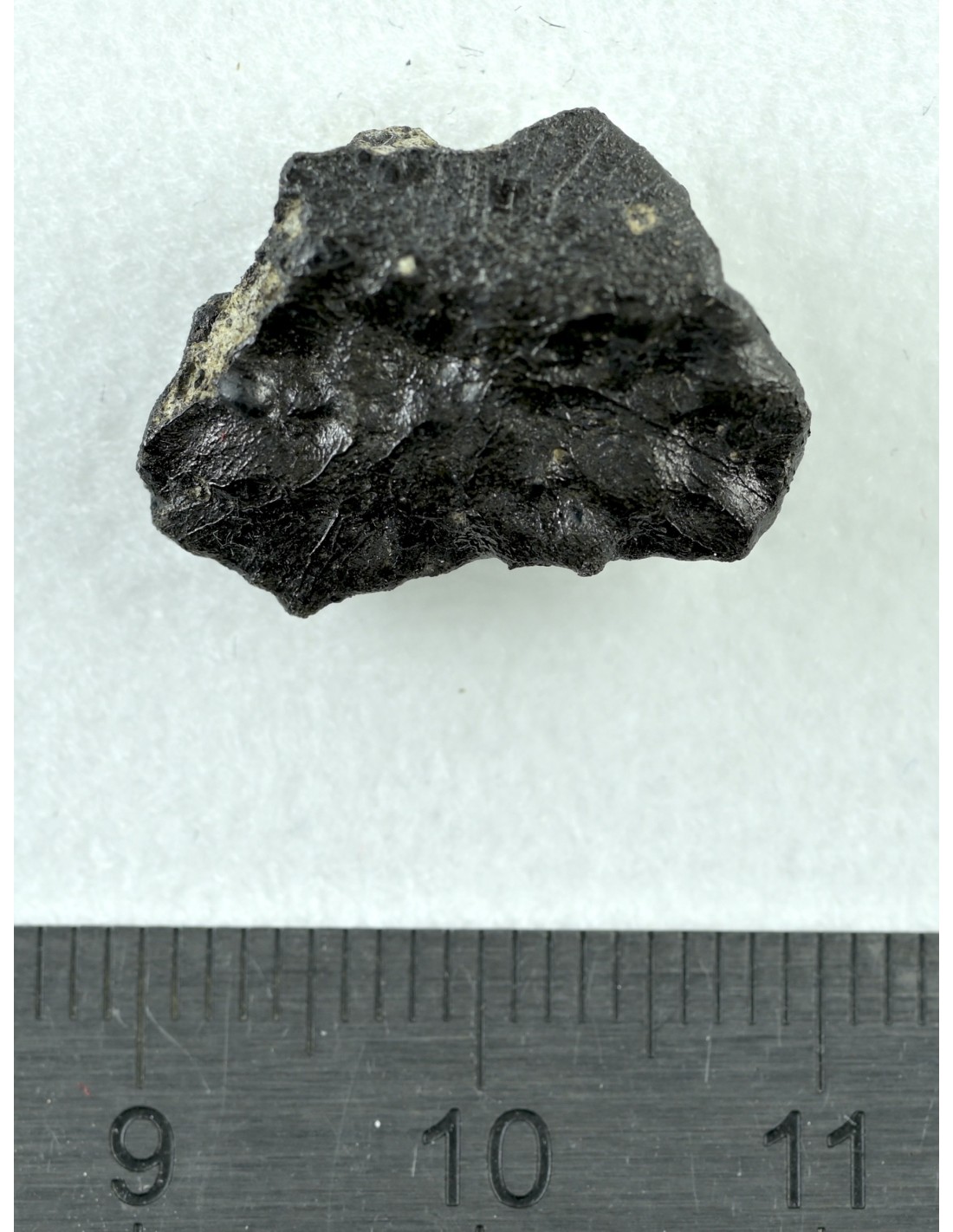
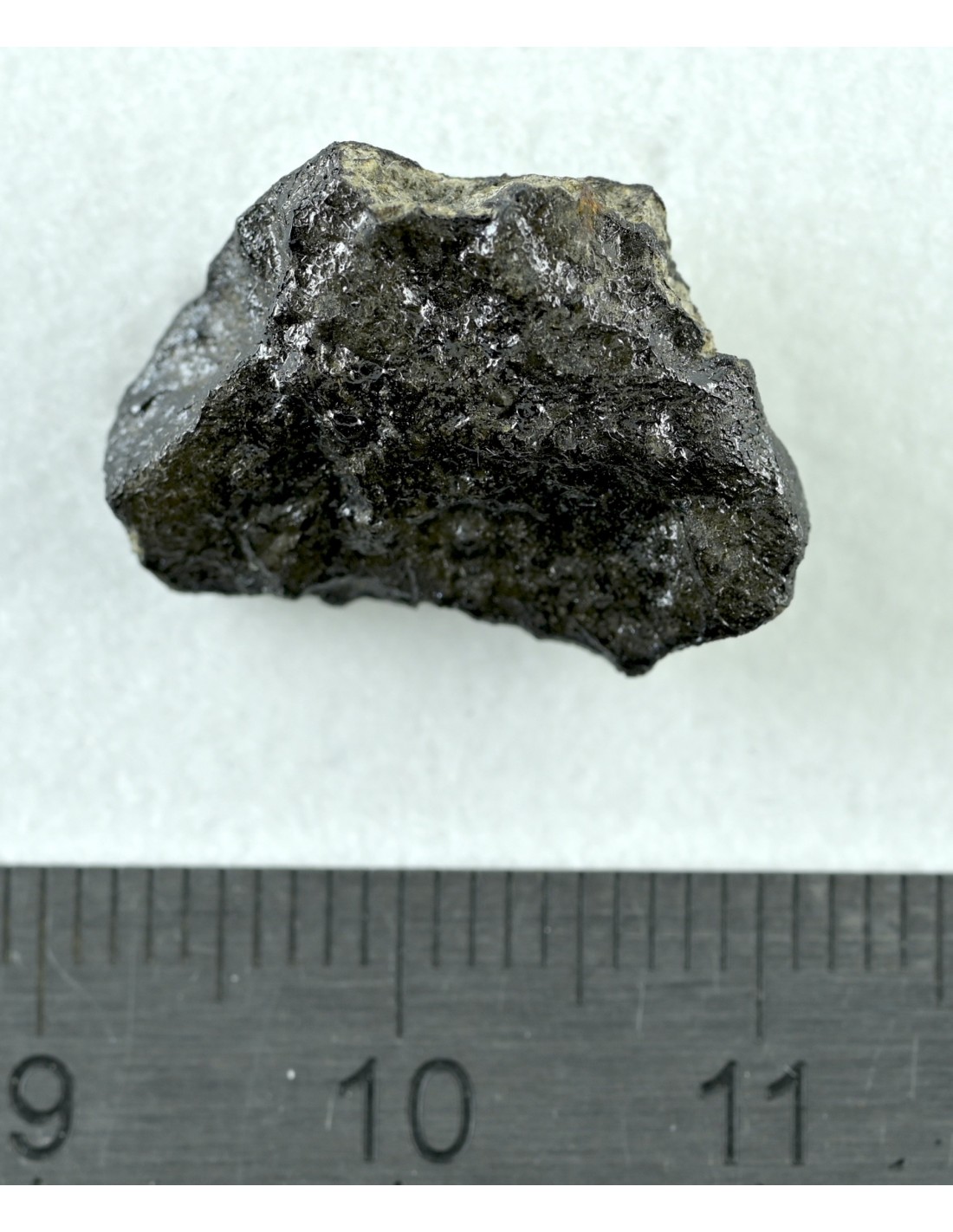
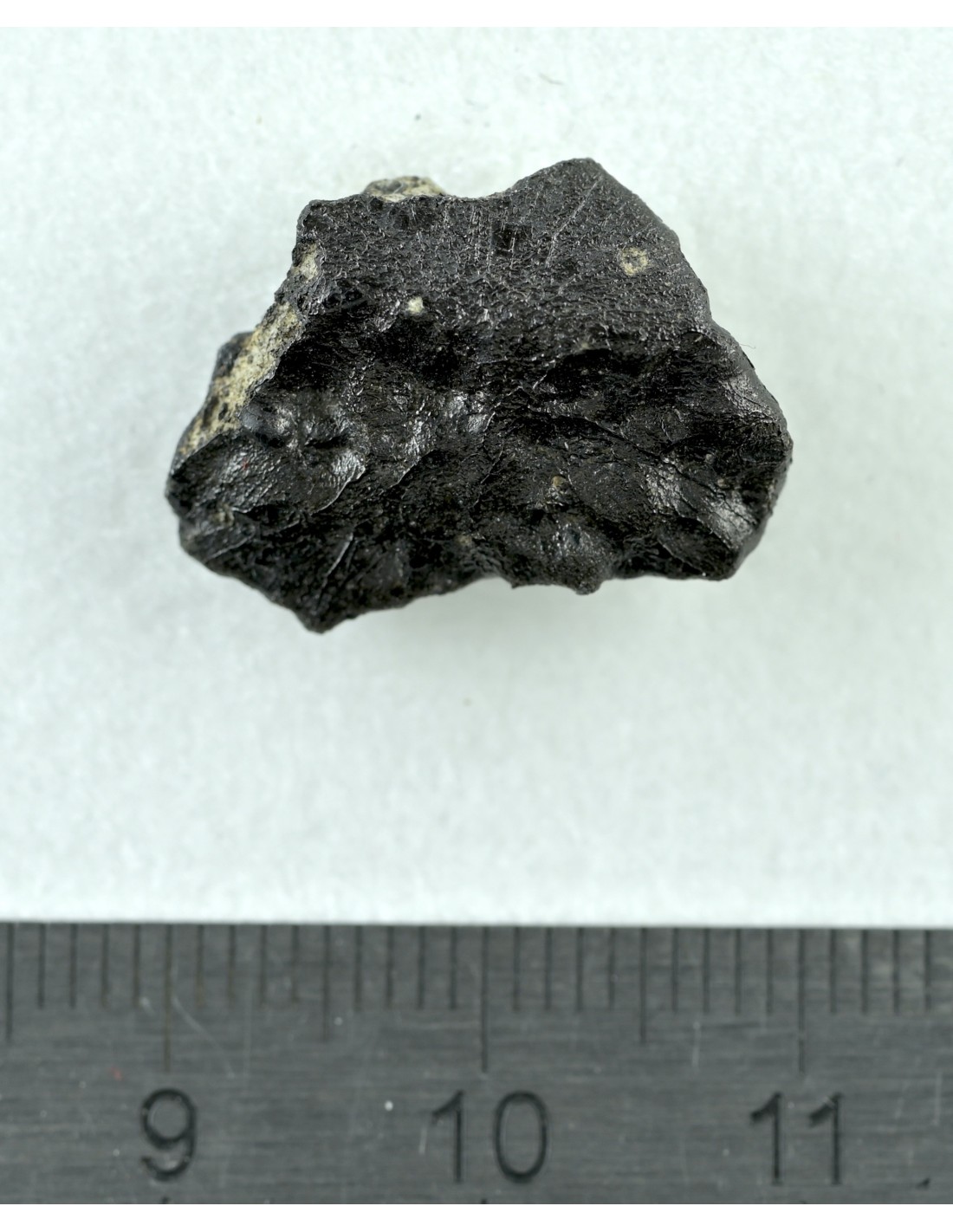
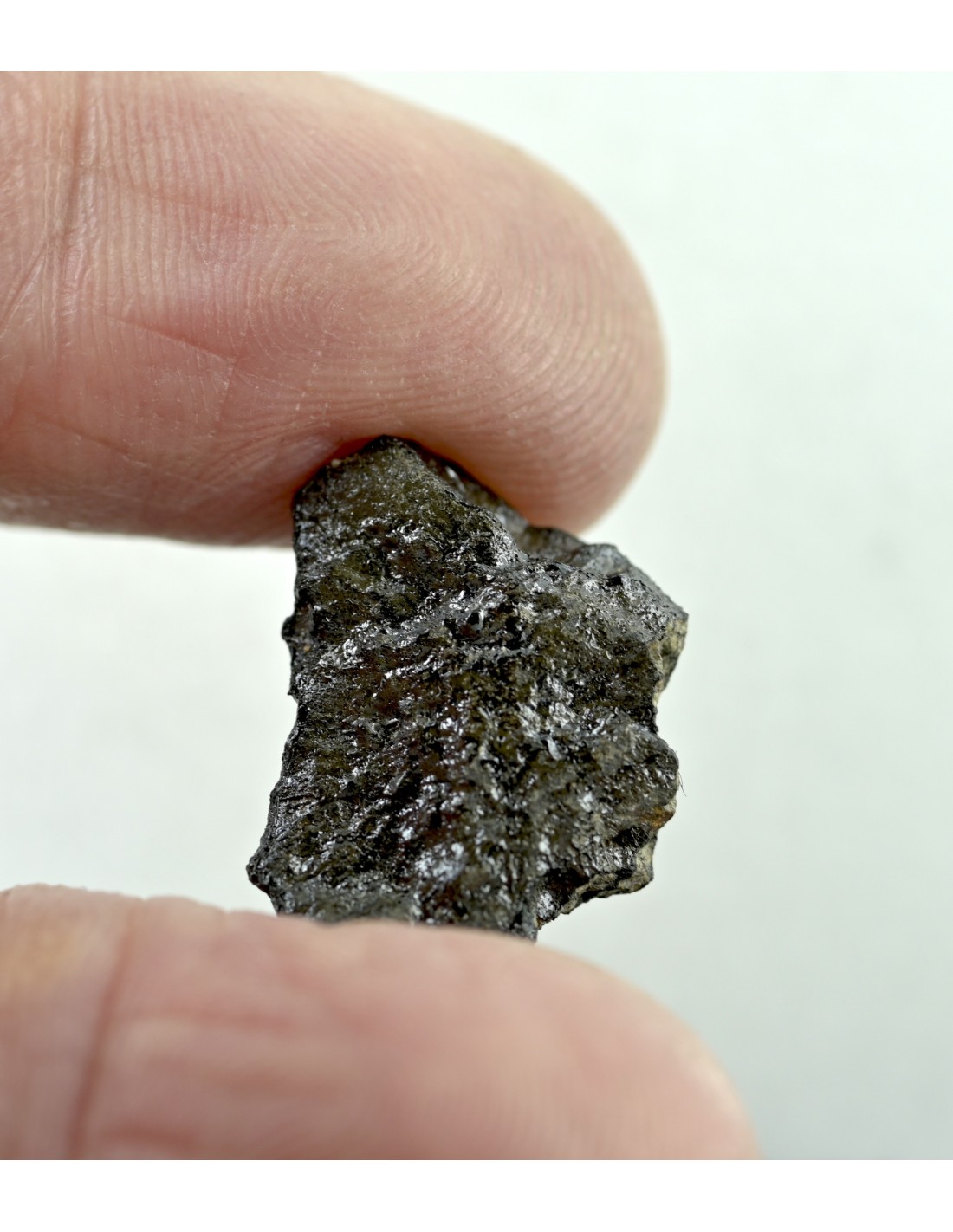
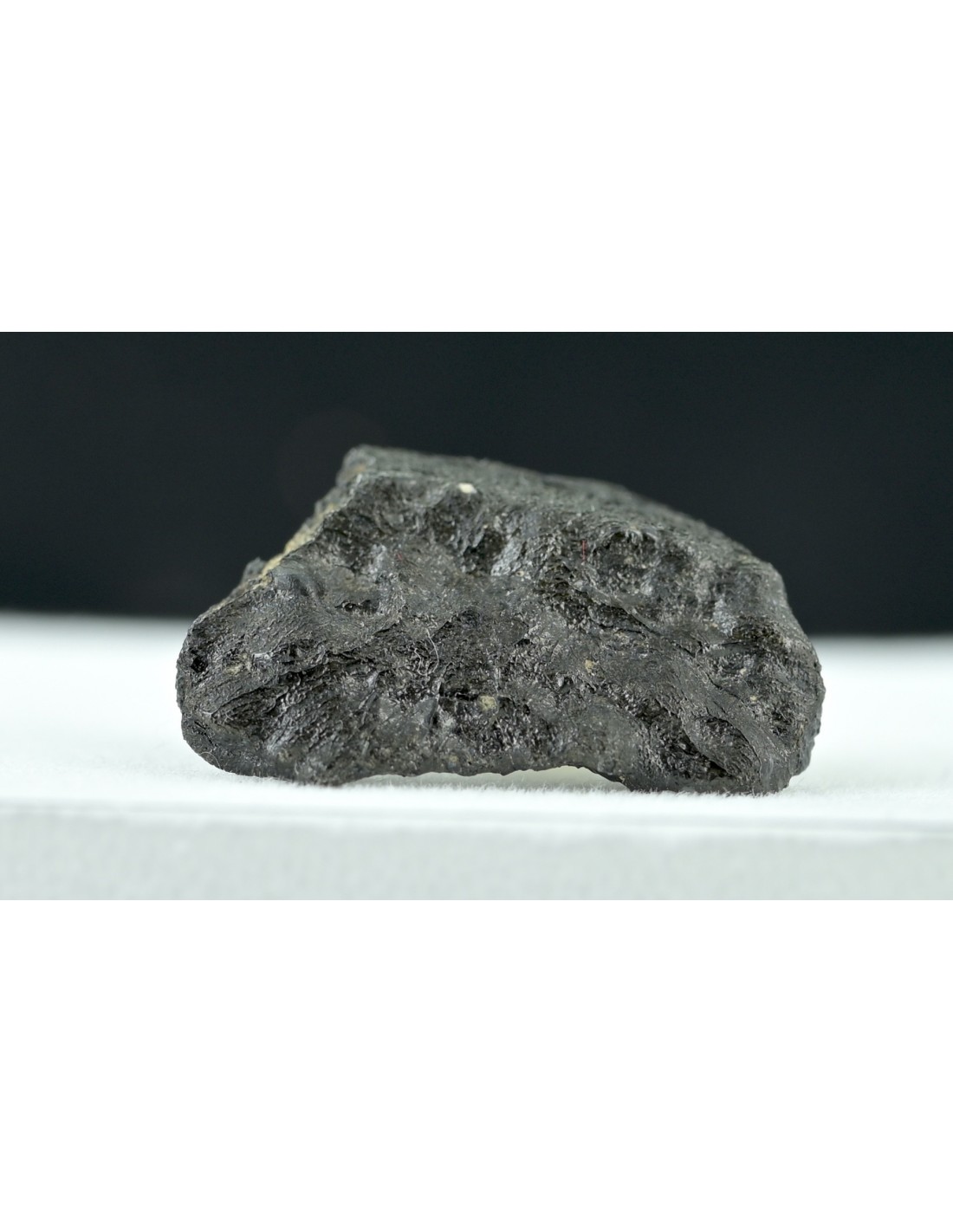
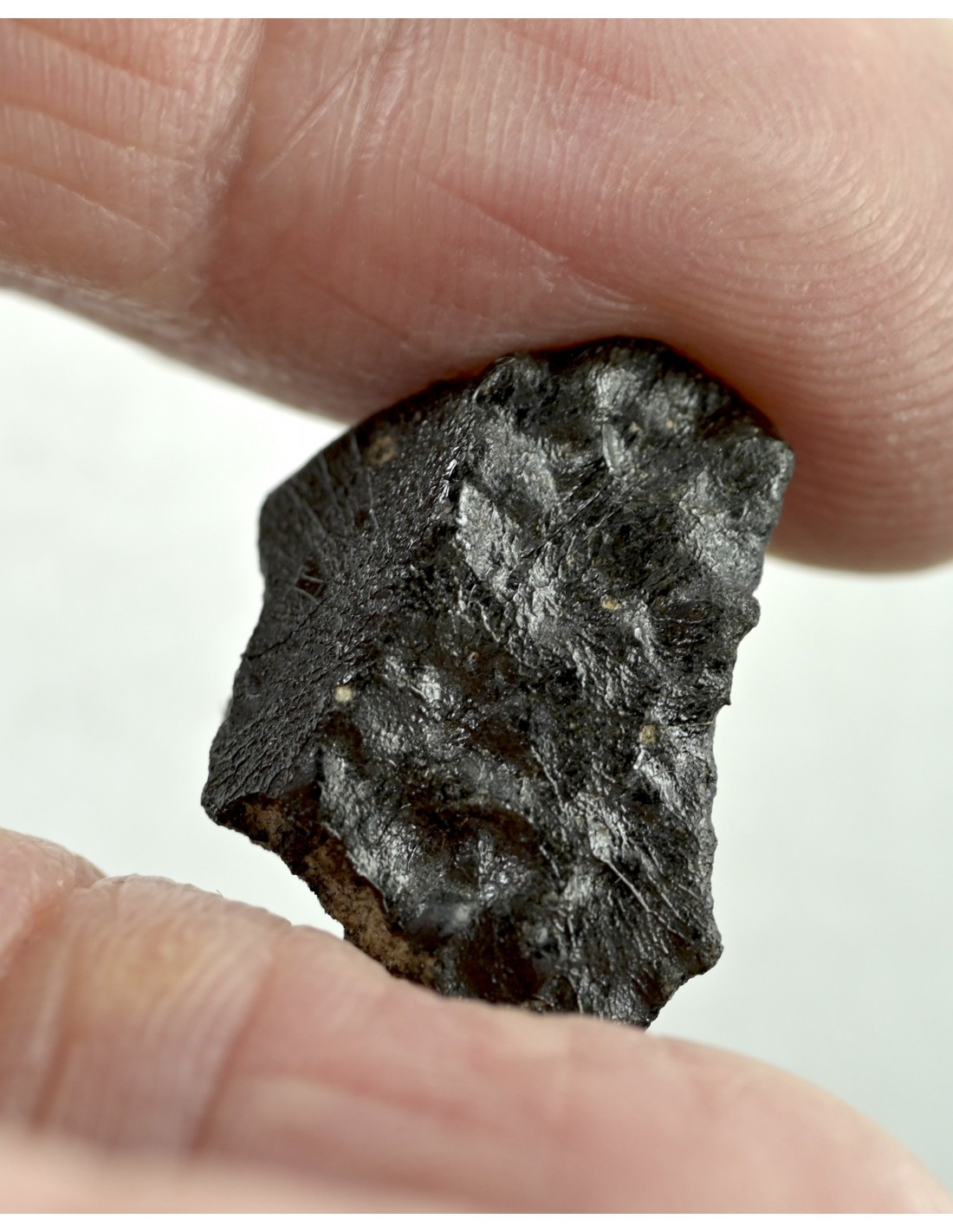
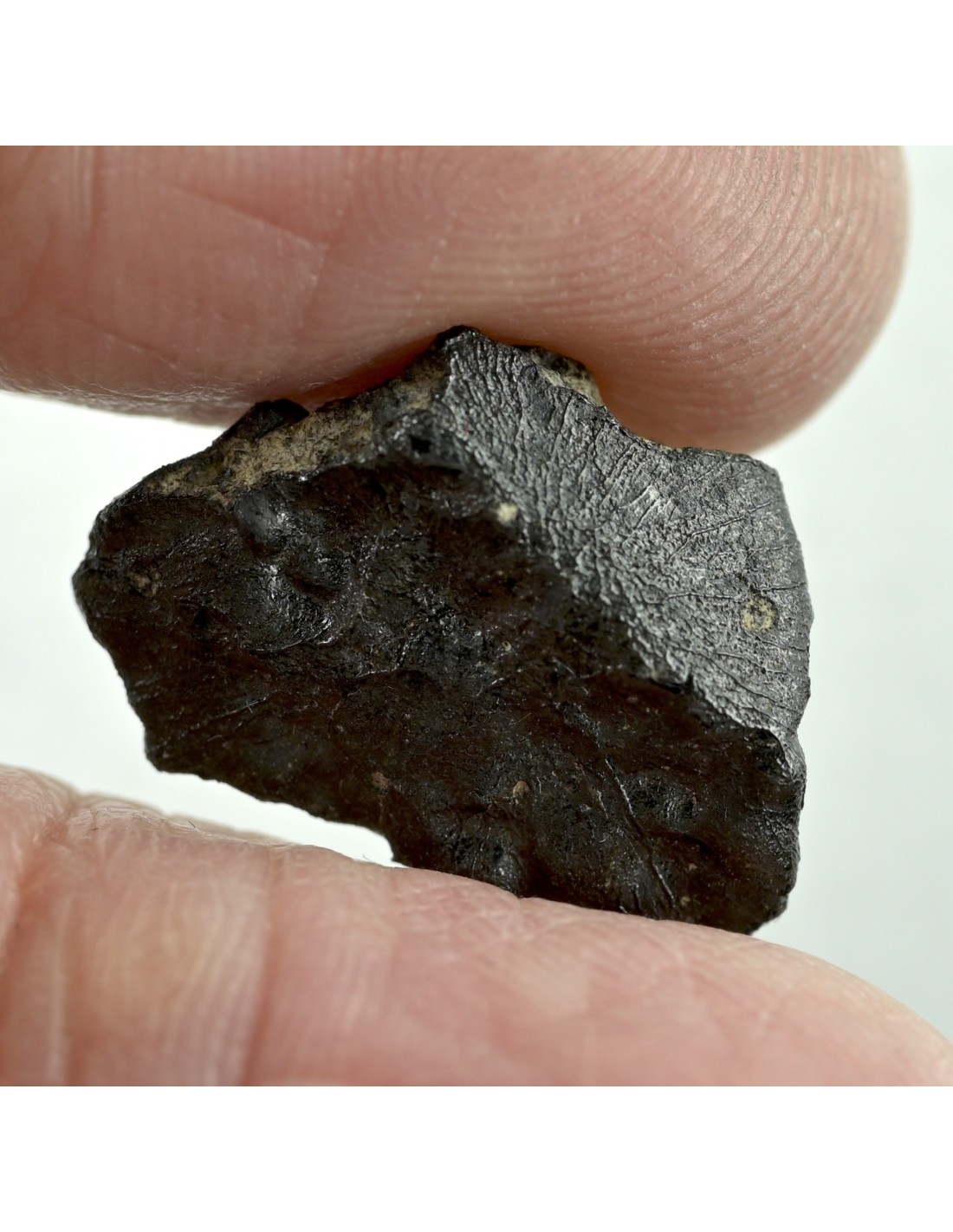
This 1.993 g specimen of the Martian meteorite Tissint is a remarkably expressive individual, distinguished by its clear aerodynamic orientation.
One face of the meteorite exhibits a network of radiating flow lines, emanating from a single focal point. These lines are formed during atmospheric entry, when molten material flows across the surface under intense heat and directional airflow. Their radial organization indicates a stable and oriented flight, making this specimen particularly informative from a physical and aerodynamic perspective.
Despite its modest size, the meteorite preserves a coherent and readable morphology, allowing the orientation features to be clearly observed. Such characteristics are not always present on small individuals, which makes this piece especially desirable.
Tissint is a witnessed fall (July 18, 2011, Morocco) and is one of the most important Martian meteorites discovered in recent decades. Its exceptional freshness has preserved delicate surface features such as fusion crust textures and flow structures, which are often altered or lost in older finds.
The combination of:
- Martian origin
- fresh fall preservation
- clear aerodynamic orientation
places this specimen in a highly sought-after category among collectors.
This piece is ideal for collectors seeking a compact yet scientifically meaningful Martian meteorite, with strong visual evidence of its atmospheric passage.