Shopping Cart
There are no more meteorites in your cart
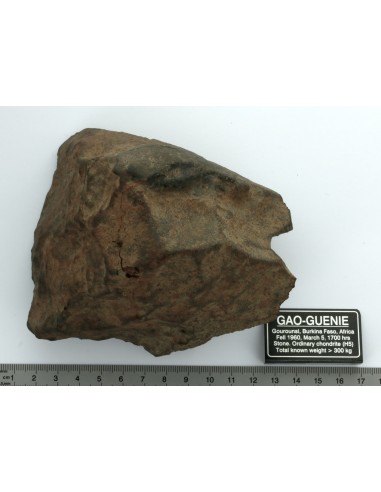
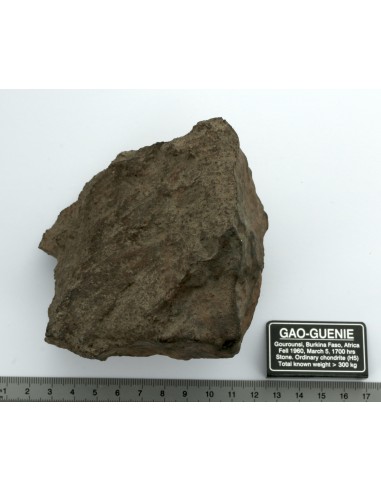
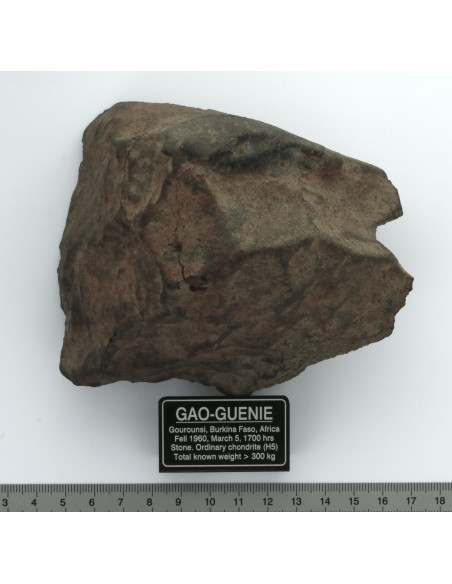
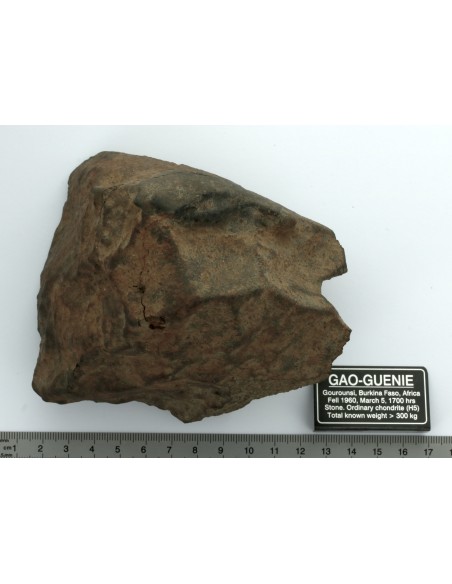
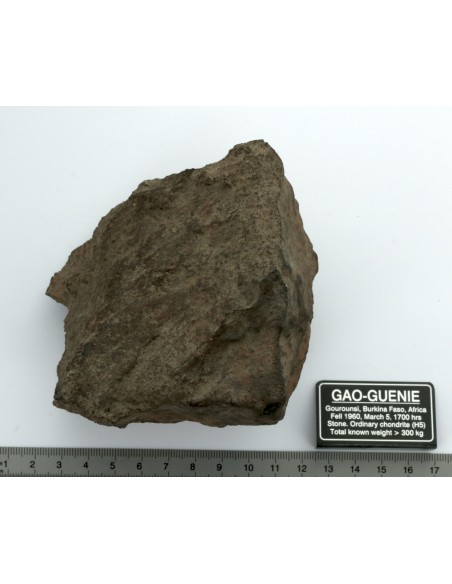
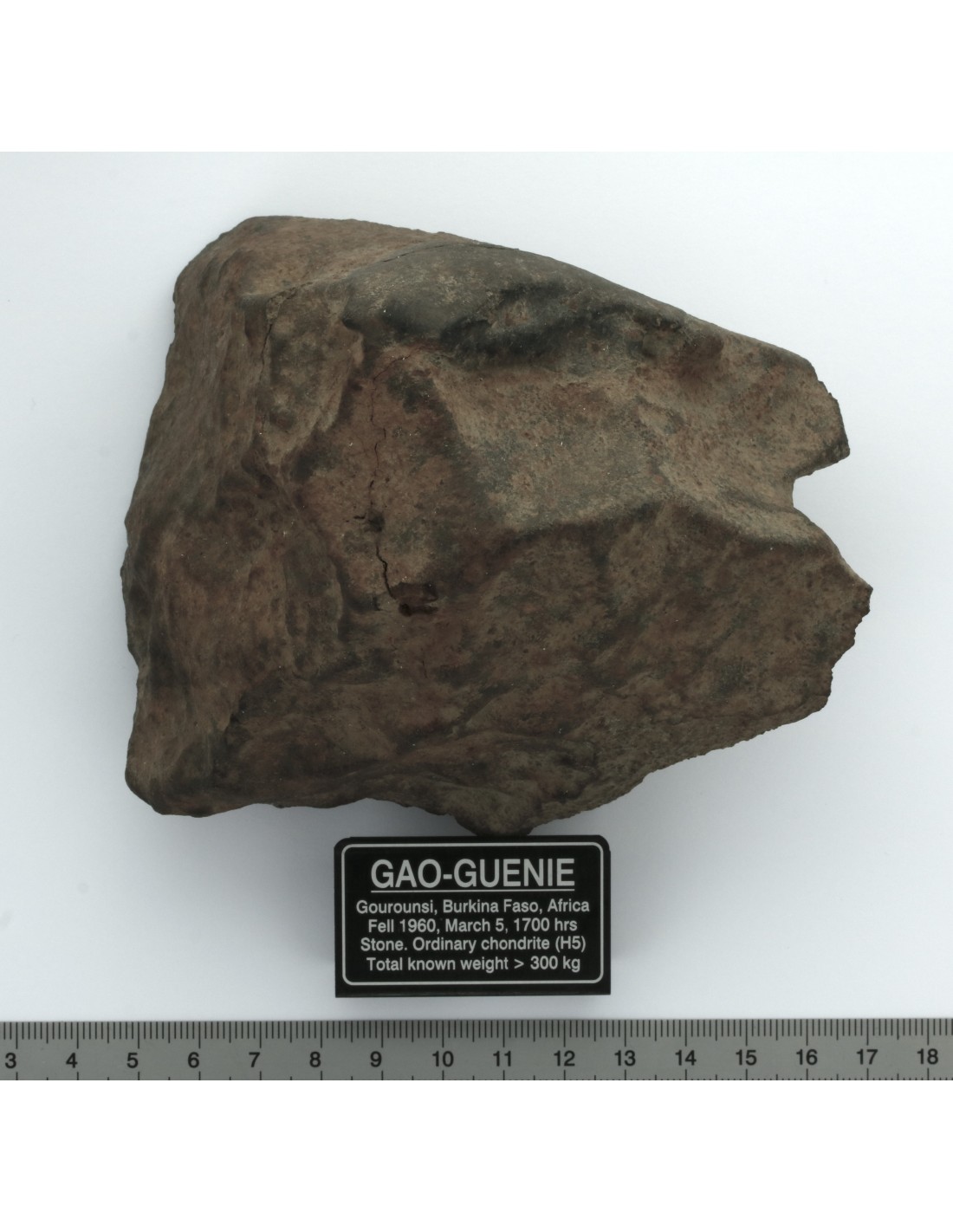
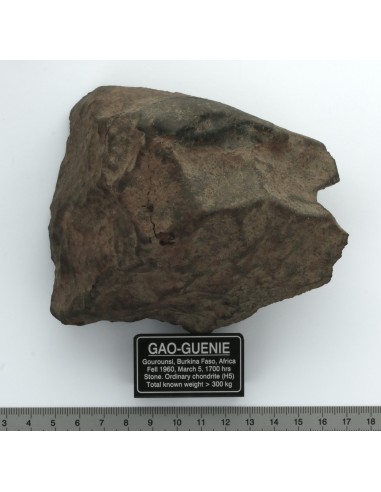
Gao-Guenie Meteorite – 1140 g Complete Individual – Historic H5 Chondrite Fall
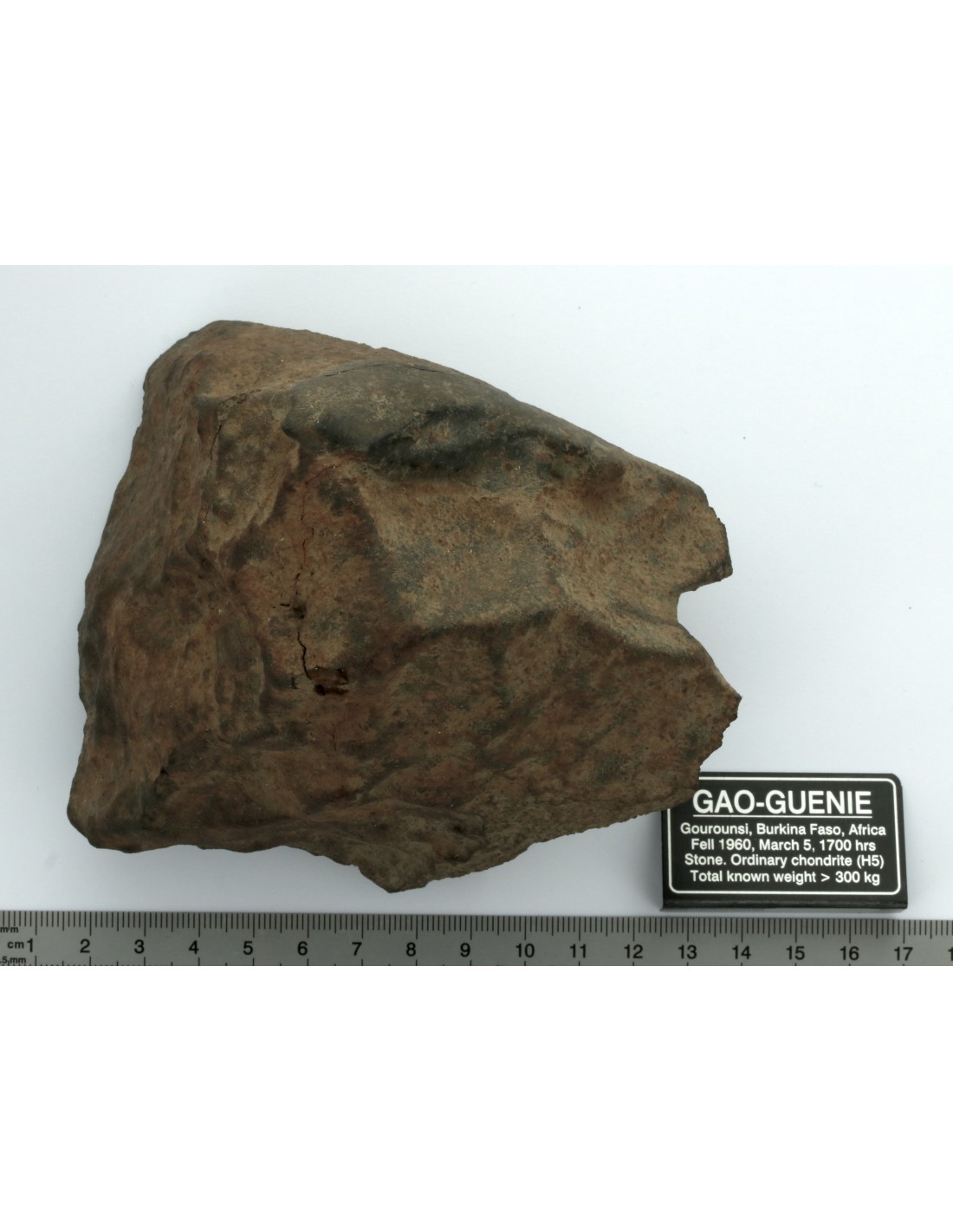
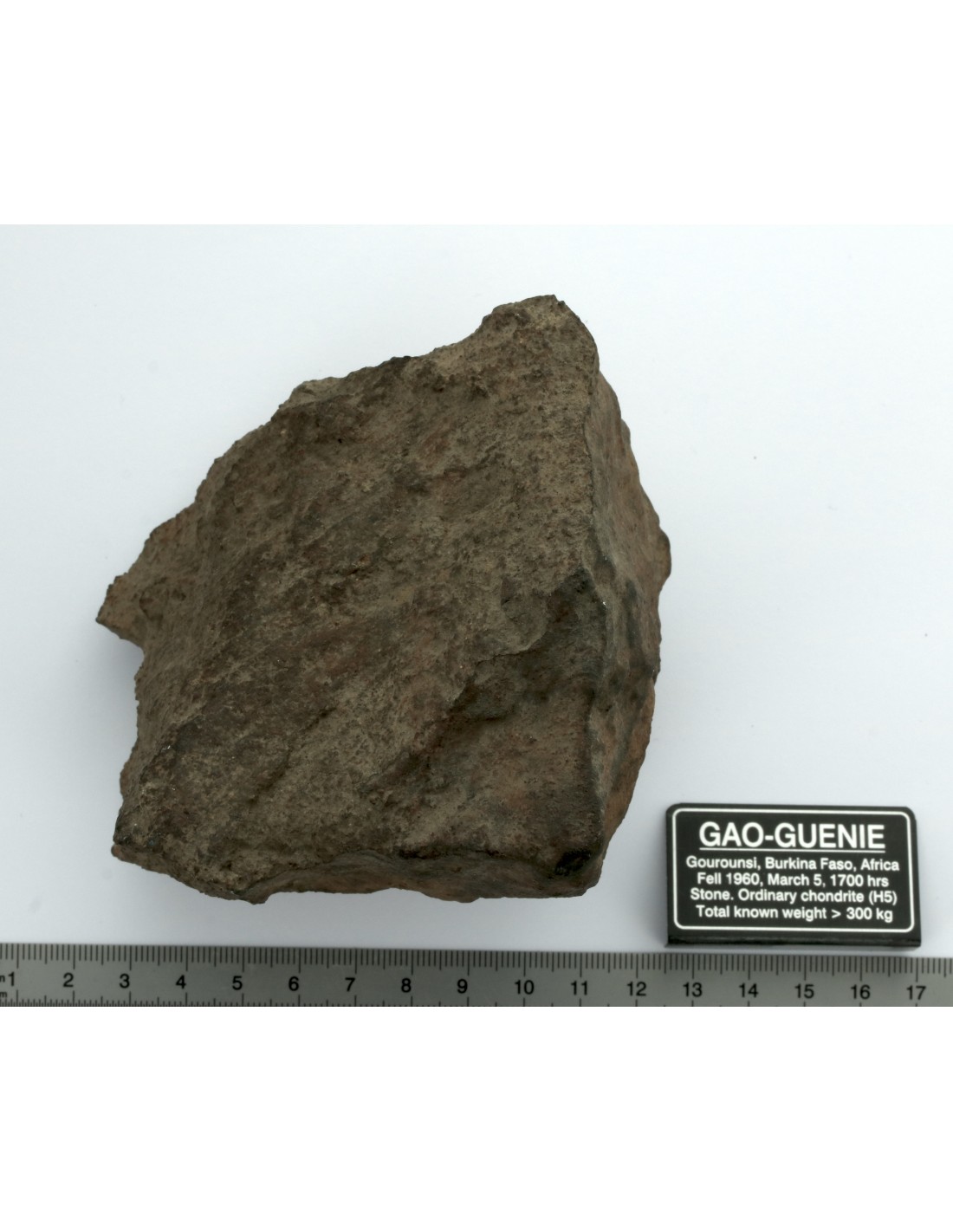
A rare large 1140 g Gao-Guenie individual from the historic 1960 witnessed fall in Burkina Faso, featuring the characteristic desert patina associated with Gao meteorites, preserved fusion crust, and a natural fractured face revealing the interior structure of this classic H5 ordinary chondrite.
A Large Historic Gao-Guenie Individual
This remarkable 1140 g Gao-Guenie meteorite is an impressive survivor of one of the most famous witnessed meteorite falls from West Africa.
Falling on March 5, 1960, in present-day Burkina Faso, the Gao-Guenie shower produced numerous stones scattered across a wide strewn field. Even today, more than sixty years after the fall, local inhabitants continue to recover specimens from the region, a testament to the extraordinary scale of this meteoritic event.
Large individuals exceeding one kilogram have become increasingly difficult to obtain, making this specimen particularly desirable for advanced collectors seeking substantial historic meteorites.
Characteristic Gao Patina
This individual displays the distinctive reddish-brown terrestrial patina commonly associated with Gao-Guenie meteorites.
The coloration developed during the meteorite’s long residence on the ground before its recovery and has become one of the visual signatures appreciated by collectors familiar with Gao specimens.
Rather than diminishing the meteorite’s appeal, this natural weathering records its terrestrial history and gives the specimen a powerful aesthetic presence.
Fusion Crust and Natural Fracture Surface
One side of the meteorite preserves areas of original fusion crust formed during atmospheric entry, while the opposite side represents a natural fracture surface likely produced either during the fall itself or after impact on the ground.
This contrast between fusion crust and fractured interior provides a particularly interesting presentation, simultaneously revealing both the atmospheric exterior and the internal structure of the meteorite.
Subtle flow features and sculpted surfaces remain visible across portions of the stone, testifying to its violent passage through Earth’s atmosphere.
A Classic H5 Ordinary Chondrite
Gao-Guenie is classified as an H5 ordinary chondrite, a meteorite type rich in iron-bearing minerals and metallic phases.
Its petrologic type 5 indicates significant thermal metamorphism within its parent asteroid, while still preserving the primitive materials formed during the earliest stages of Solar System history more than 4.5 billion years ago.
Because Gao-Guenie is a witnessed fall with well-documented recovery history, it has long held scientific importance and remains one of the classic ordinary chondrites represented in museums and major collections worldwide.
Collector Interest
Large complete Gao-Guenie individuals are increasingly scarce on the market today.
Specimens above one kilogram combine historical importance, strong display presence, and collector desirability, especially when preserving both atmospheric surfaces and natural fracture features.
This 1140 g individual is an excellent example of the enduring appeal of Gao-Guenie meteorites — authentic witnesses to one of the great historic meteorite falls of Africa.
Tap to zoom