Shopping Cart
There are no more meteorites in your cart

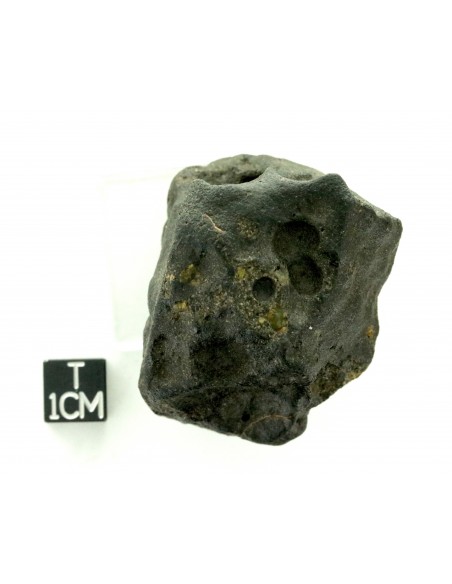
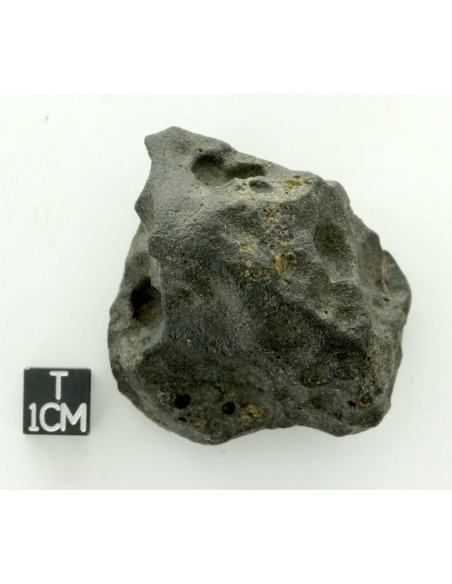
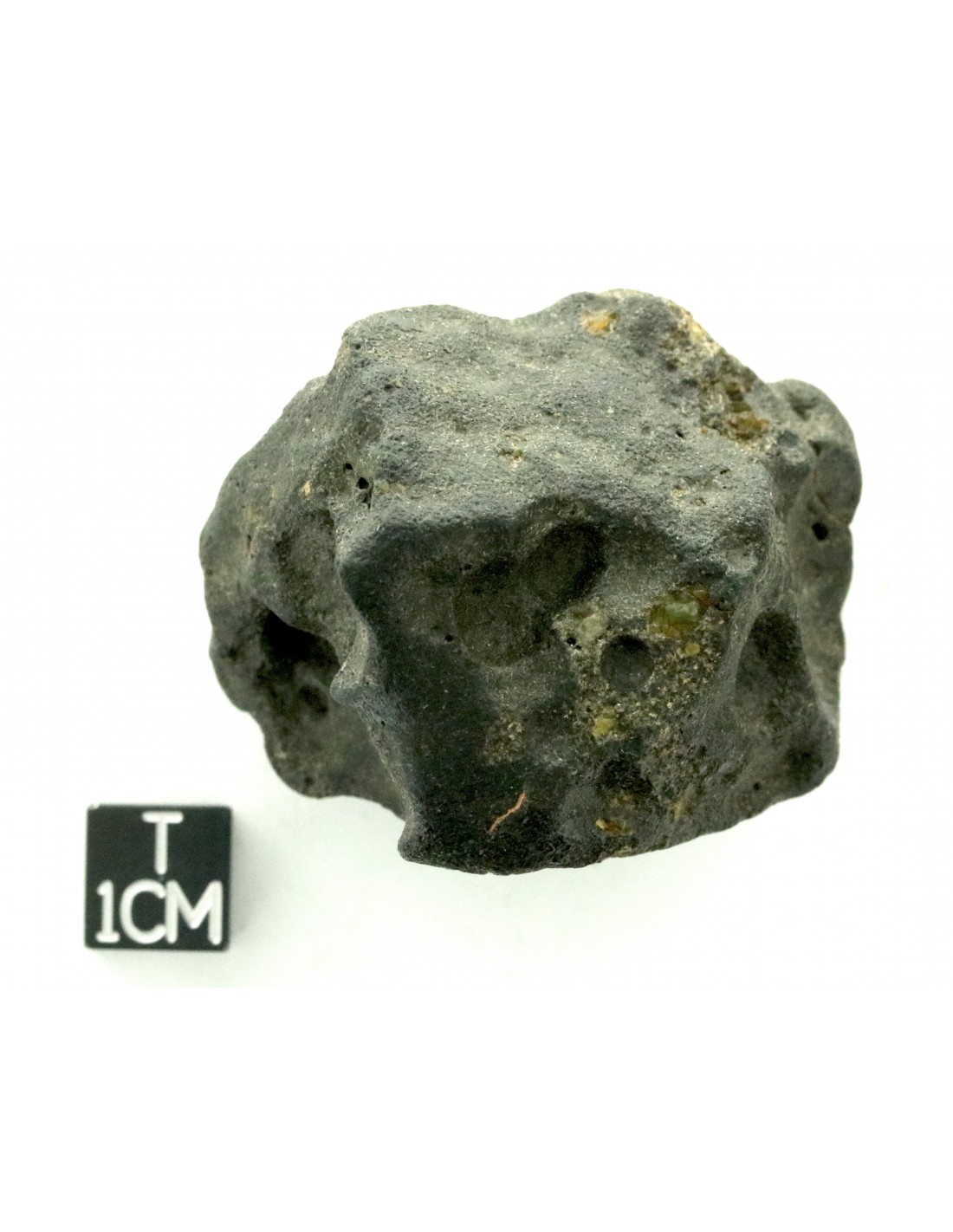
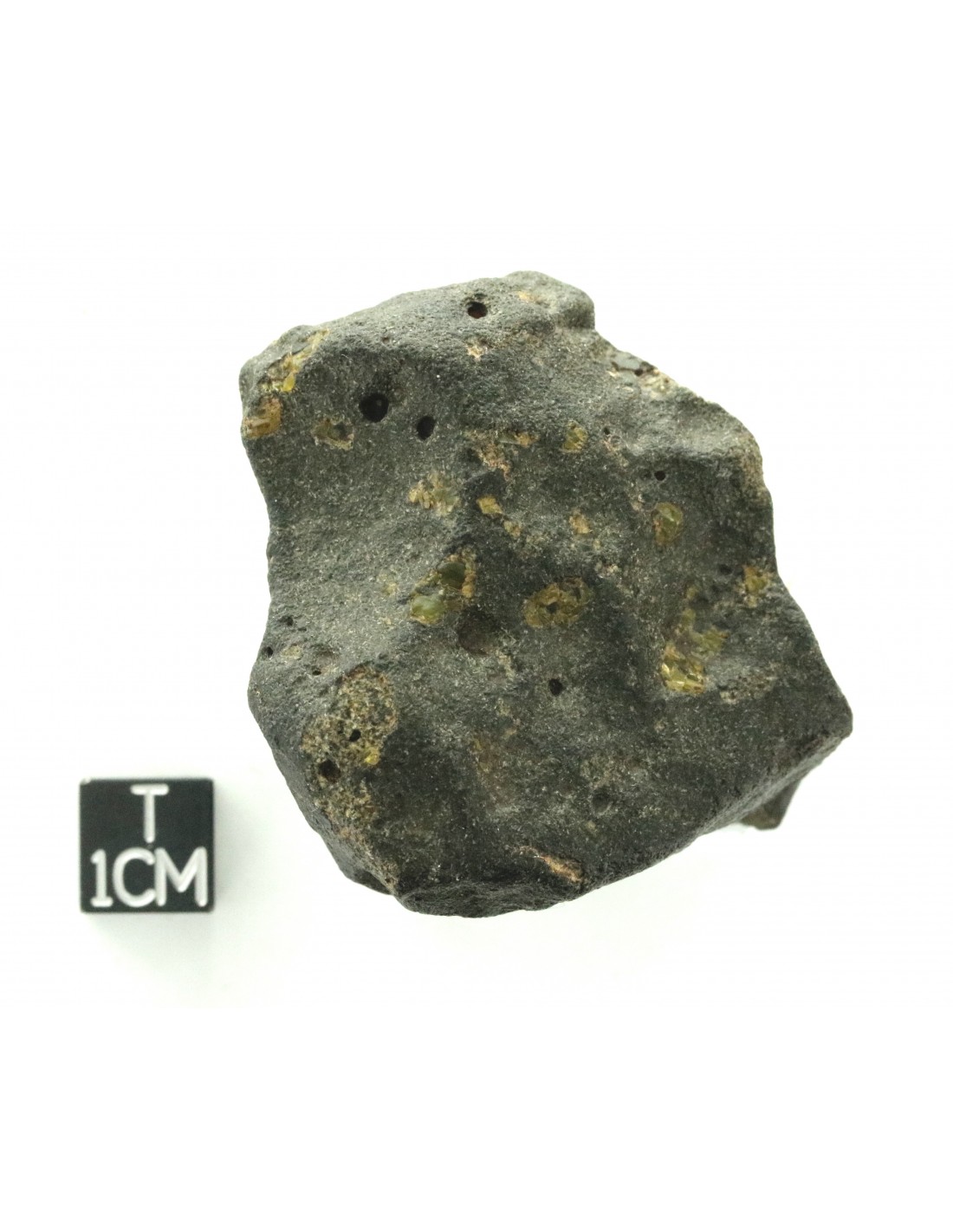
Oued Namous 001 – Volcanic Angrite with Vesicles & Fusion Crust (97.80 g Individual)
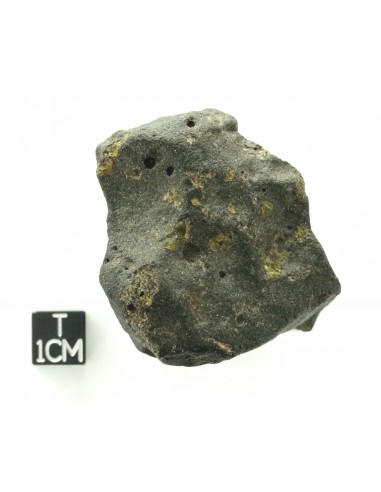
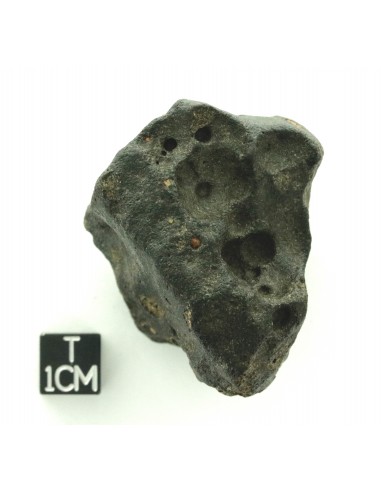
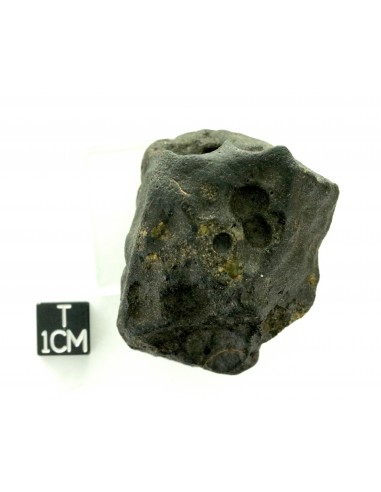
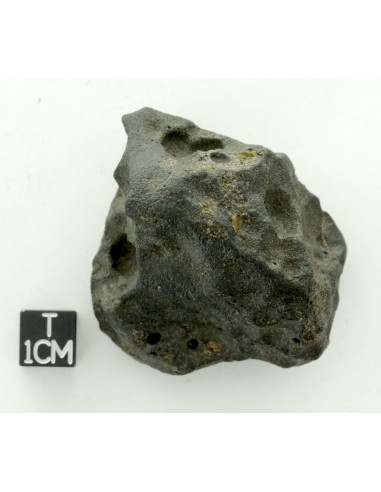
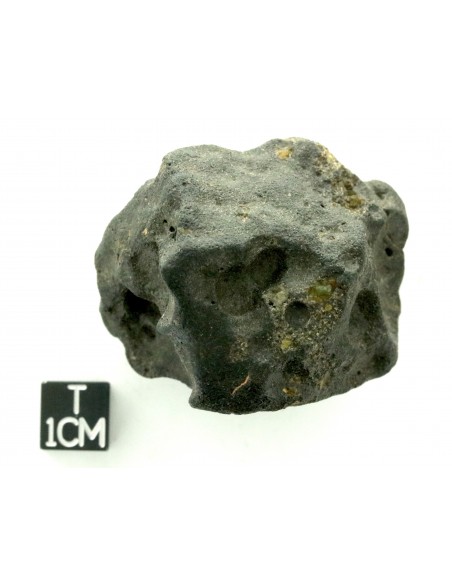
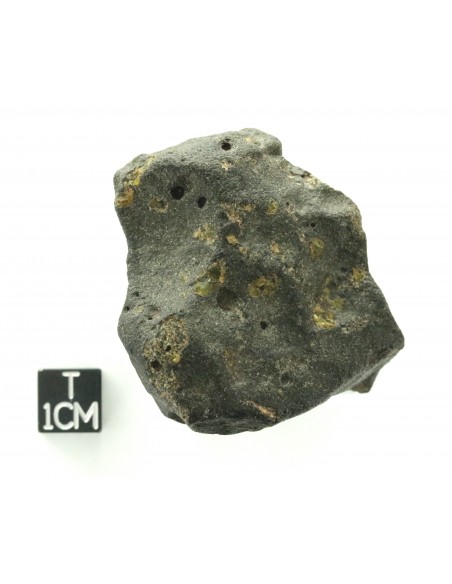
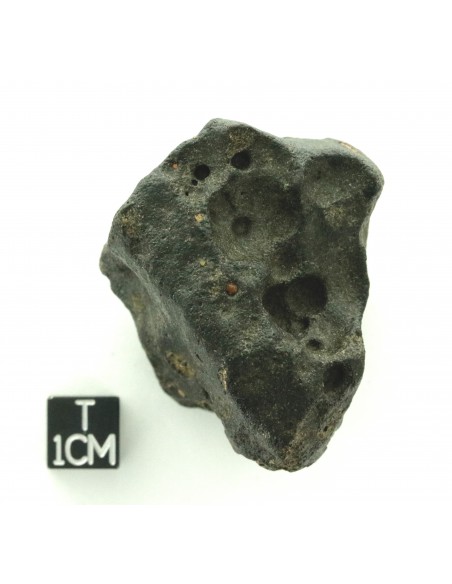
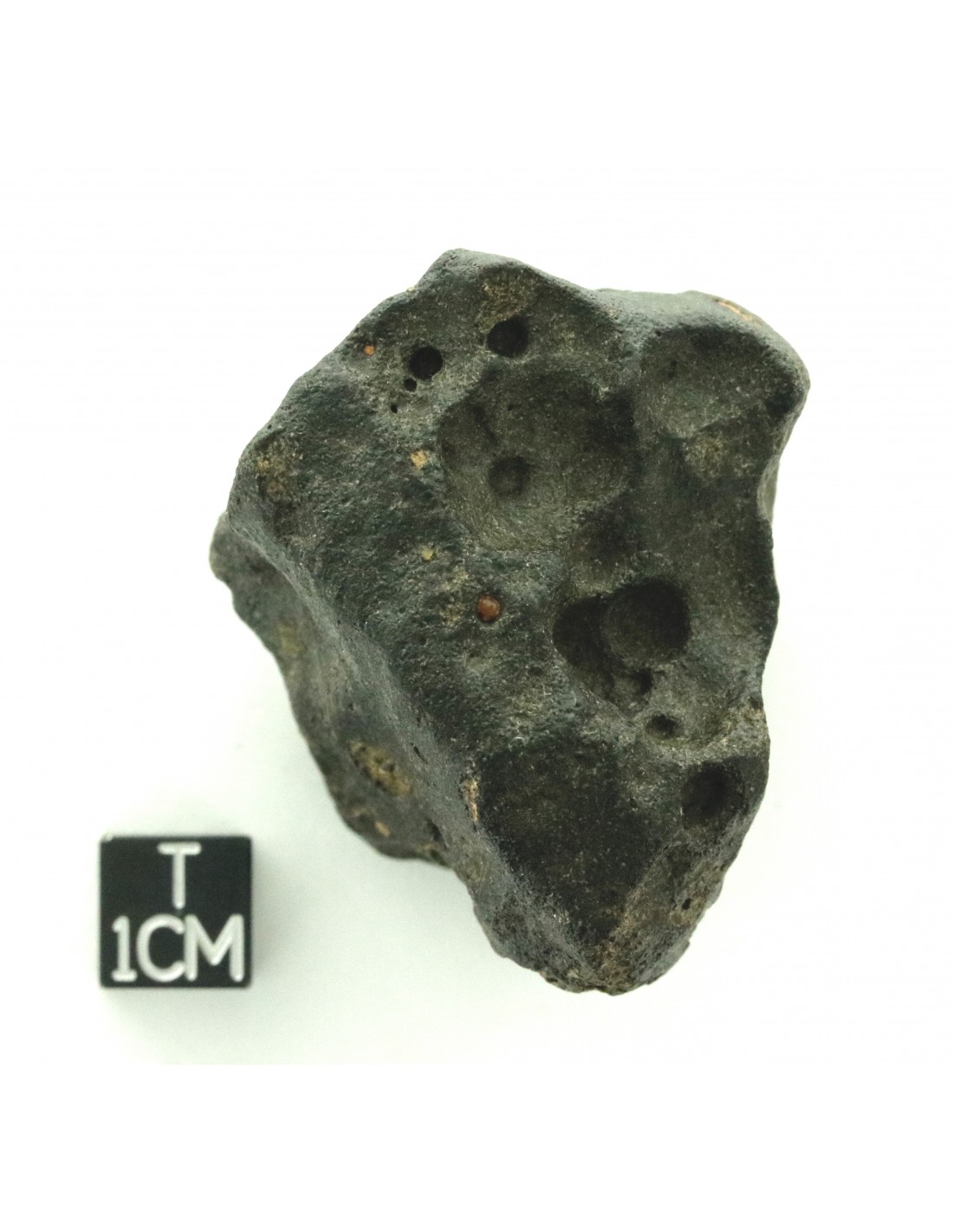
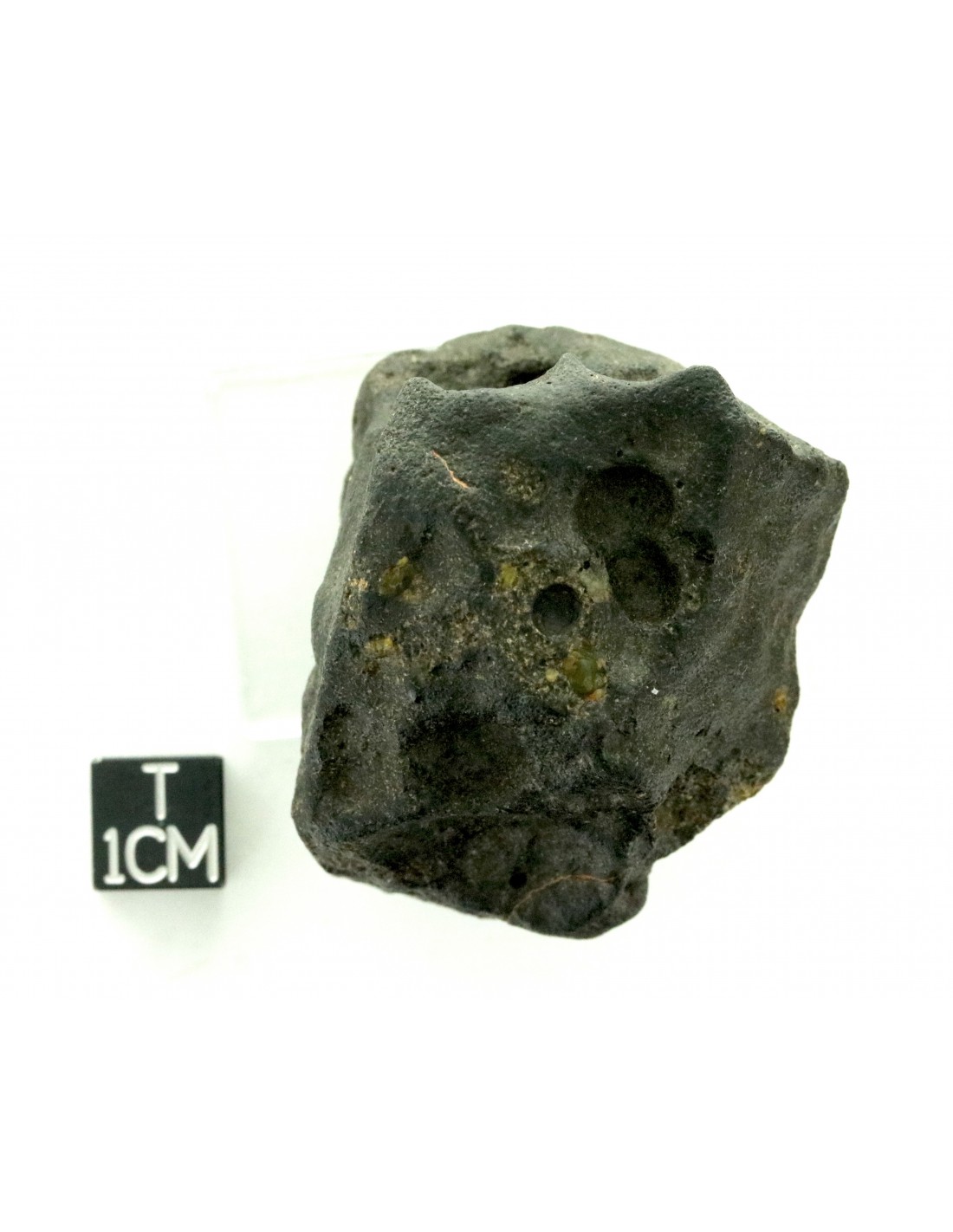
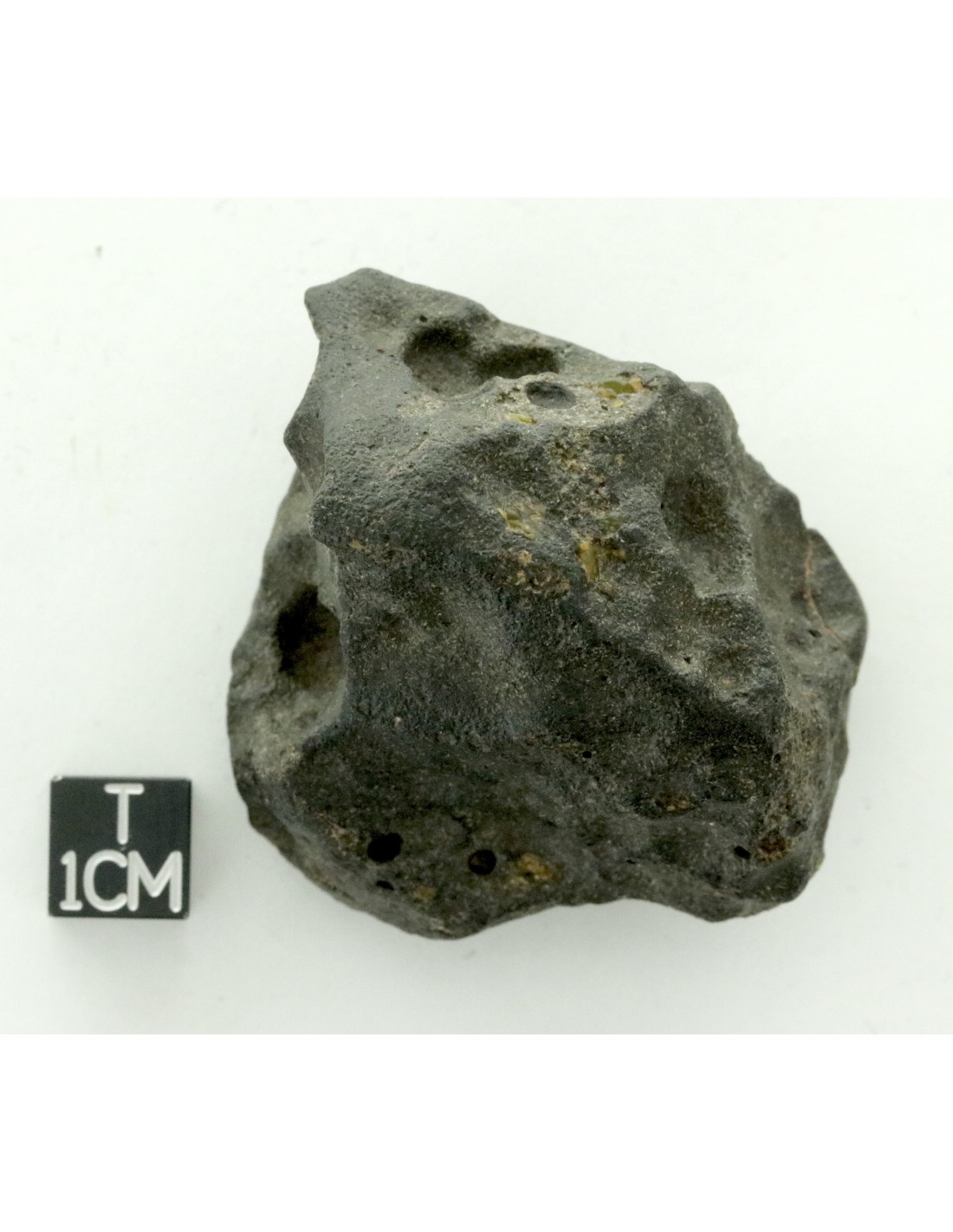
A rare 97.80 g individual of the volcanic angrite Oued Namous 001, displaying abundant spherical vesicles (vugs), a textured fusion crust, and visible green olivine phenocrysts—an exceptional witness to early Solar System volcanism.
This 97.80 g specimen of Oued Namous 001 is a remarkable example of a volcanic angrite, a rare class of basaltic achondrites formed through early magmatic processes on a differentiated parent body.
Its surface is characterized by a dark, well-developed fusion crust, locally smooth but often finely granular in texture, giving the specimen a distinctive tactile quality. This crust enhances the relief of the underlying structure and contributes to the sculptural presence of the piece.
One of the most striking features of this angrite is the presence of abundant spherical vesicles (vugs) distributed across the specimen. These cavities are the direct result of volatile degassing during lava solidification, clearly indicating a volcanic origin. Such well-expressed vesicular structures are particularly sought after, as they provide a rare and direct insight into extraterrestrial volcanic processes.
Broken and naturally exposed areas reveal a fine-grained mosaic of black, green, and lighter mineral phases, typical of angritic lithology. Within this matrix, one can observe scattered gem-quality green olivine phenocrysts, some reaching several millimeters in size, adding both scientific interest and visual contrast.
The interplay between:
- the granular fusion crust,
- the vesicular texture,
- and the internal crystalline mosaic,
creates a specimen that is both geologically informative and visually compelling.
This piece combines textural complexity, volcanic evidence, and mineralogical diversity in a single compact individual—an uncommon and highly desirable combination for collectors.
🔬 Scientific Significance
Angrites are among the most important meteorites for understanding early planetary evolution:
- They represent some of the earliest volcanic rocks in the Solar System
- Their vesicles (vugs) are direct evidence of magma degassing in low-gravity environments
- They formed on a differentiated parent body shortly after Solar System formation (~4.56 Ga)
- Their mineralogy provides key insights into primitive igneous processes
The presence of well-developed vesicles makes this specimen particularly valuable, as such features are rarely preserved so clearly.
Tap to zoom