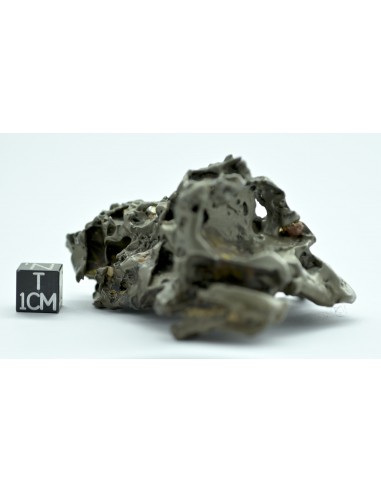
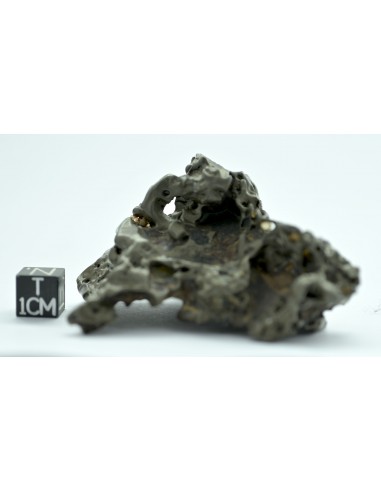
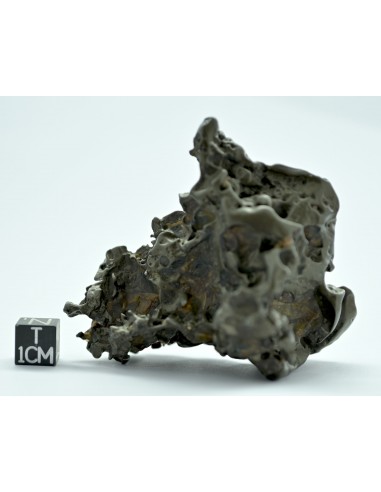
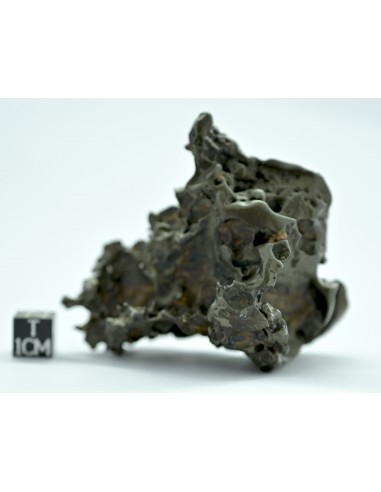
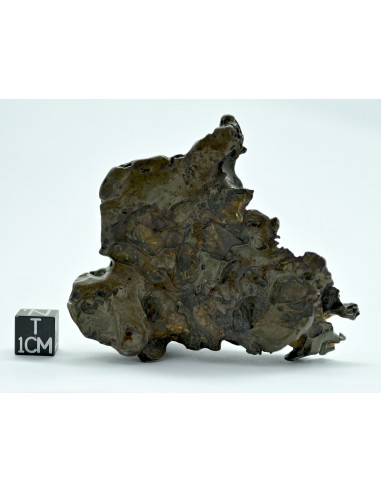
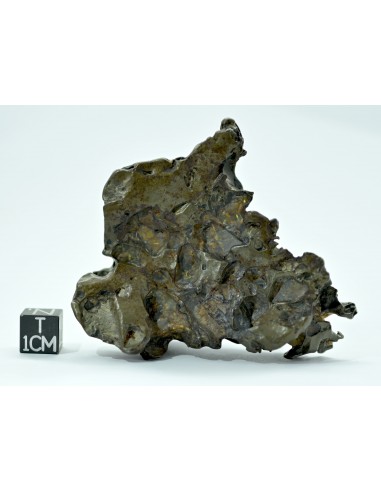
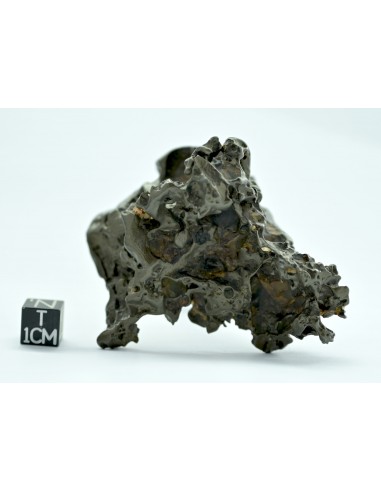
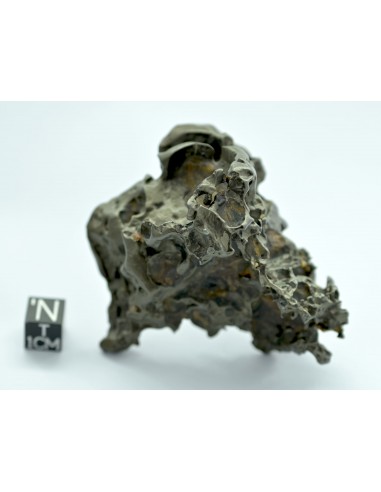
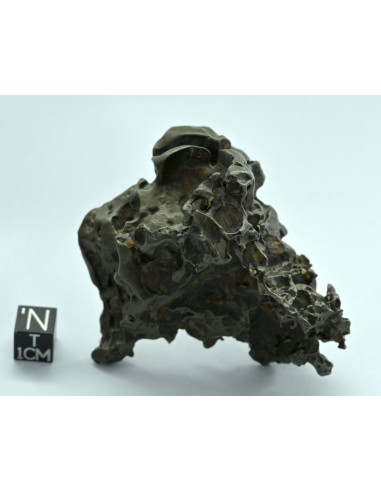
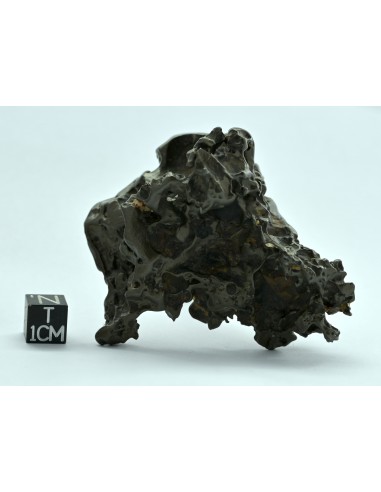
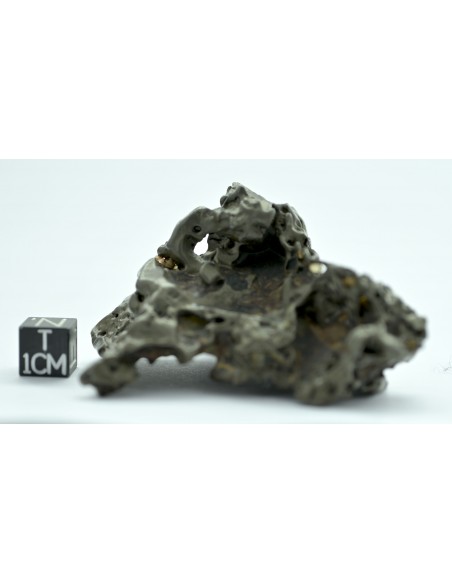
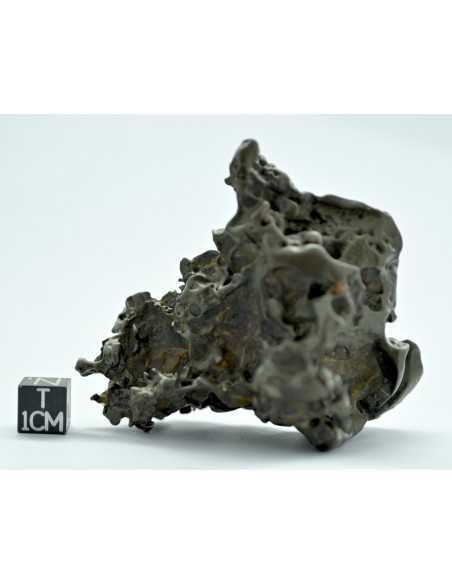
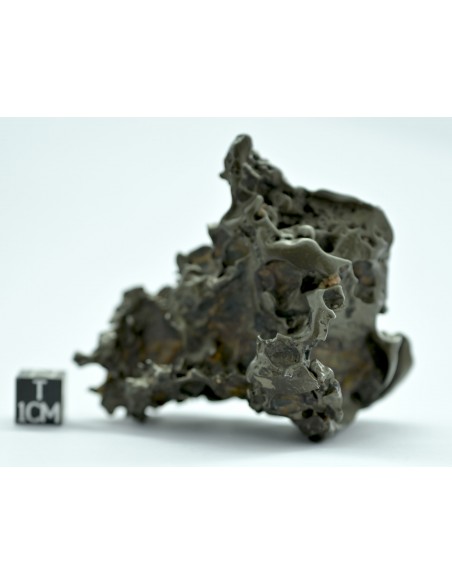
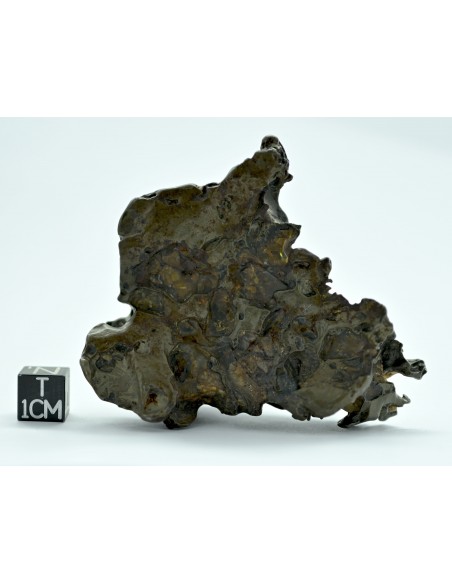
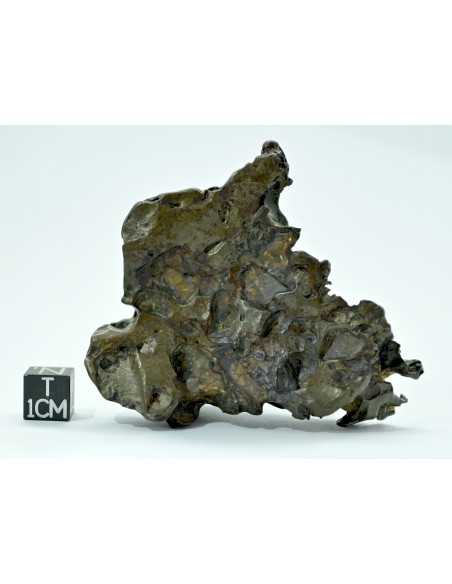
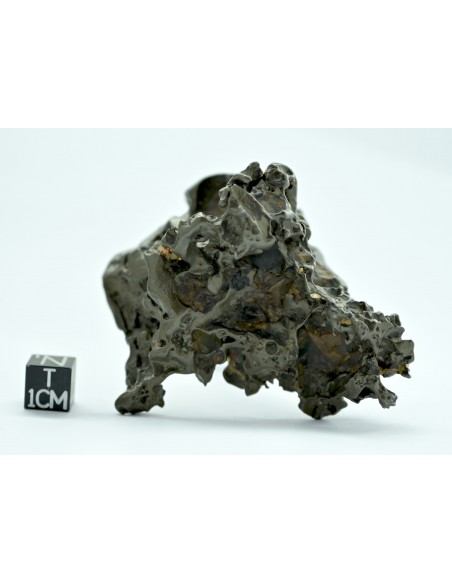
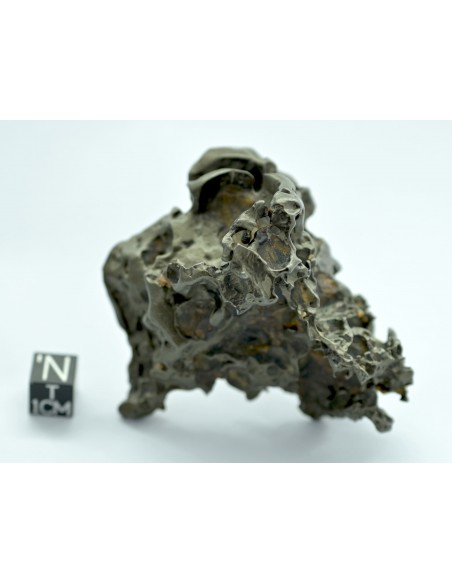
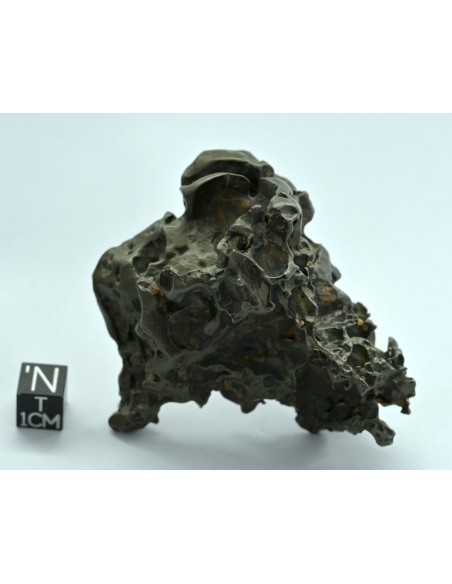
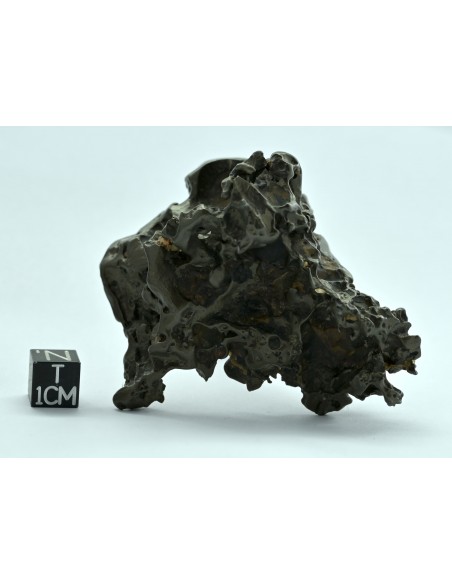
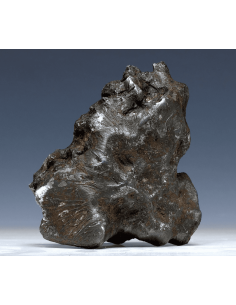
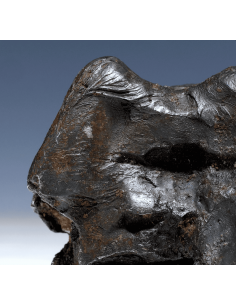
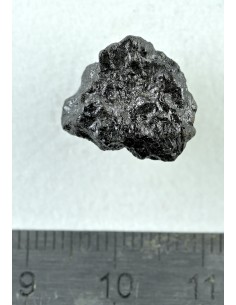
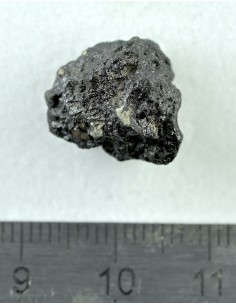
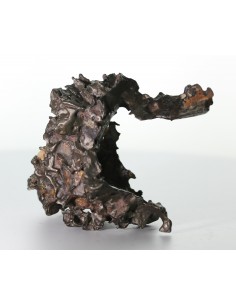
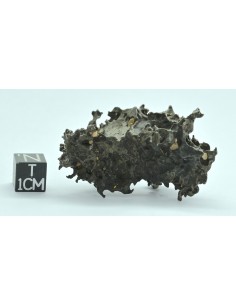
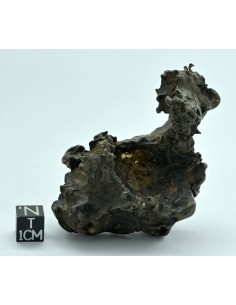
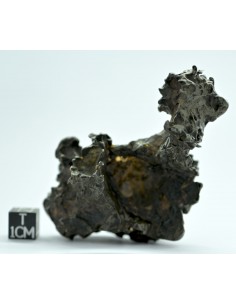
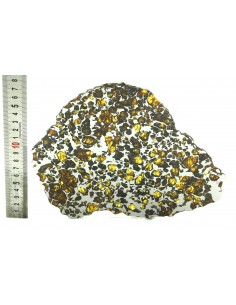
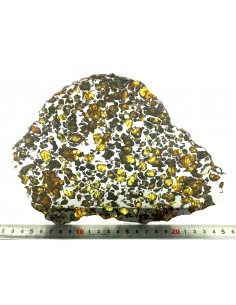
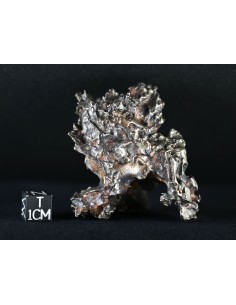
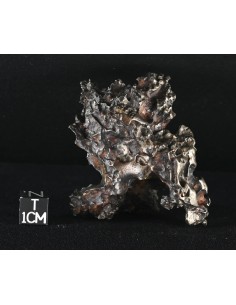
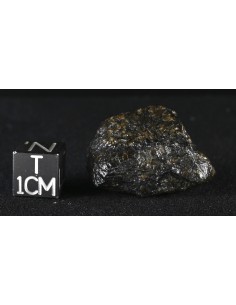
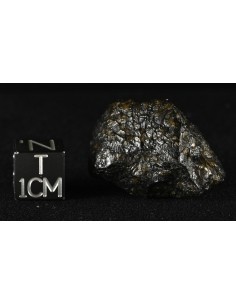
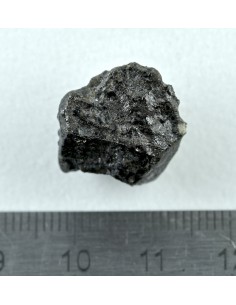
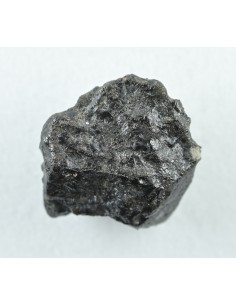
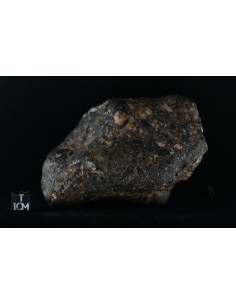
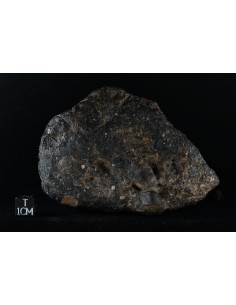
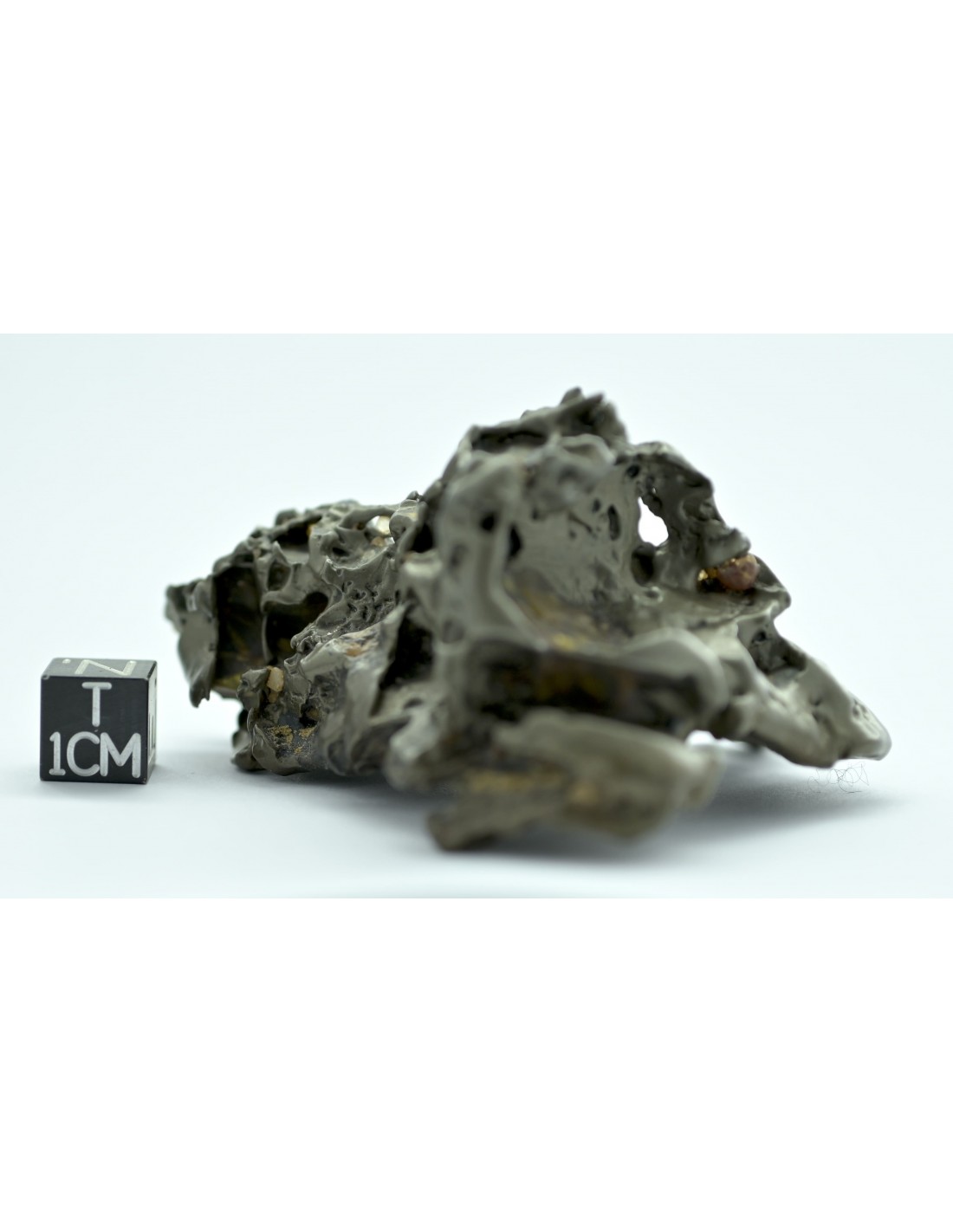
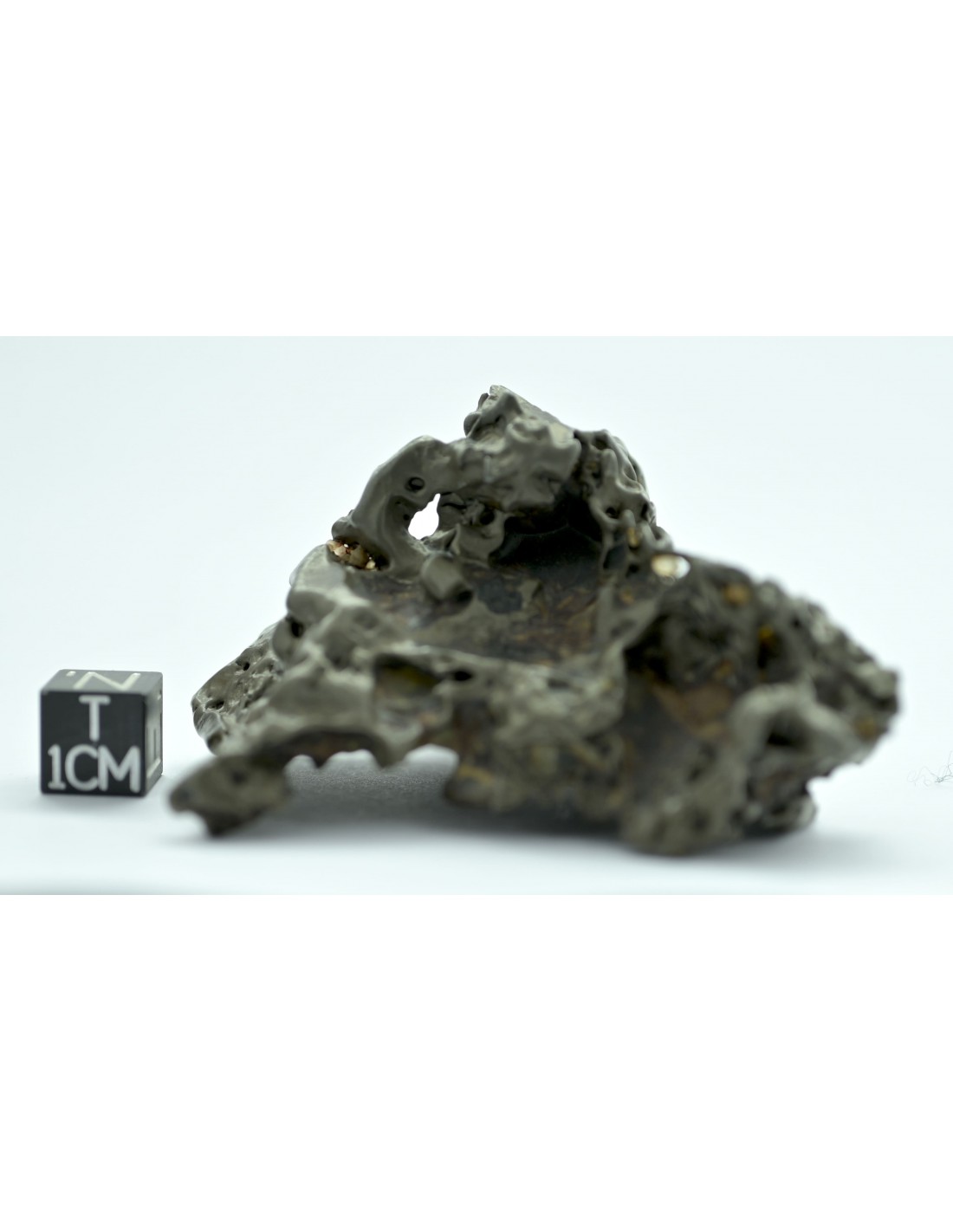
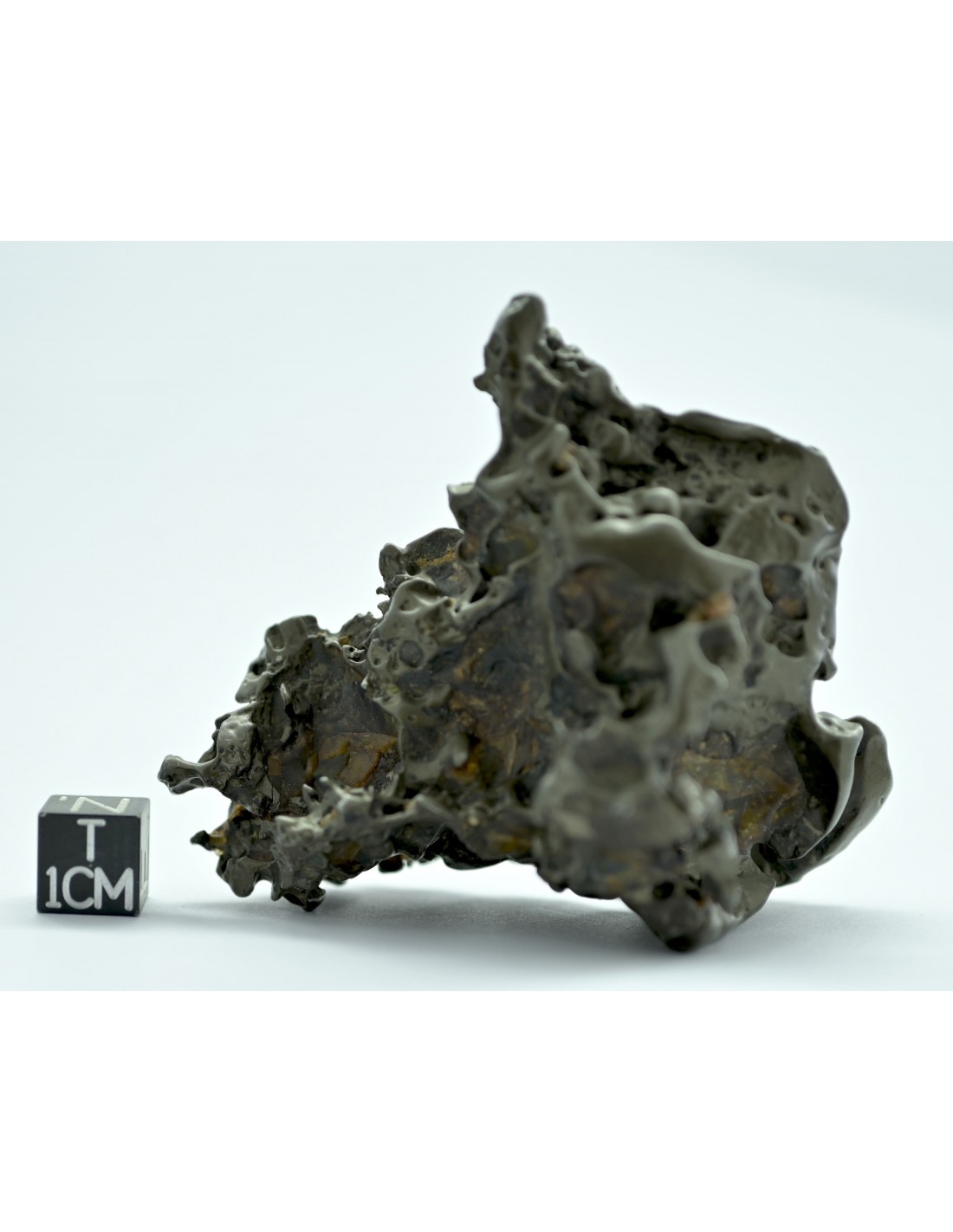
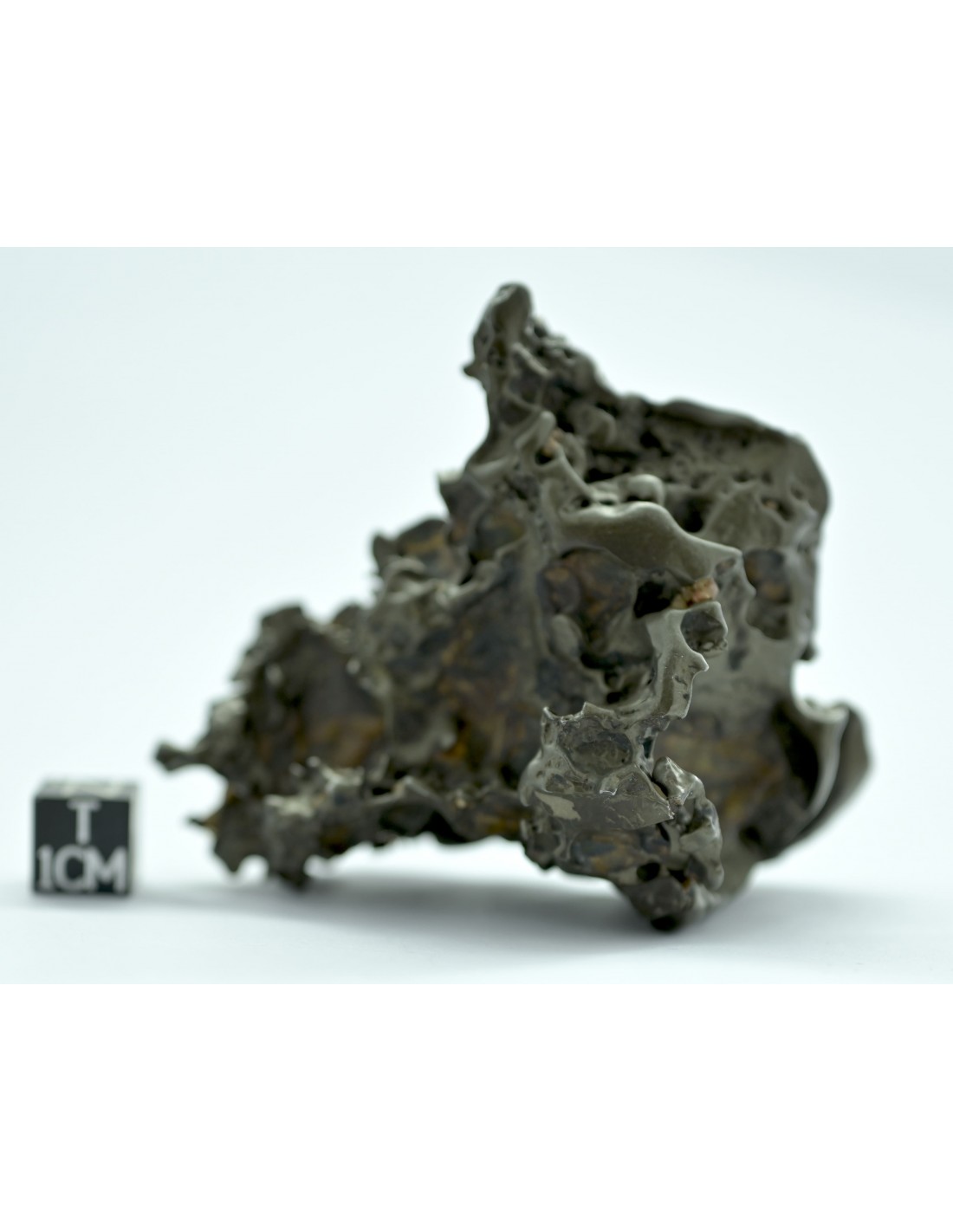
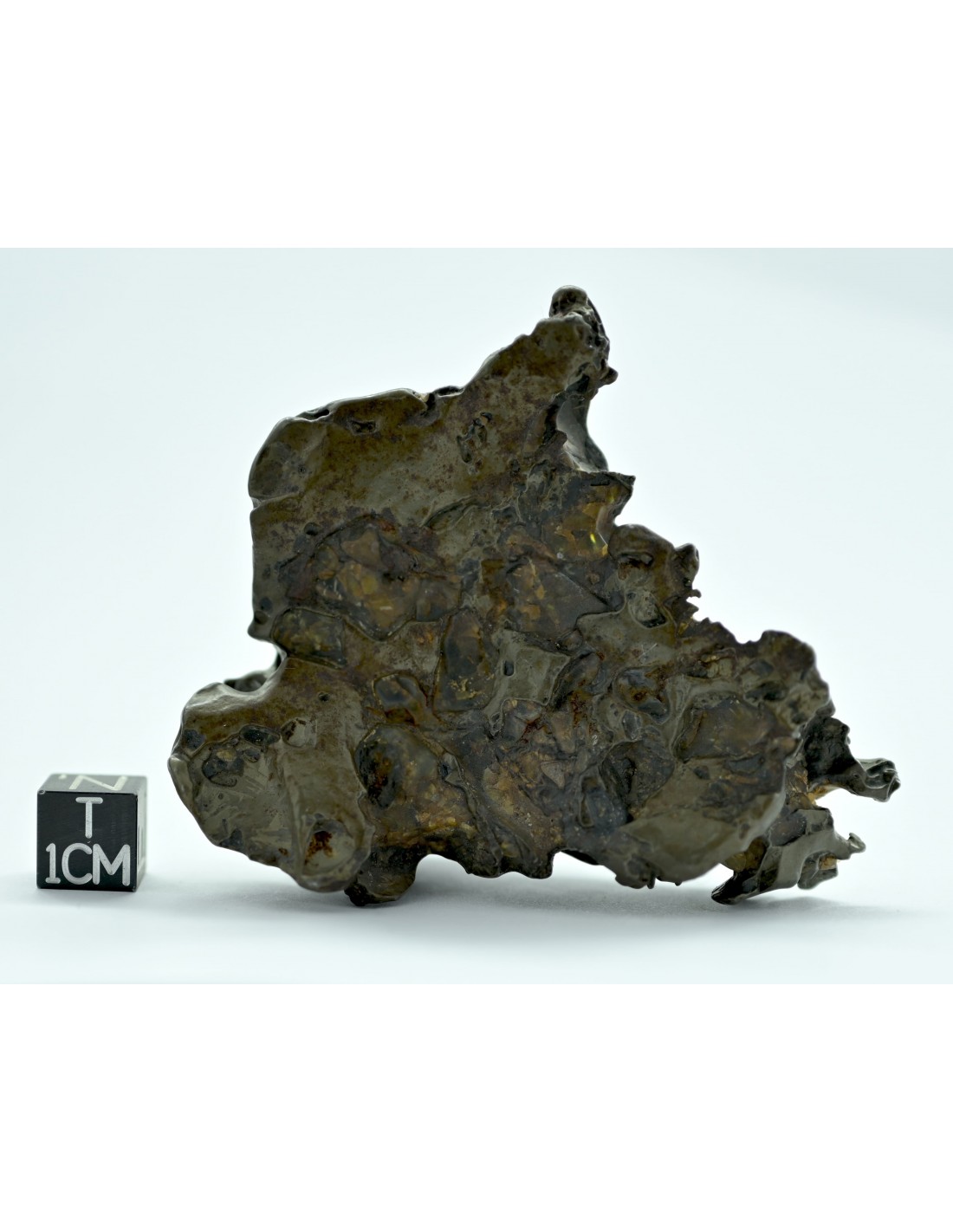
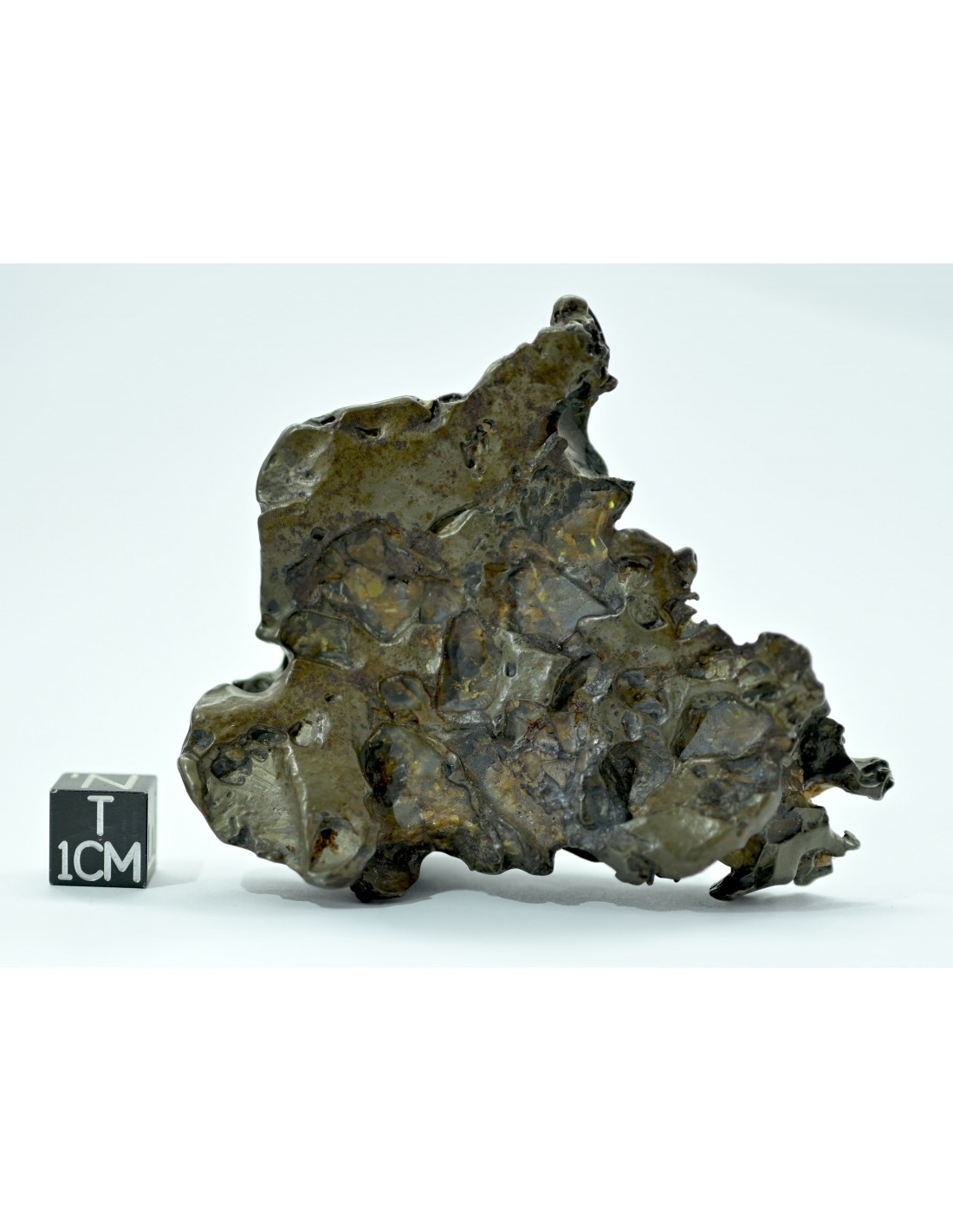
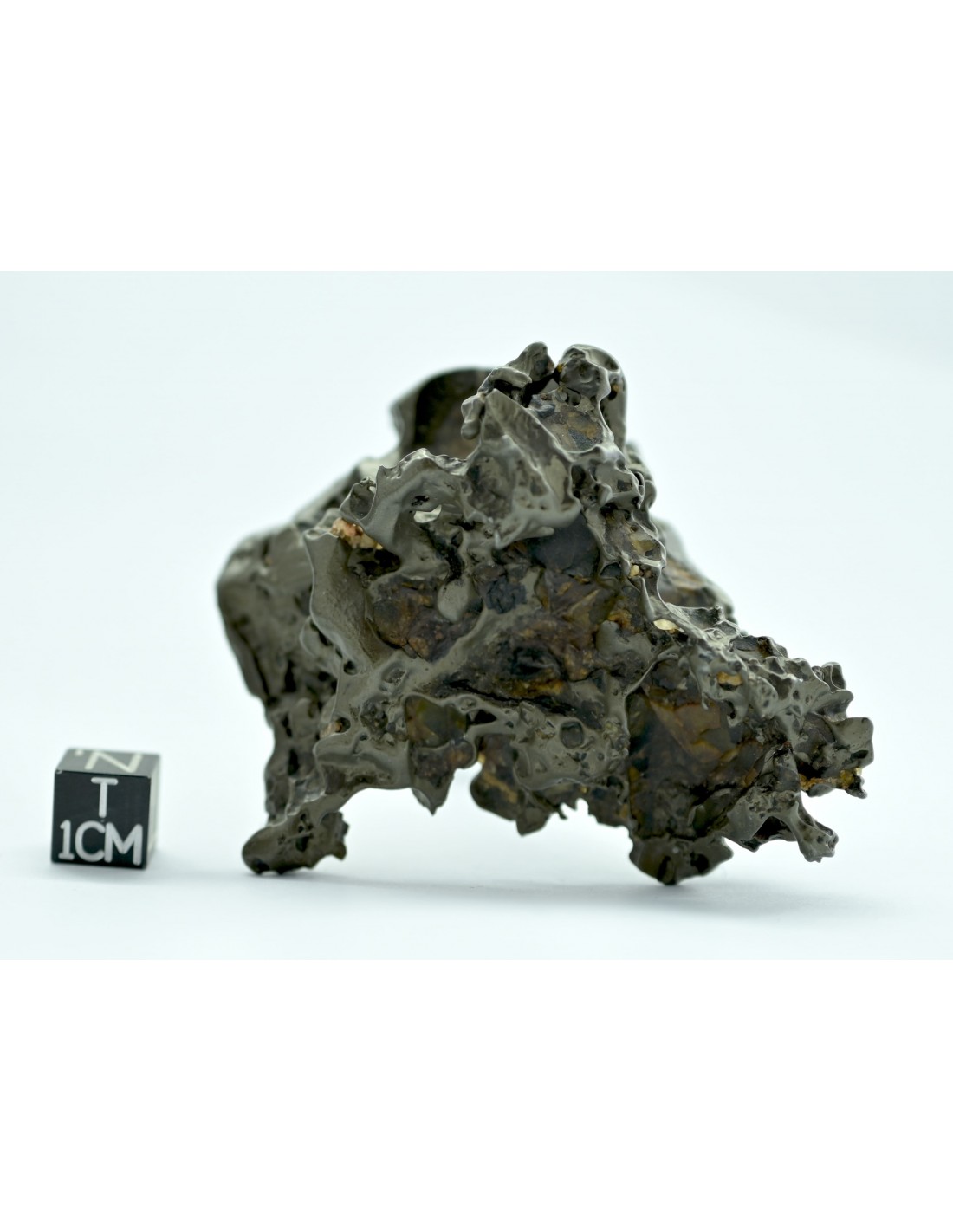
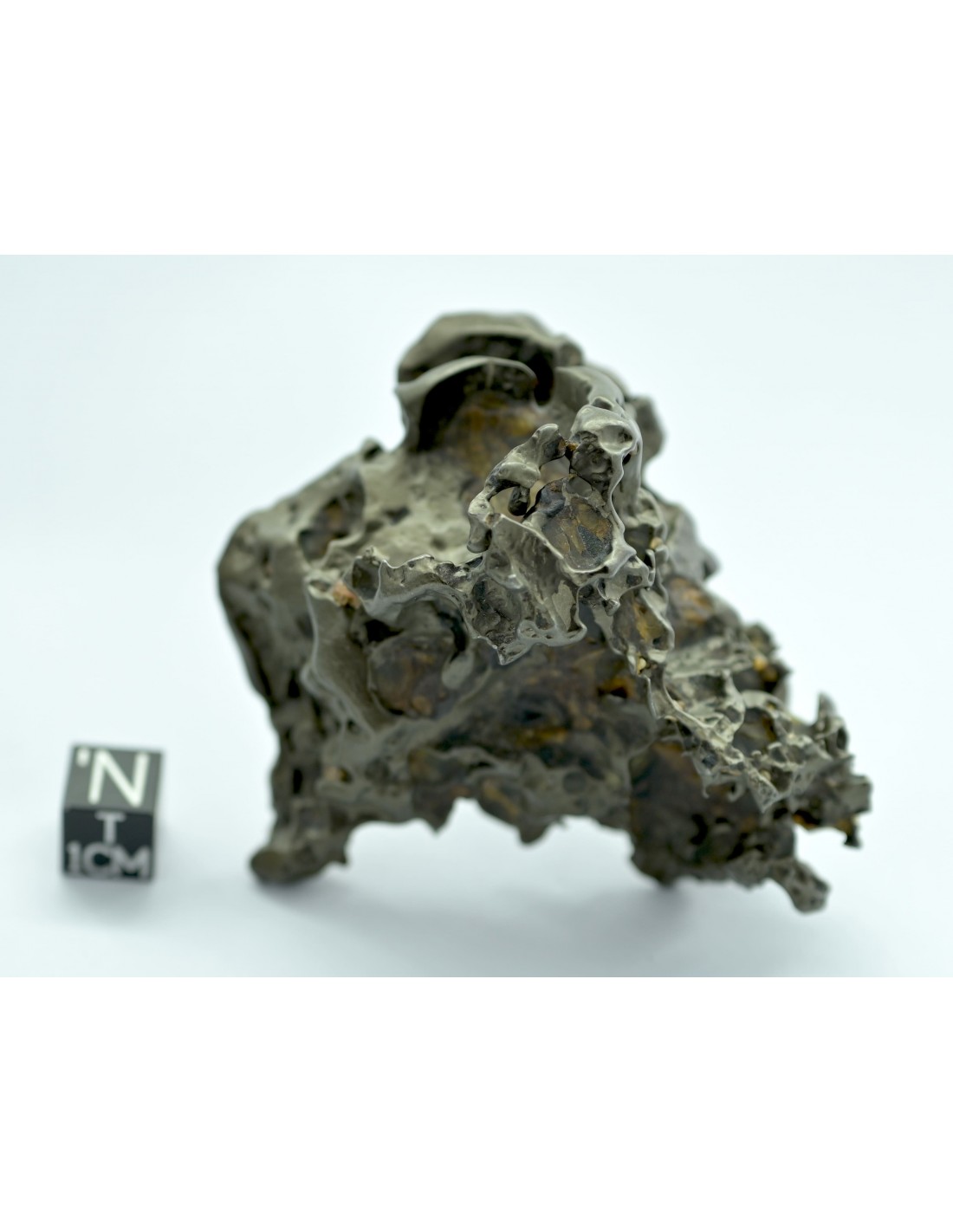
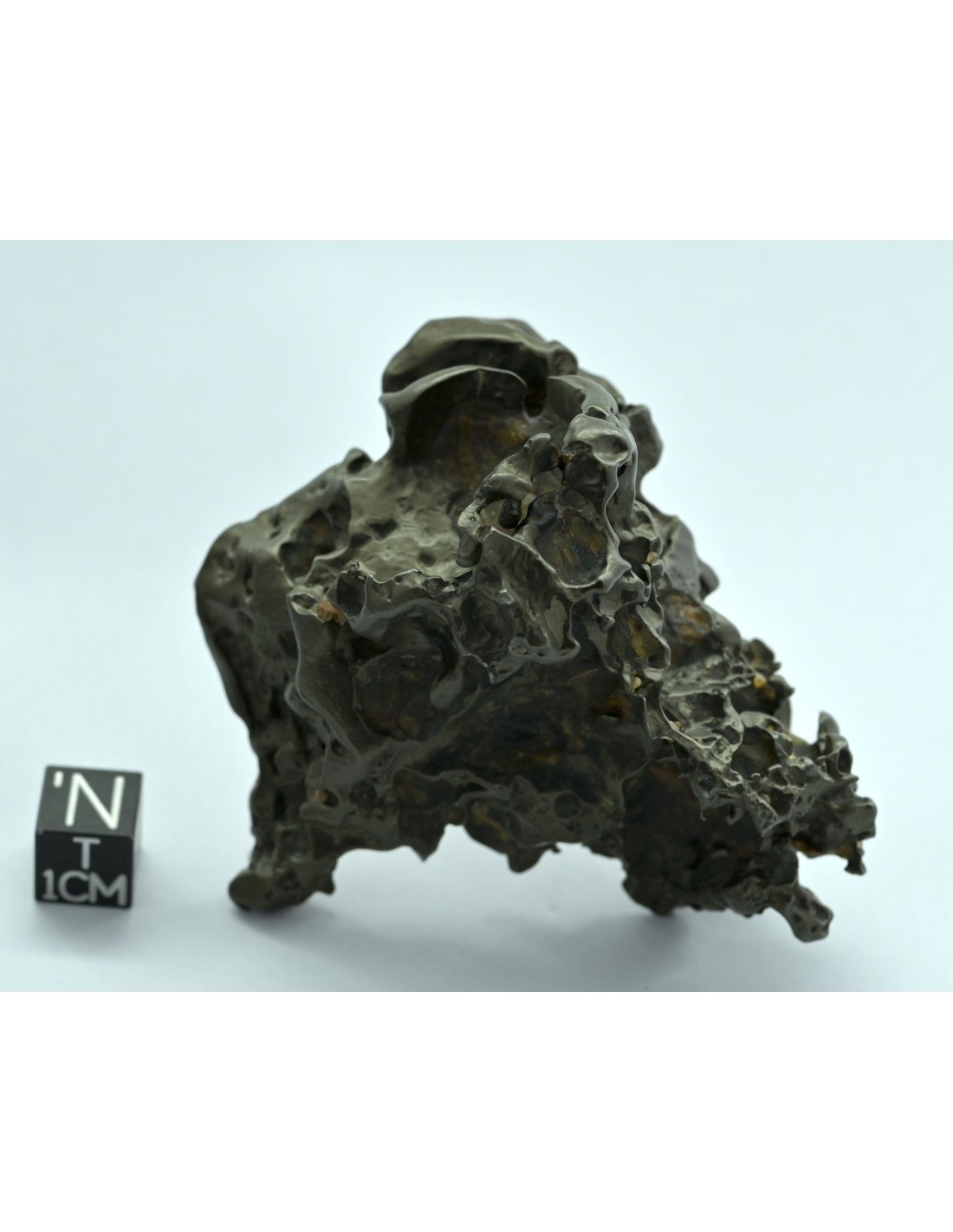
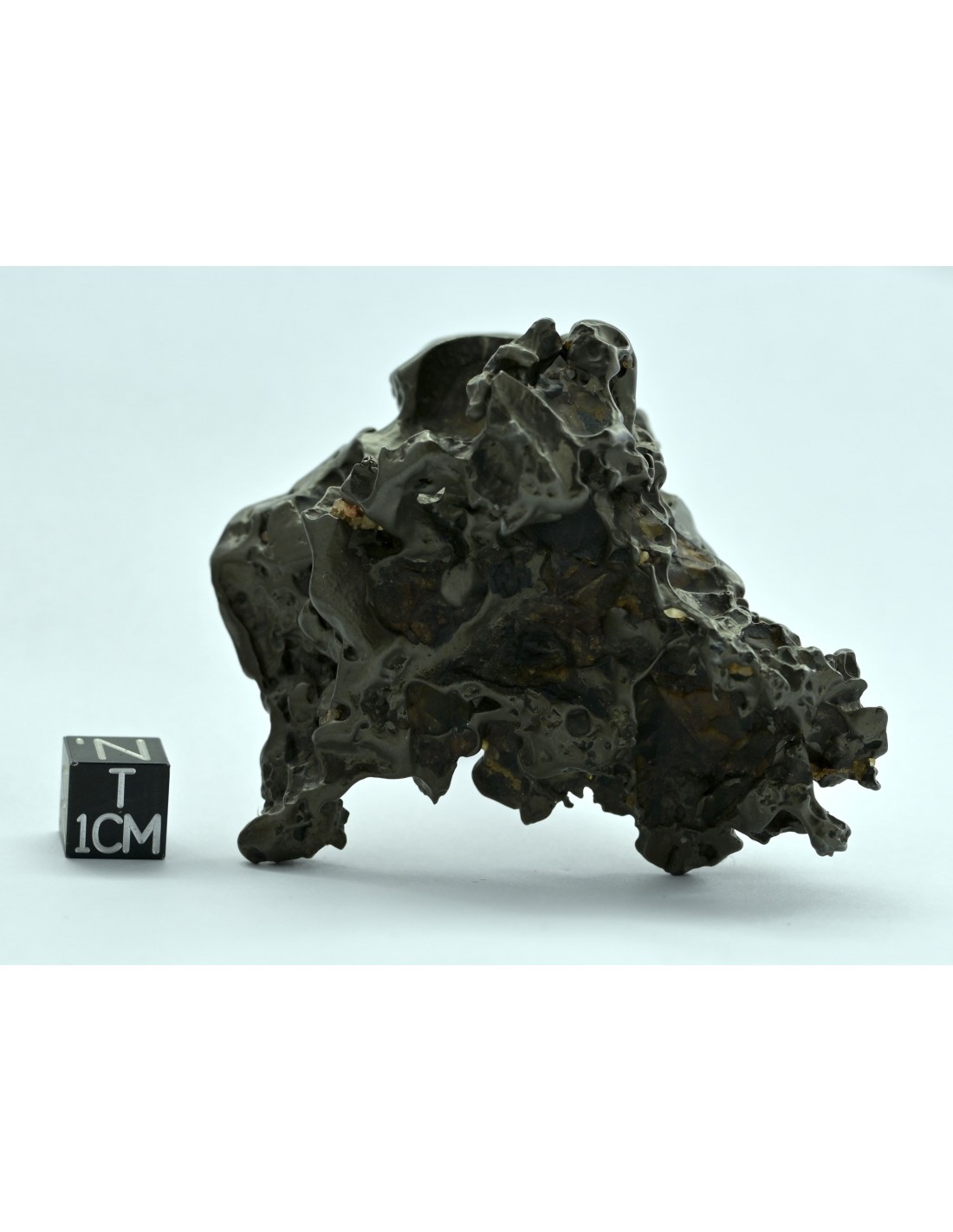
This 147.50 g golden pallasite is a striking natural individual defined by its openwork structure and strong three-dimensional presence.
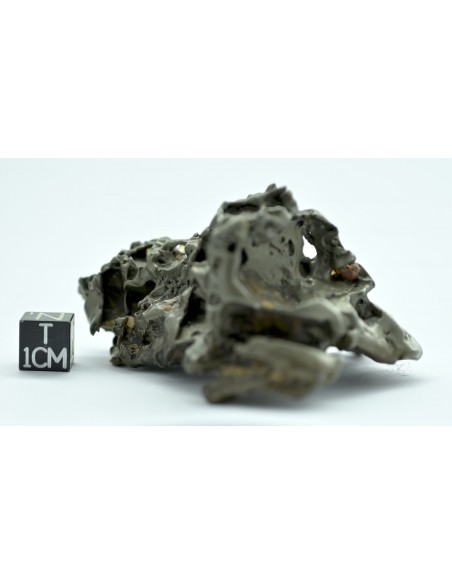
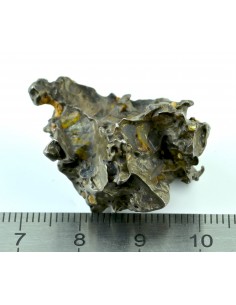
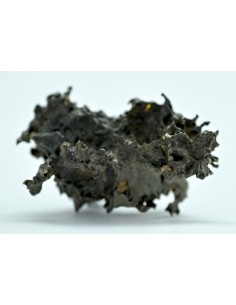
Unlike more compact specimens, this piece reveals a network of cavities and natural perforations, creating an almost architectural form. These voids are the result of prolonged desert weathering, during which the more fragile olivine crystals were progressively removed, leaving behind a resistant metallic framework.
This framework now appears as a series of bridges, edges, and overhangs, giving the specimen a dynamic and highly sculptural character. The surface is marked by numerous metallic spikes, formed where the iron-nickel matrix resisted erosion. These sharp protrusions emphasize the internal structure of the meteorite and provide a tactile, almost organic texture.
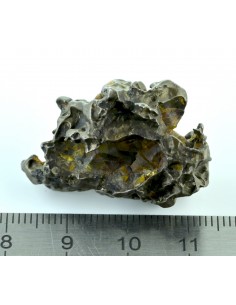
Within deeper cavities and more sheltered zones, residual olivine grains can still be observed. Their subdued yellow to orange tones contrast with the darker metallic surfaces, offering glimpses of the original pallasitic composition.
Additionally, several cavities contain light beige desert sand grains, naturally trapped over time. These inclusions reinforce the authenticity of the specimen’s terrestrial history and add another layer of visual complexity.
The surface displays a subtle golden-brown desert patina, typical of long-term exposure in arid conditions, further enhancing the contrast between smooth metallic areas and more rugged, eroded zones.
This specimen is particularly remarkable for its balance between mass, openness, and structural complexity. It invites observation from multiple angles, constantly revealing new perspectives through its interplay of light, shadow, and depth.