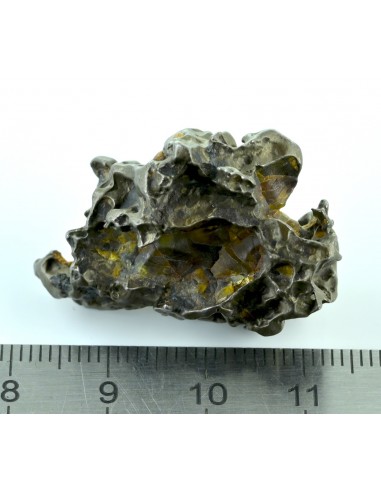
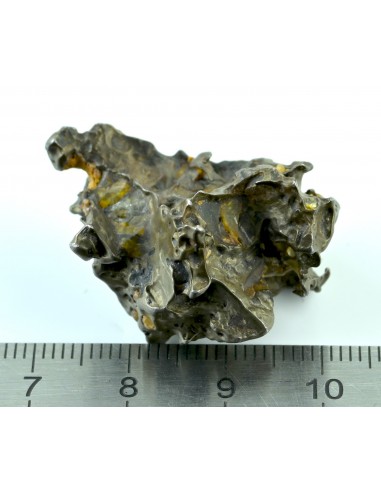
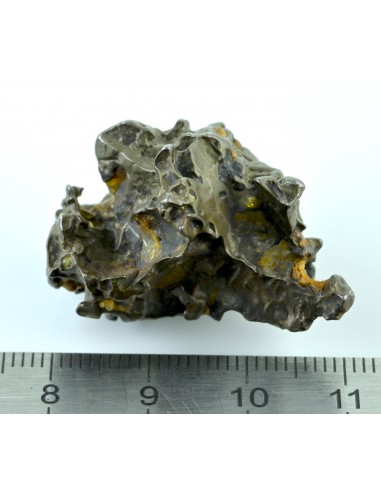
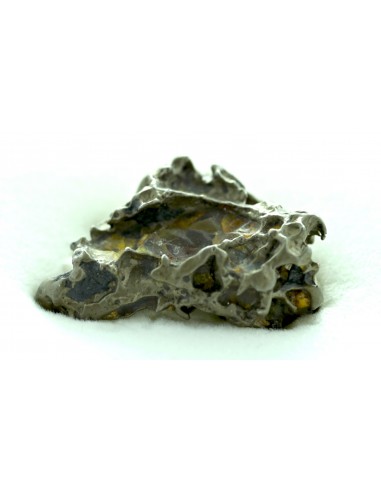
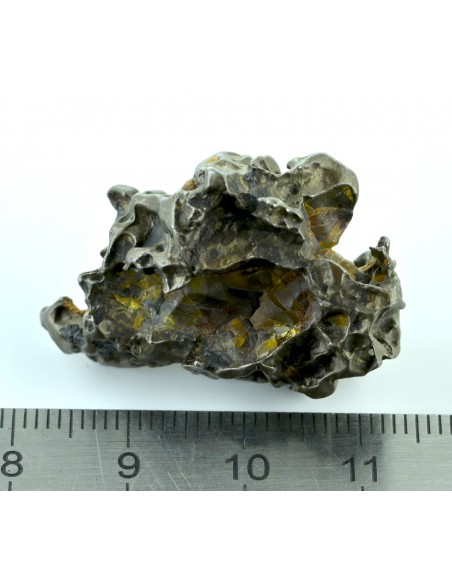
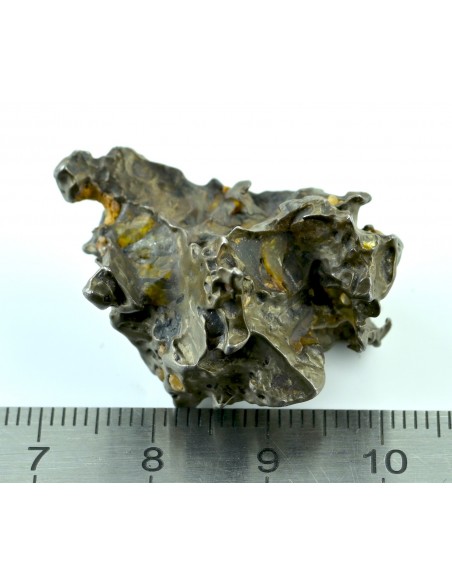
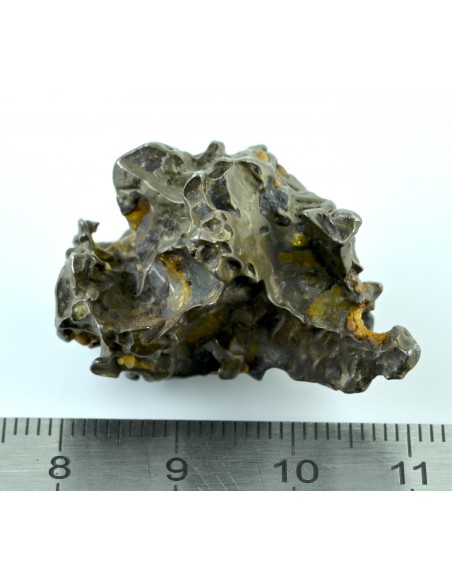
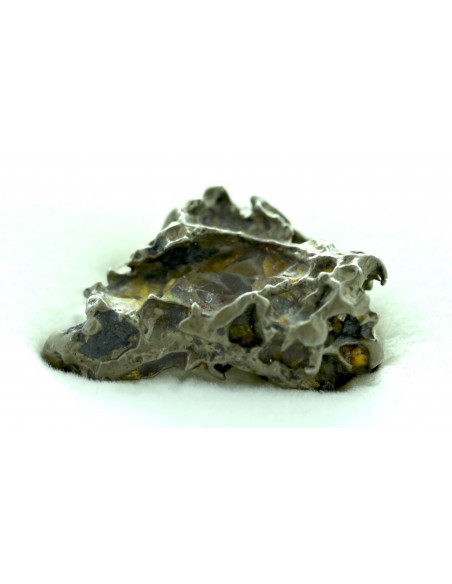
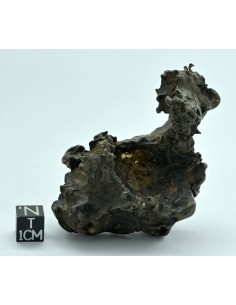
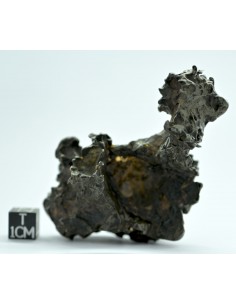
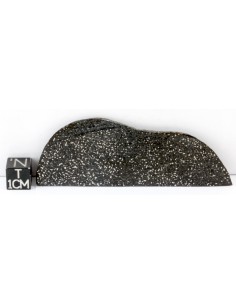
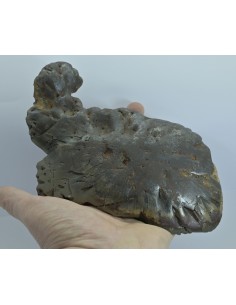
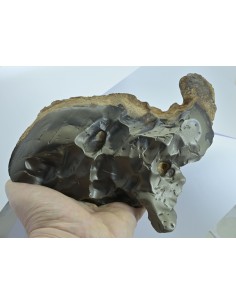
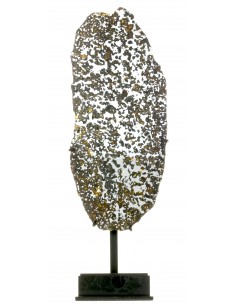
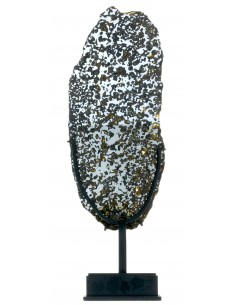
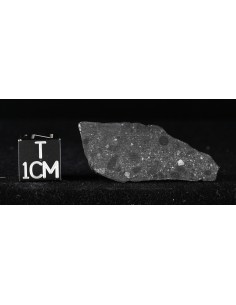
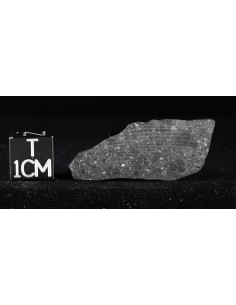
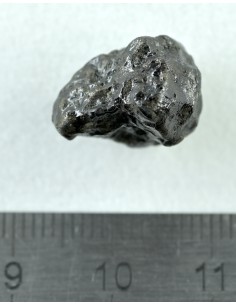
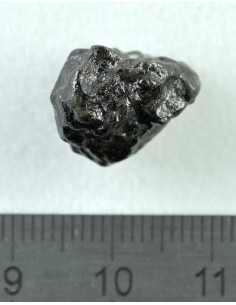
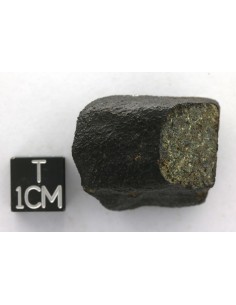
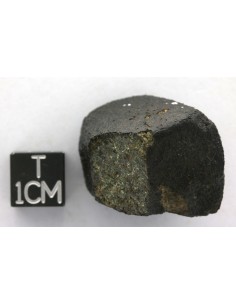
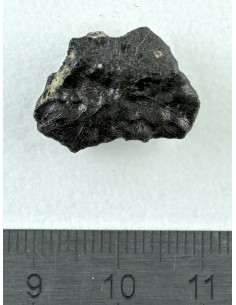
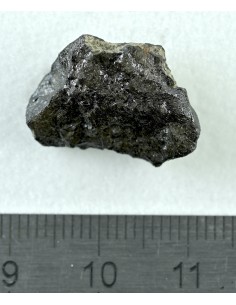
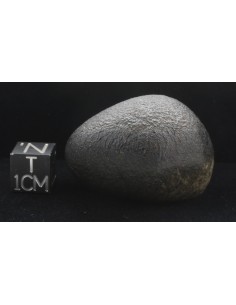
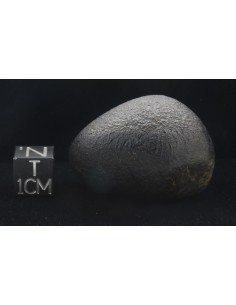
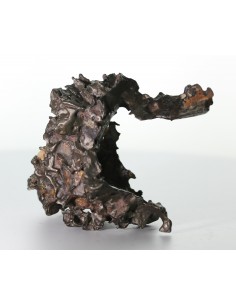
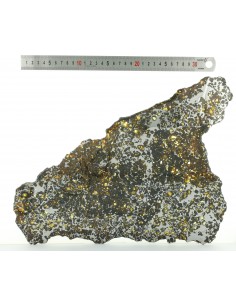
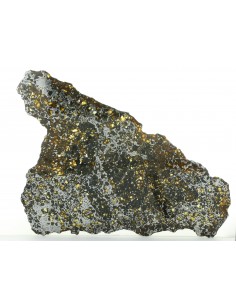
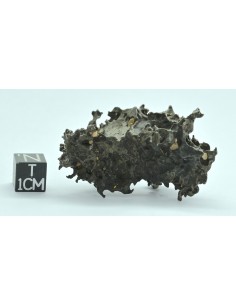
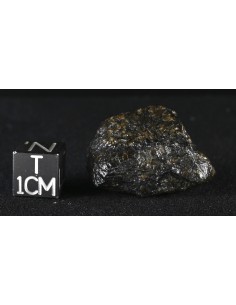
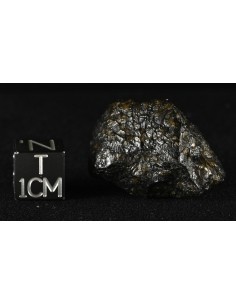
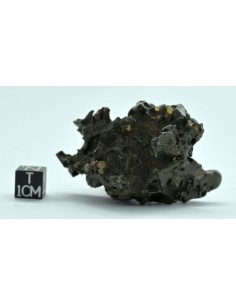
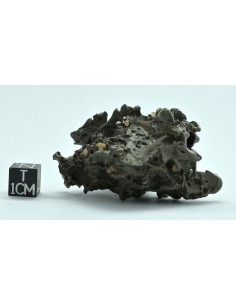
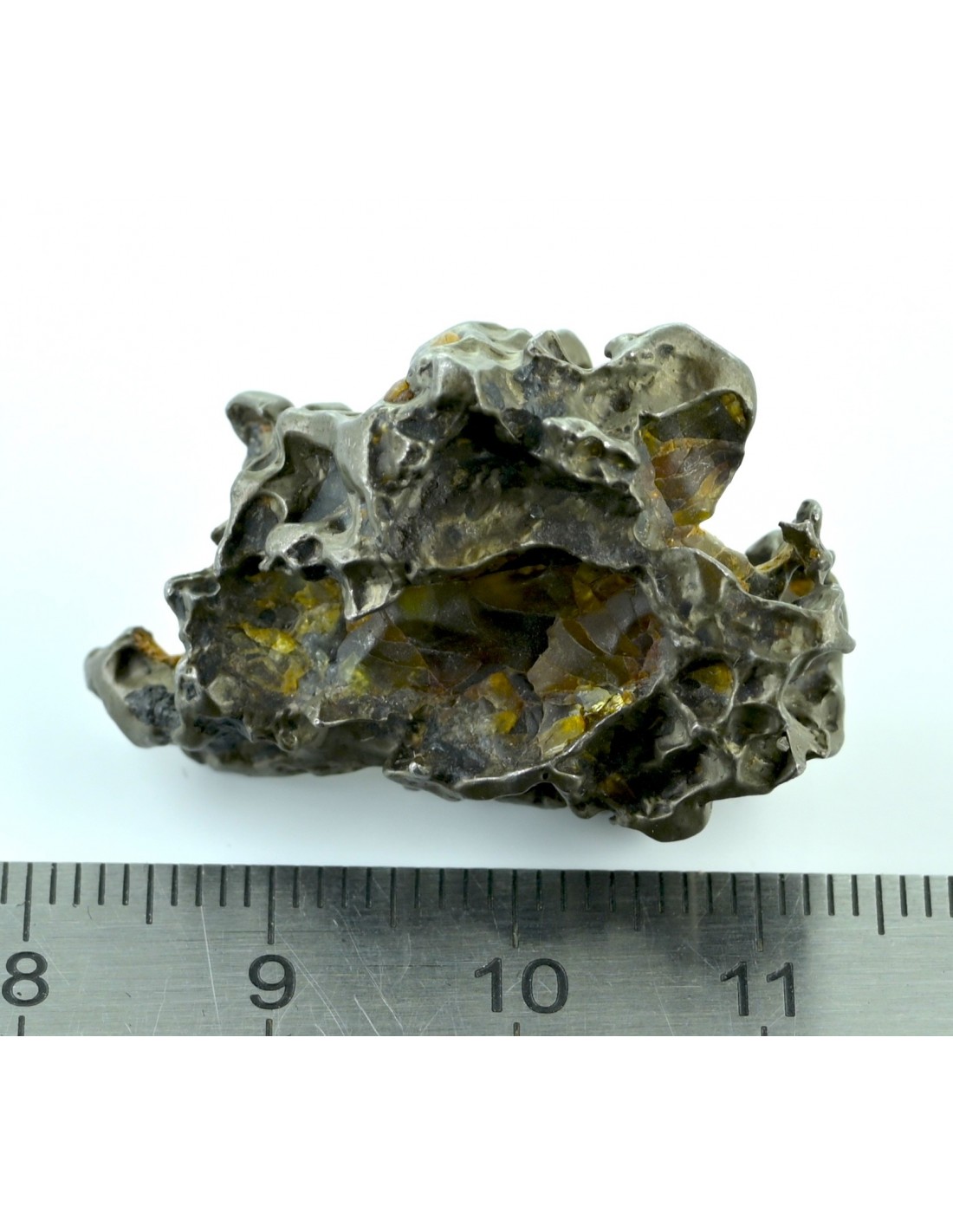
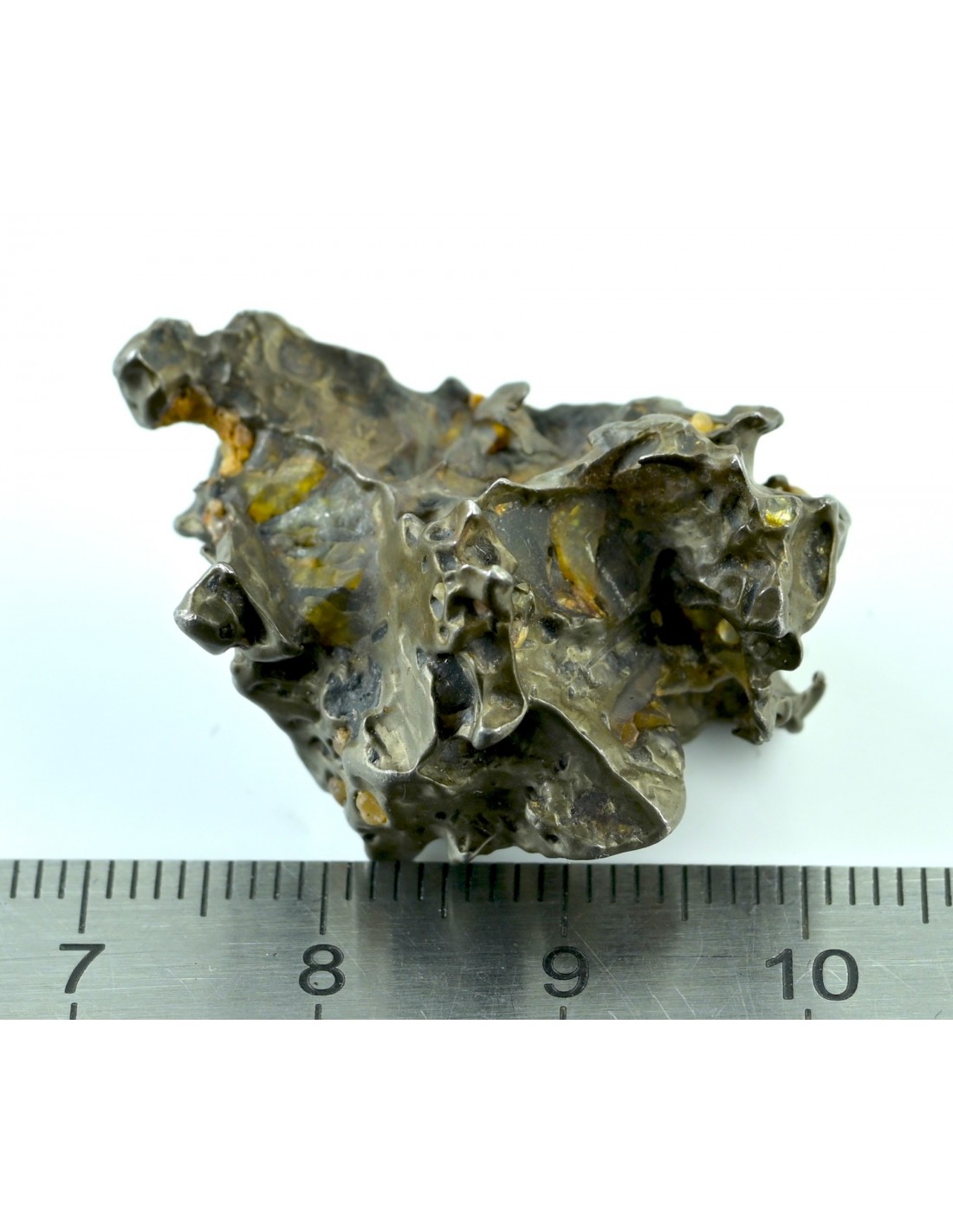
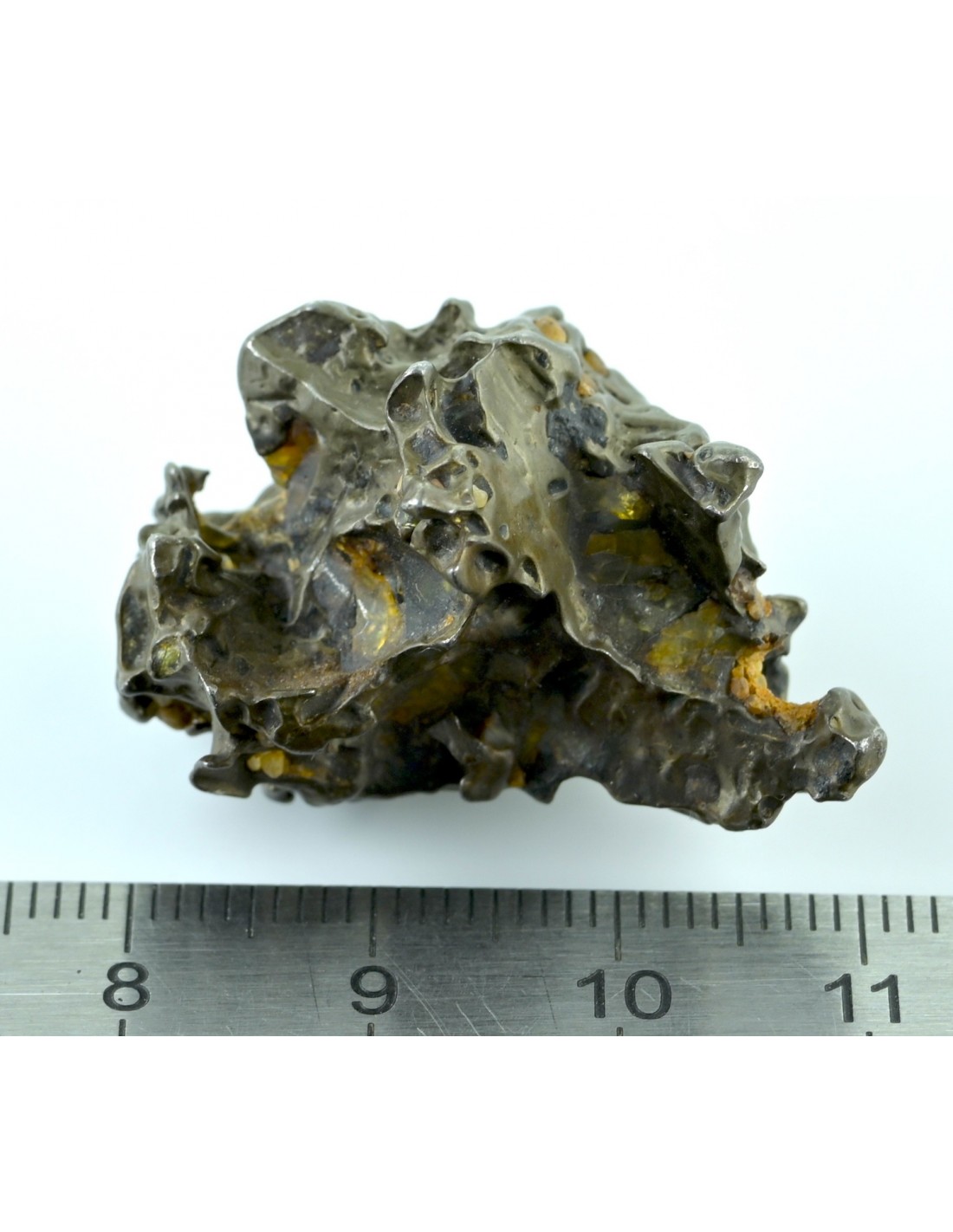
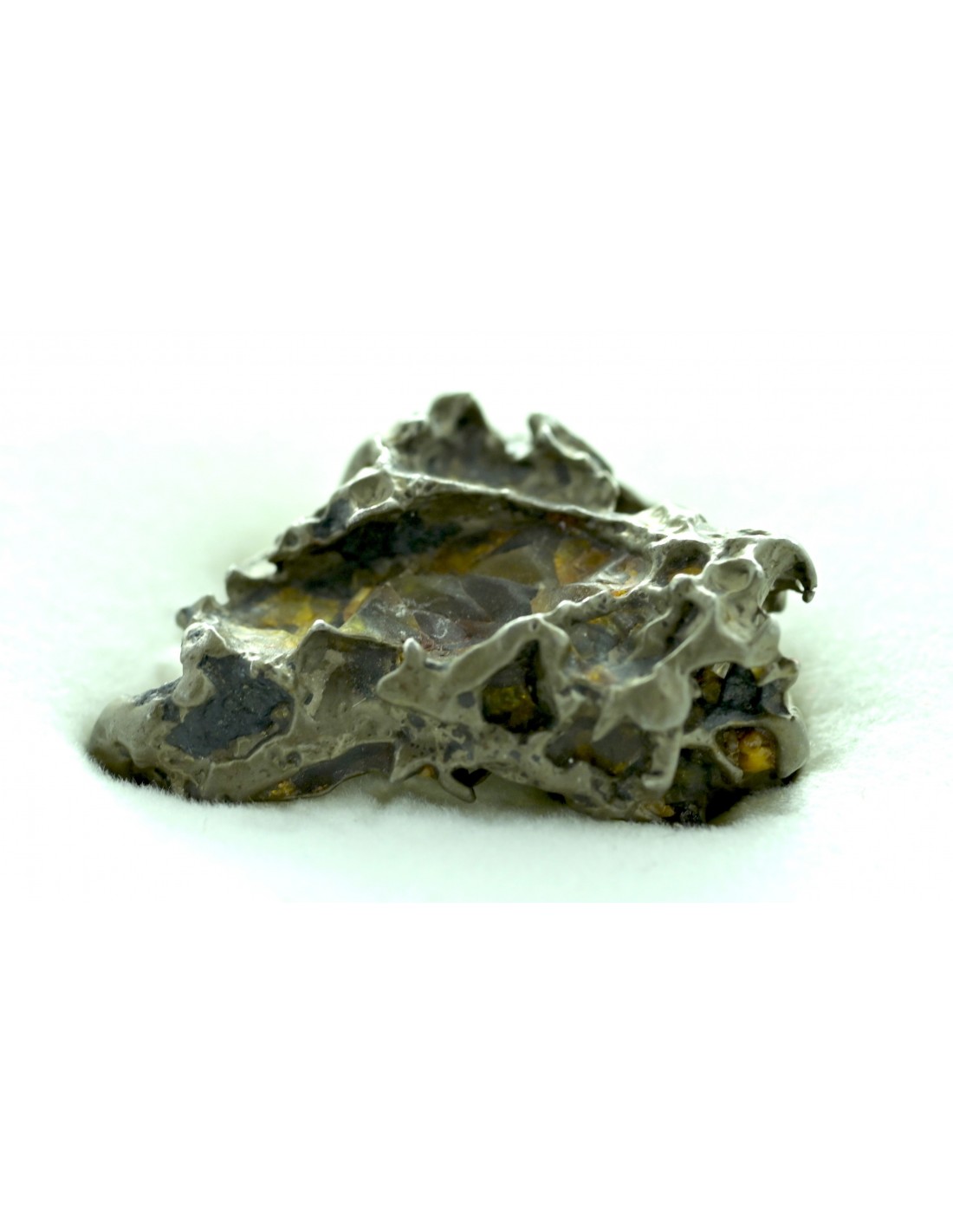
This 16.67 g golden pallasite is a small but visually rich individual, distinguished by its intricate structure and the presence of a central cavity exposing its internal composition.
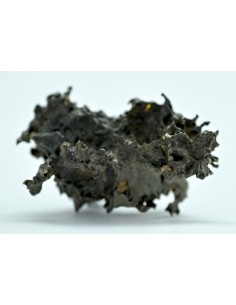
The specimen reveals a natural hollowed zone, where several olivine fragments remain preserved. These crystals, showing warm tones from yellow to amber, are partially embedded within the iron-nickel matrix and can be observed in depth, offering a glimpse into the original pallasitic structure.
The surrounding metallic framework displays smooth, flowing surfaces shaped by long-term desert weathering, contrasting with sharper edges and subtle reliefs along the margins. This balance between erosion and preservation creates a dynamic micro-landscape that rewards close observation.
Despite its compact size, the piece presents a remarkable level of structural detail, making it particularly appealing for collectors who appreciate fine, well-defined specimens. The scale of the meteorite allows for an intimate examination of its features, highlighting the interaction between metal and silicate phases.
Small golden pallasites with such readable internal cavities and preserved olivines are relatively uncommon, as these features are often either too eroded or not clearly visible.
This specimen is ideally suited for collectors seeking a refined, tactile, and structurally expressive meteorite, where every detail can be appreciated up close.
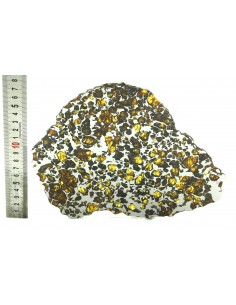
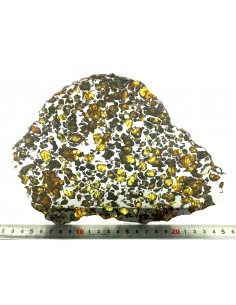
Pallasites are stony-iron meteorites composed of olivine crystals embedded within an iron-nickel matrix, representing material formed at the boundary between the core and mantle of differentiated asteroids.
In desert environments, differential weathering often removes part of the olivine, creating cavities within the metallic structure. When preserved olivines remain visible within these cavities, as in this specimen, they provide valuable insight into the original internal arrangement of the meteorite.