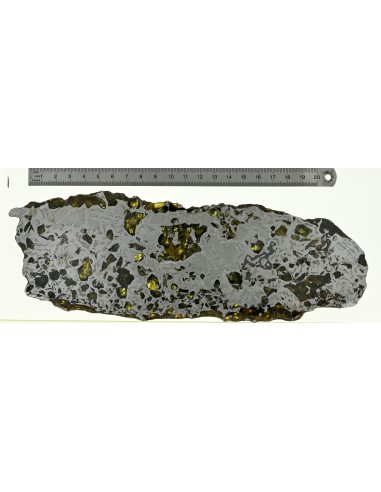
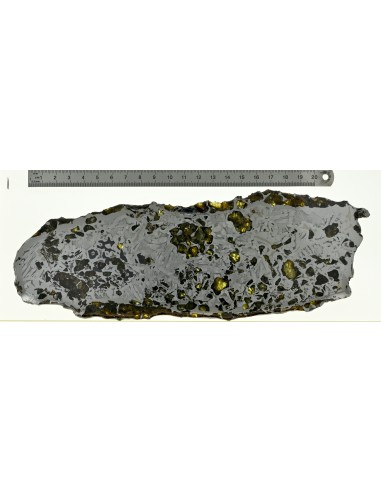
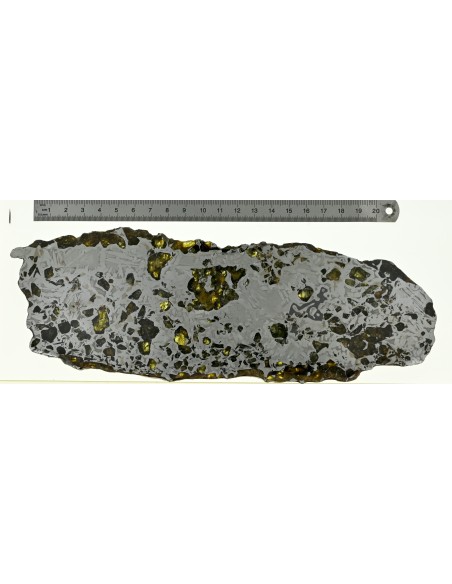
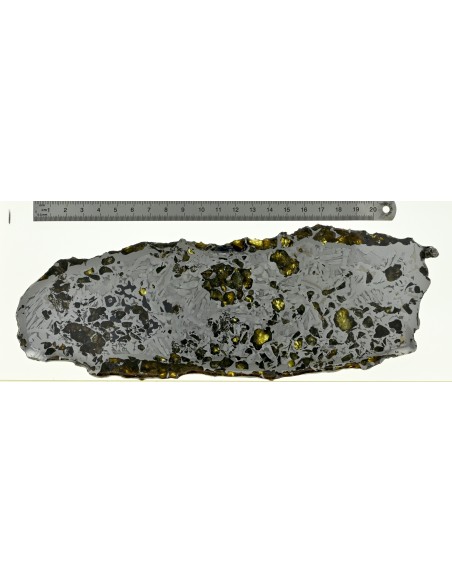
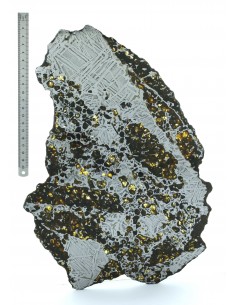
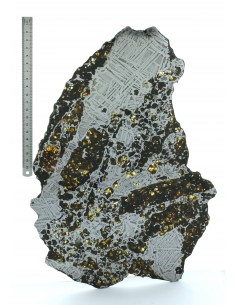
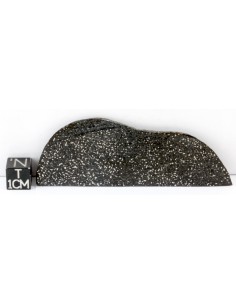
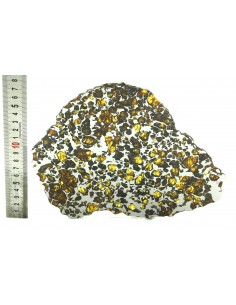
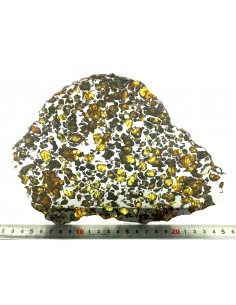
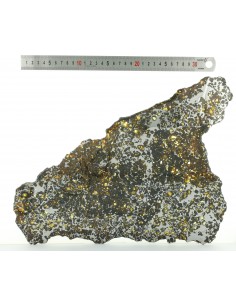
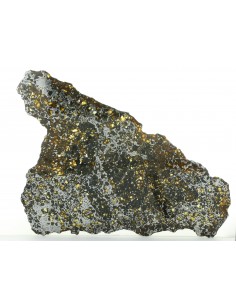
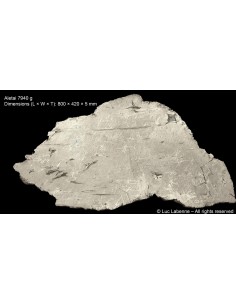
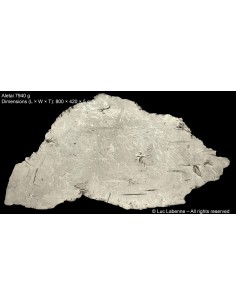
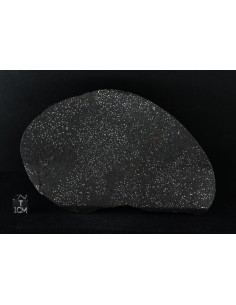
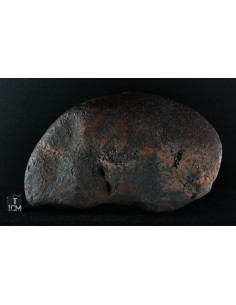
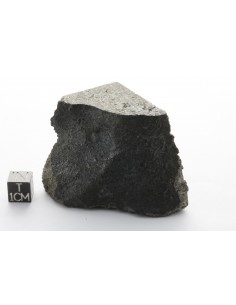
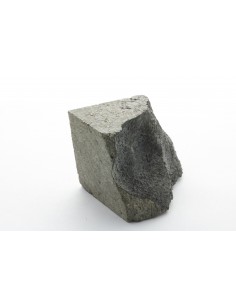
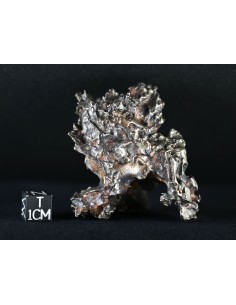
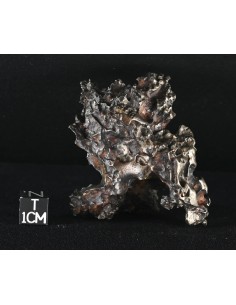
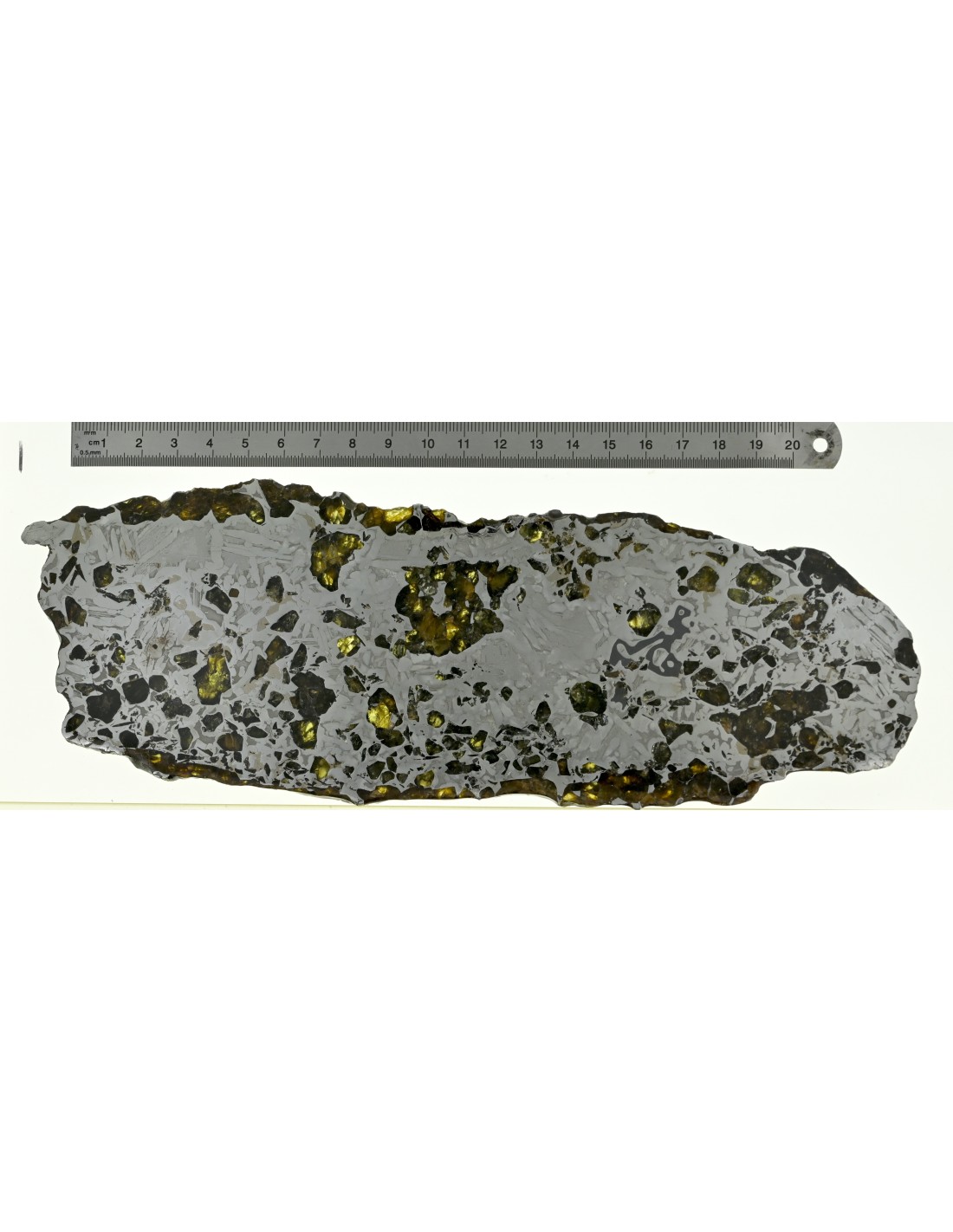
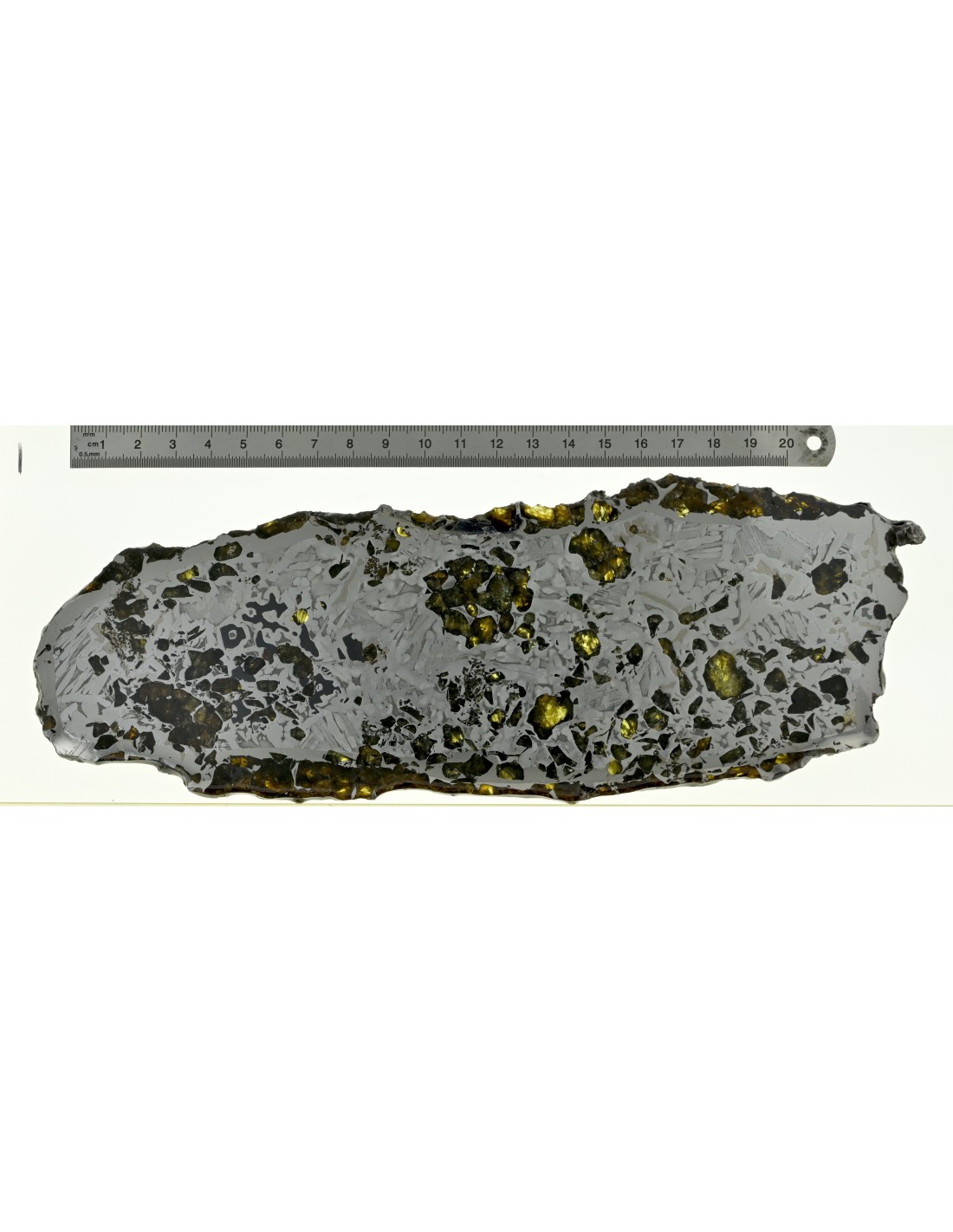
This 395 g complete slice of Seymchan presents a particularly elegant and well-balanced composition, where iron-nickel metal and olivine crystals coexist in a harmonious distribution.
The metallic portion reveals a clearly developed Widmanstätten pattern, formed through an extremely slow cooling process within the parent asteroid—on the order of only a few degrees per million years. This crystalline structure is a direct record of early Solar System formation conditions and is one of the defining features of pallasitic material.
Embedded within this metallic framework are numerous olivine crystals, ranging from deep golden to olive-green hues. Many of these crystals show good translucency under light, enhancing the visual contrast with the surrounding etched metal. Their distribution across the slice creates a natural rhythm, alternating between dense clusters and more open metallic areas.
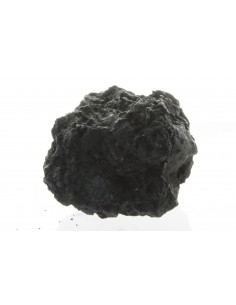
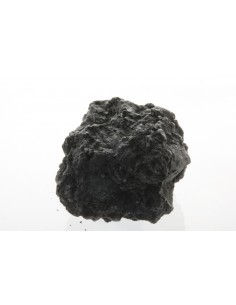
The edges preserve the natural outline of the original mass, reinforcing the authenticity of the slice as a complete section. The preparation—cutting, polishing, and etching—has been executed with precision, allowing both the metallic structure and the silicate phases to be expressed at their best without over-processing.
This specimen stands out for its equilibrium between scientific readability and aesthetic appeal, making it equally suitable for advanced collectors, display, or educational purposes.
🔬 Scientific Significance
Seymchan is a main group pallasite, originating from the boundary zone between the metallic core and silicate mantle of a differentiated asteroid.
This type of meteorite provides:
- Direct insight into planetary differentiation processes
- Evidence of extremely slow cooling rates recorded in Widmanstätten patterns
- A rare association of metallic and silicate phases in equilibrium
Pallasites remain among the most visually striking and scientifically important meteorites known.