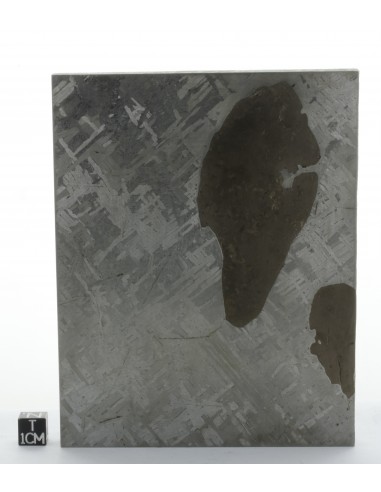
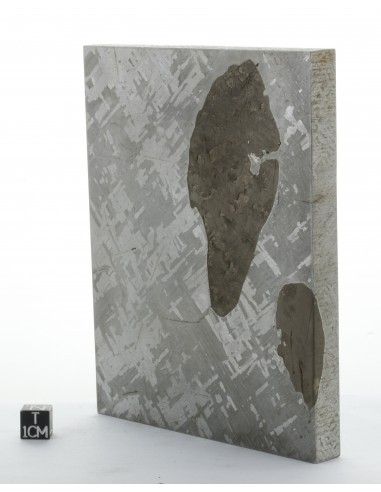
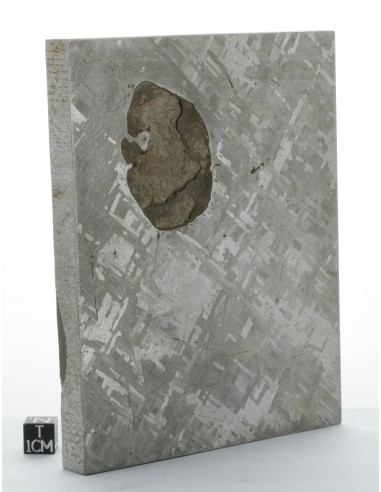
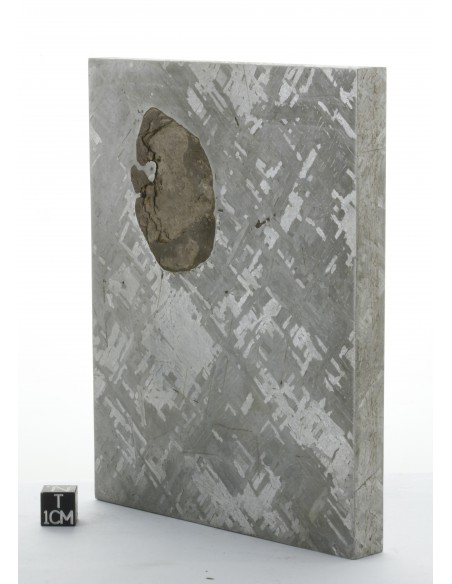
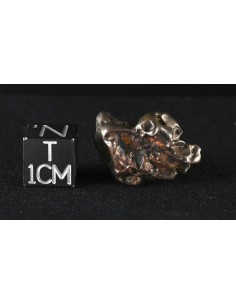
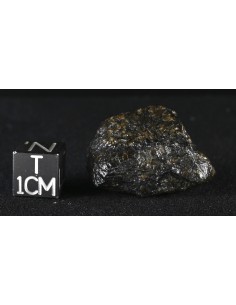
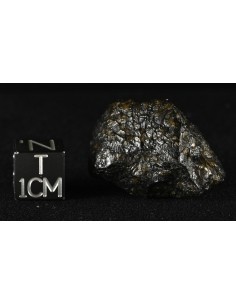
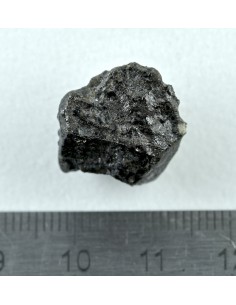
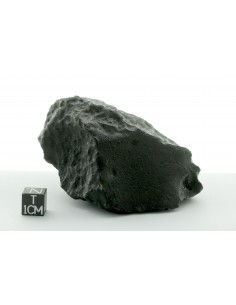
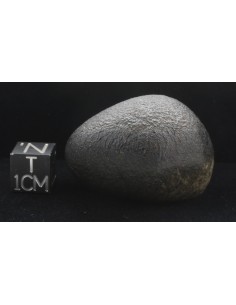
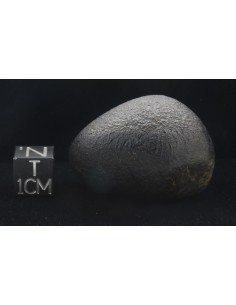
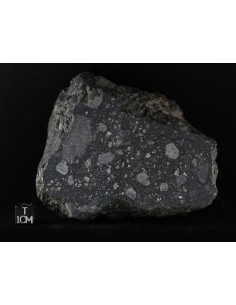
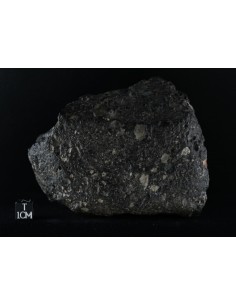
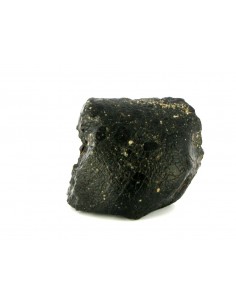
Cape York Meteorite Block with Large Troilite Inclusion – 1277 g
- Meteorite: Cape York
- Type: iron meteorite block
- Weight: 1277 g
- Dimensions: 132 × 105 mm
- Thickness: 12 mm
- Surface: polished and etched
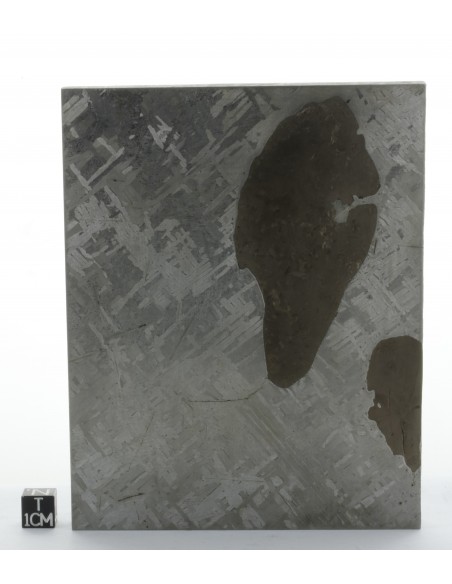
- Main structural feature: clearly revealed Widmanstätten pattern
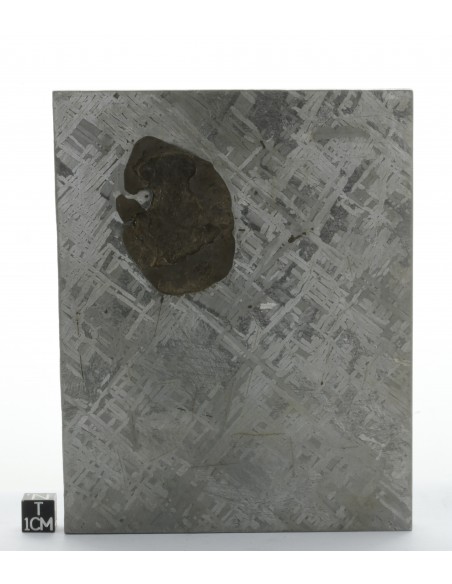
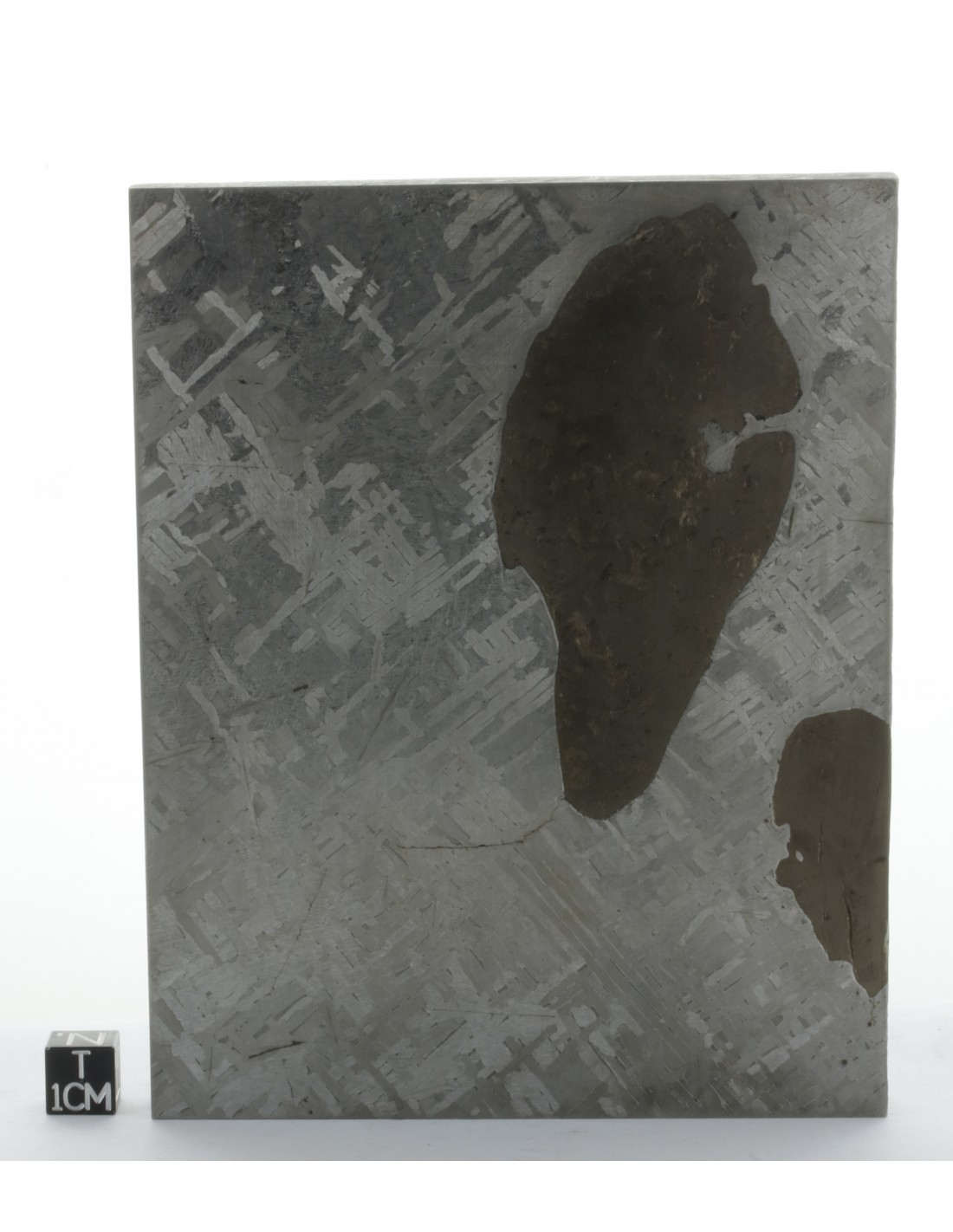
- Main visual feature: large troilite inclusion
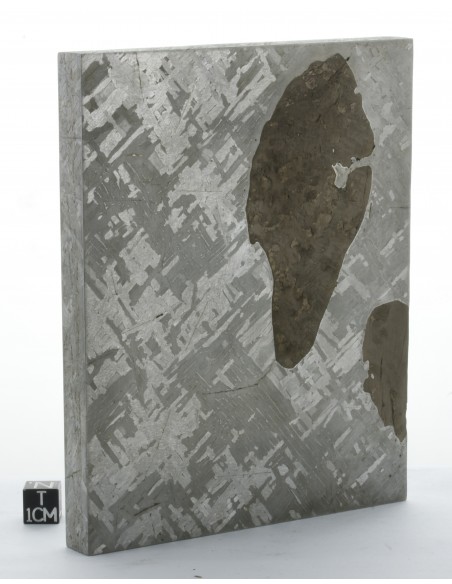
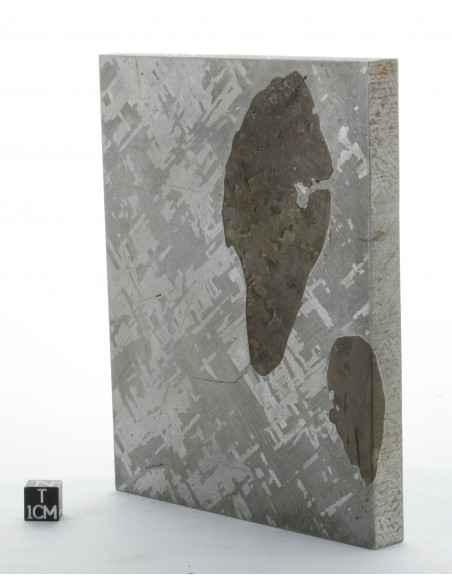
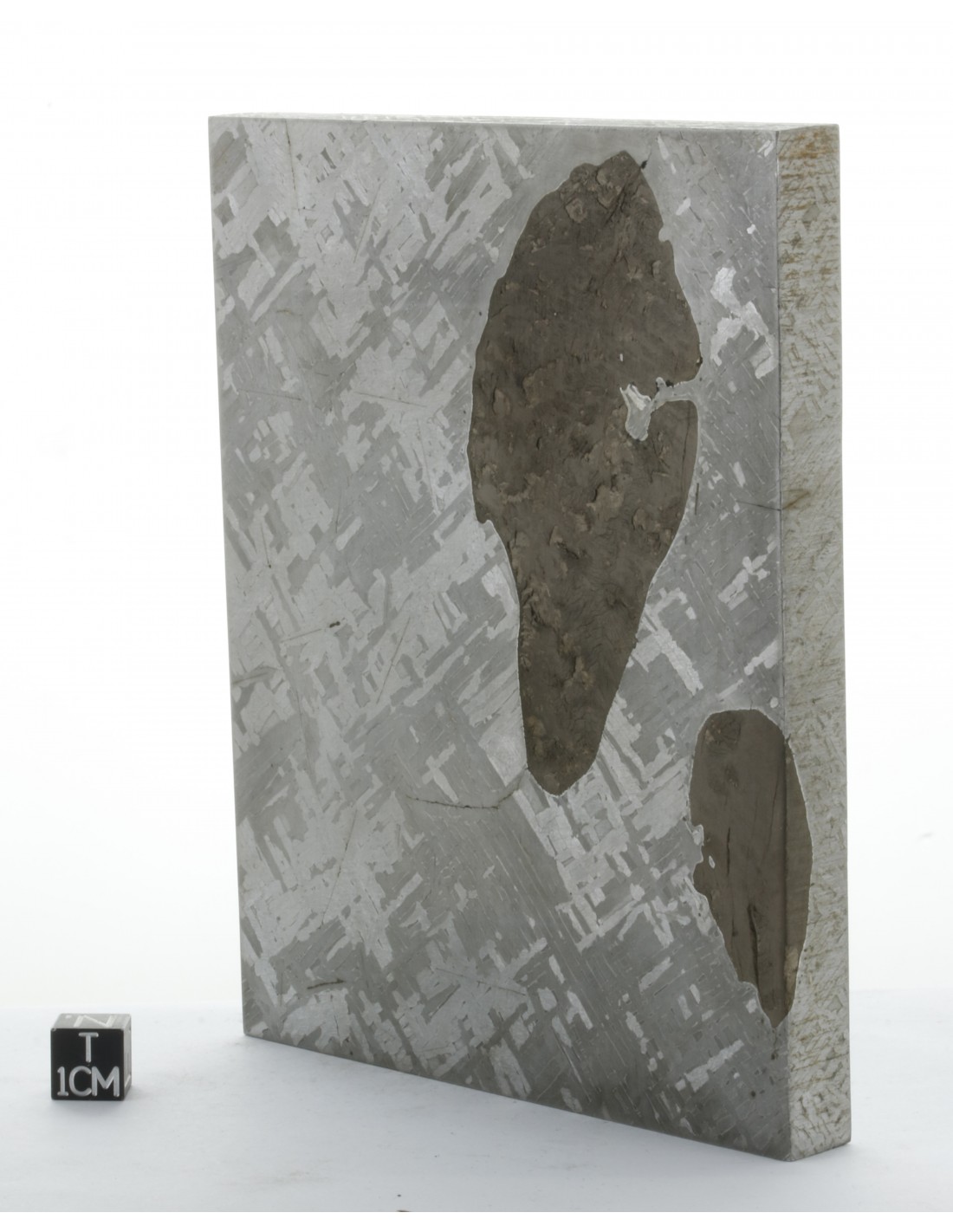
- Display quality: self-standing specimen
- Character: sculptural, monolithic, substantial display block
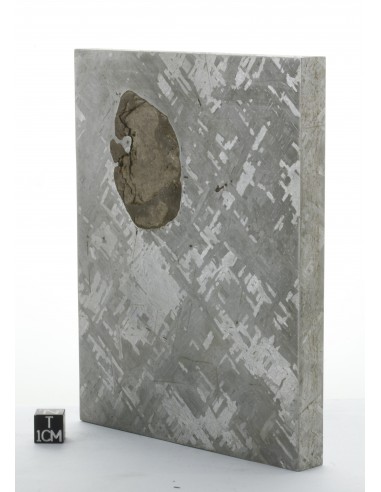
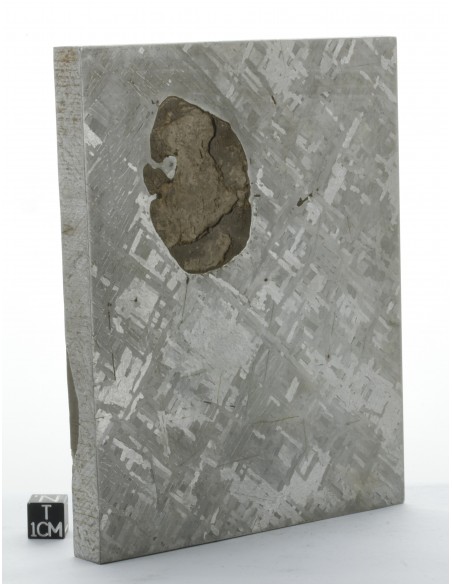
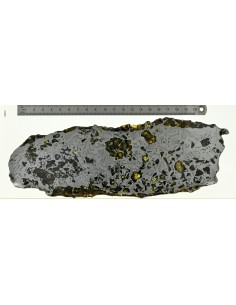
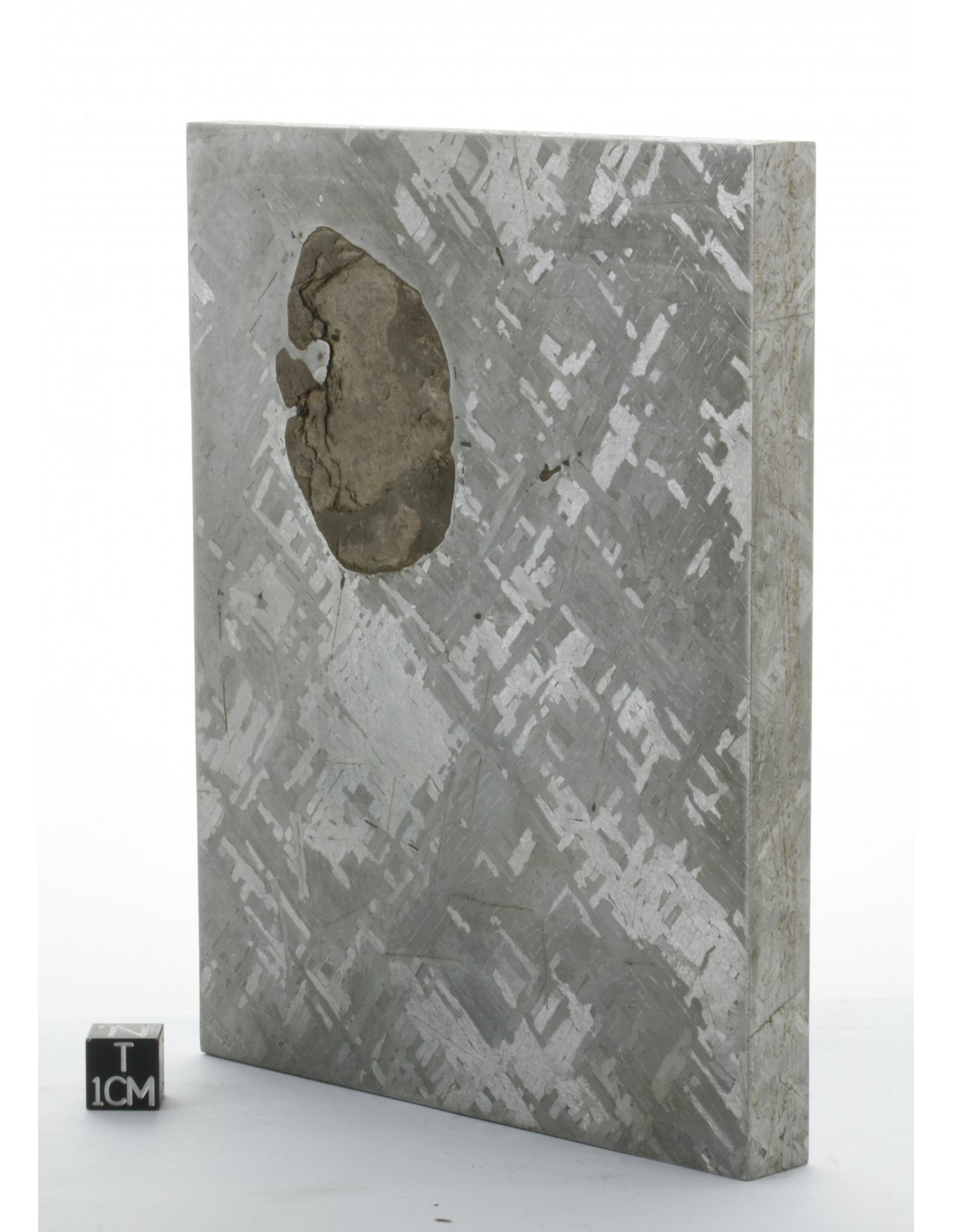
This Cape York meteorite block weighs 1277 g and measures approximately 132 × 105 mm, with a solid thickness of 12 mm. Its format gives it a very different character from a conventional thin slice. This is a specimen with real volume, real depth, and enough presence to stand on its own, making it especially satisfying as a display piece.
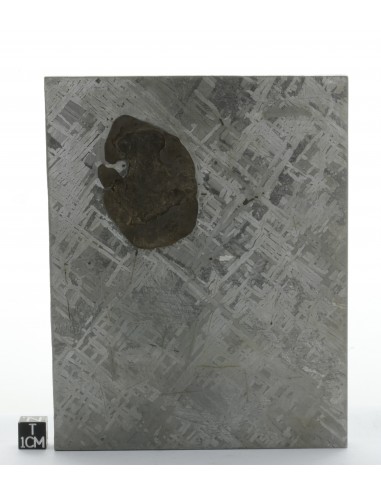
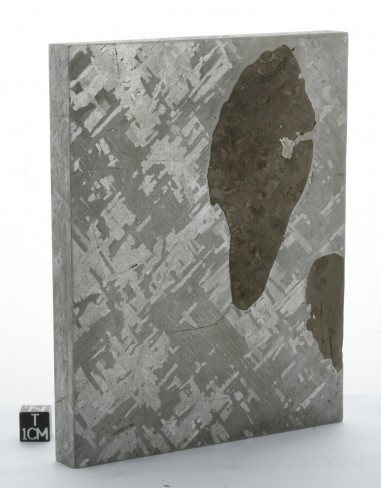
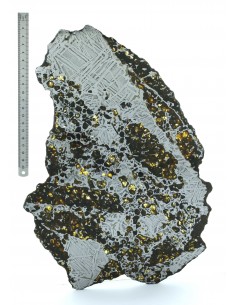
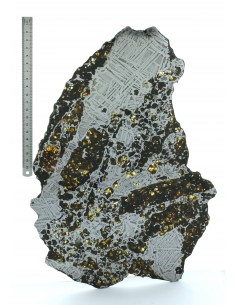
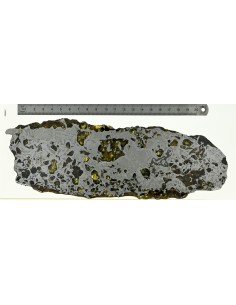
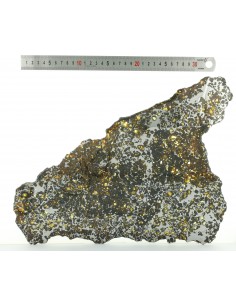
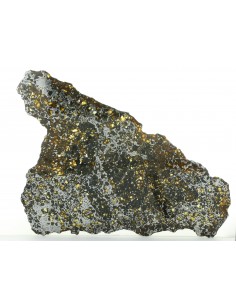
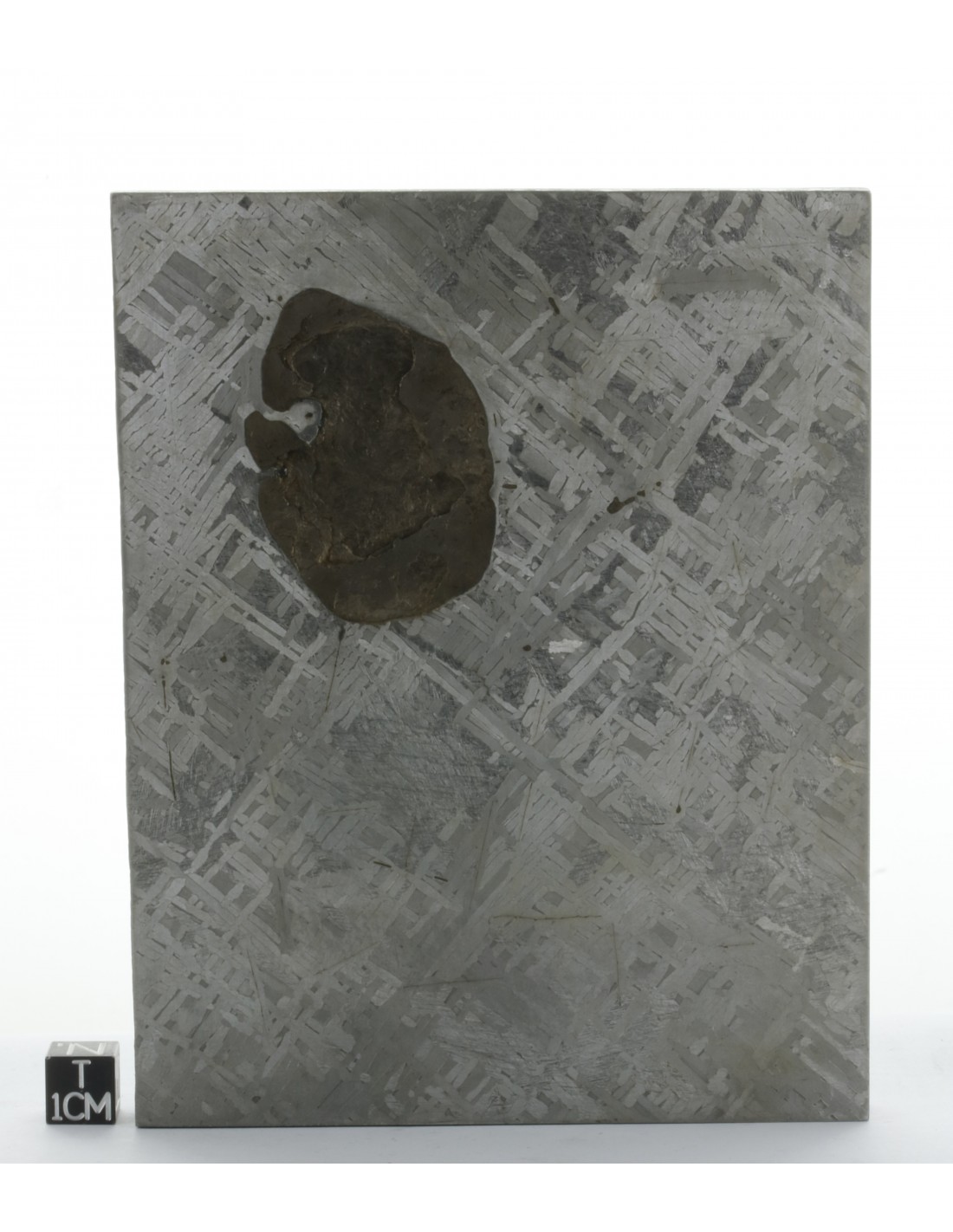
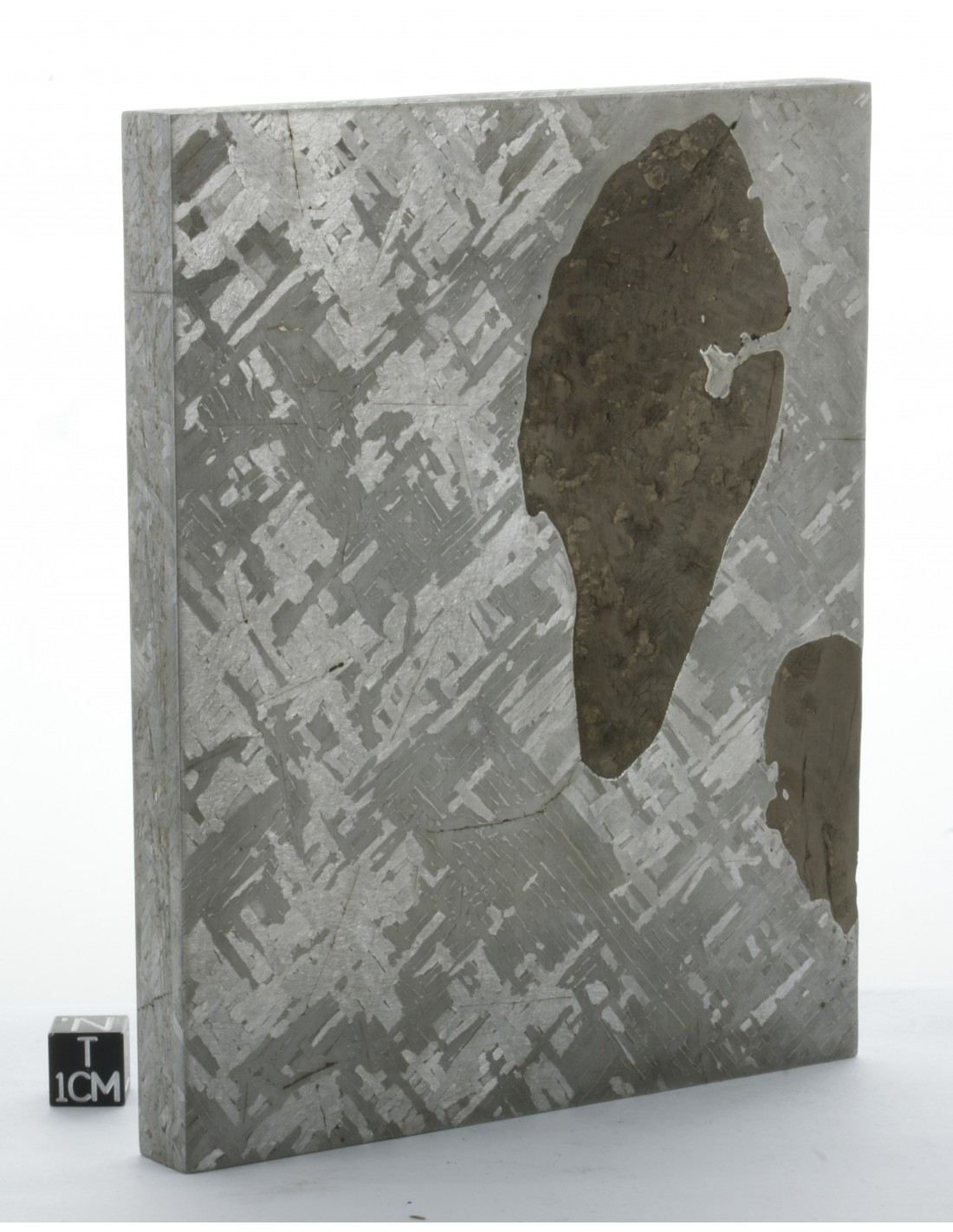
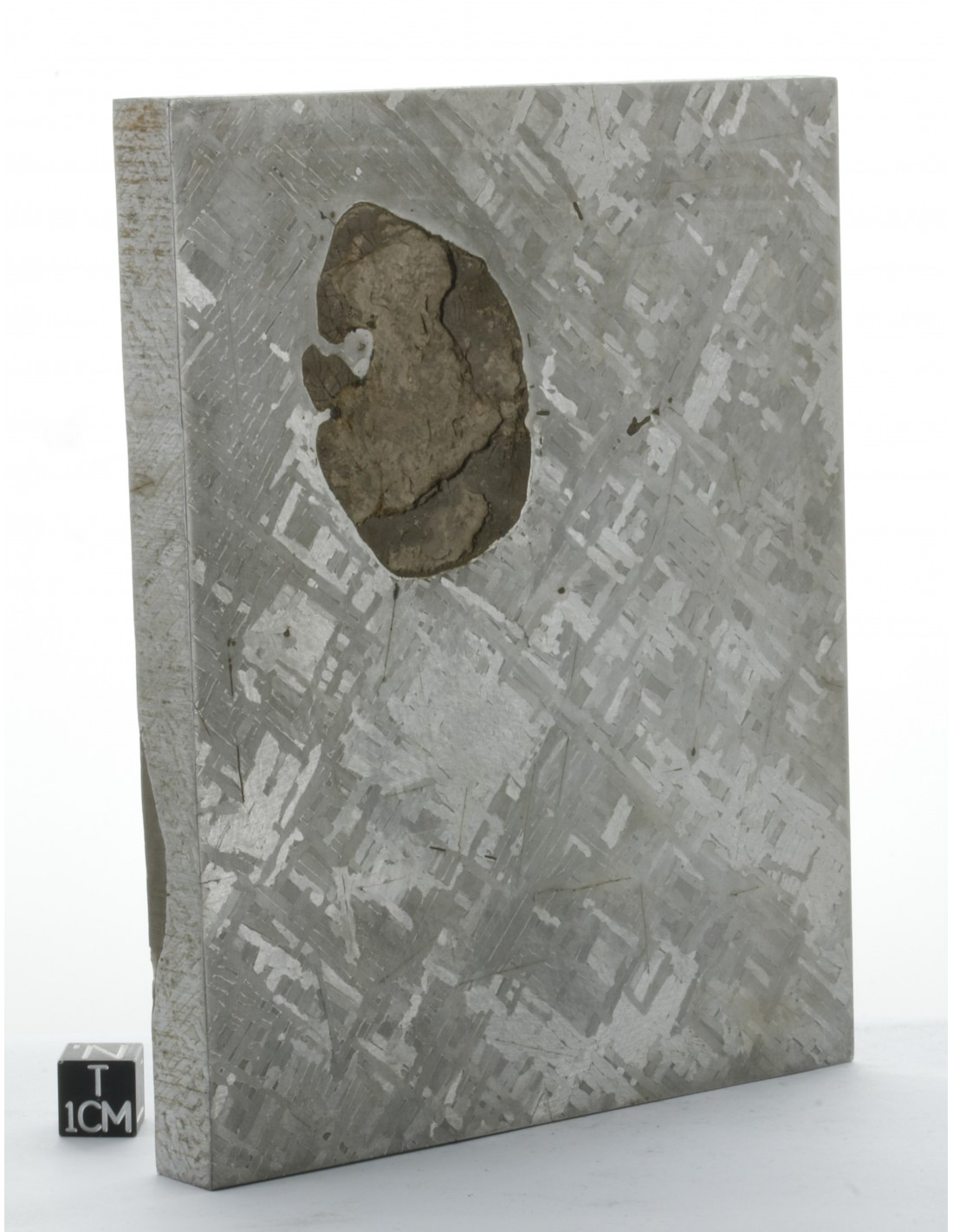
The polished and etched face reveals the classic internal metallic structure of Cape York, while a large troilite inclusion creates an immediate focal point within the iron field. This inclusion is not a minor detail. It gives the specimen a highly distinctive visual identity and reinforces its character as a singular, self-contained block.
A Self-Standing Cape York Block
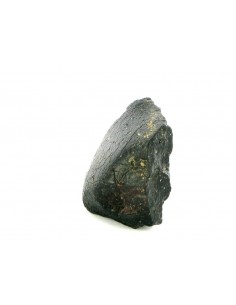
One of the key qualities of this specimen is that it is not simply a cut section to be laid flat or placed in a frame. Because of its thickness and proportions, it can be displayed upright and stand on its own, which gives it a much more sculptural and autonomous presence than a thinner slice.
This quality changes the way the specimen is perceived. It is no longer only a surface to be examined, but an object in space — a meteorite block whose structure, mass, and internal composition can be appreciated as a whole.
Widmanstätten Structure
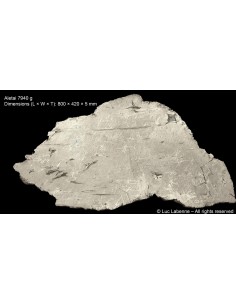
The etched face clearly reveals the Widmanstätten structure, the crystallographic metallic pattern that gives fine iron meteorites so much of their scientific and visual appeal. These interlocking lamellae are the result of extremely slow cooling in the parent body and remain one of the defining structural characteristics of important iron meteorites.
In this specimen, the pattern is broad and coherent, giving the polished face a strong architectural order. The etched structure does not simply decorate the block: it organizes the entire visual field and gives it depth and rhythm.
A Large Troilite Inclusion as a Defining Feature
The most distinctive element of this block is the presence of a large troilite inclusion. Its size and position create a commanding point of contrast within the metallic field, immediately drawing the eye and giving the specimen a stronger identity than a more homogeneous Cape York section.
Rather than appearing as a small accessory feature, the troilite here reads as a major internal element. It introduces mineralogical contrast, tonal depth, and a more organic visual counterpoint to the surrounding geometric iron structure.
A More Sculptural and Monolithic Format
This specimen has a more monolithic and sculptural character than a flat slice. The 12 mm thickness preserves a stronger sense of the meteorite’s original substance, while still allowing the internal structure to be read clearly across the polished face.
That balance is important. The piece offers both the legibility of a cut and etched surface and the physical authority of a block. For collectors who value meteorites as objects of presence as much as objects of study, this is a major advantage.
Collector and Display Interest
For collectors, this 1277 g Cape York block brings together several highly desirable qualities: a respected historic meteorite name, a broad etched metallic field, a large troilite feature, and a self-standing format that makes the specimen especially effective in display.
It is well suited to an advanced private collection, a cabinet presentation, or an institutional setting where the physical presence of the object matters as much as its internal structure.
A Distinctive Cape York Specimen
Among Cape York specimens, individuality often comes from the balance between structure, proportions, and internal contrast. In this example, that individuality lies in the combination of a self-standing block format, a strong etched Widmanstätten field, and a large troilite inclusion that gives the specimen a clear internal center of gravity.
For that reason, this 1277 g Cape York should be regarded not simply as a slice, but as a true display block: substantial, readable, self-supporting, and highly distinctive.